The Enigma of the Bimini Road: The Sunken Remnants of Atlantis
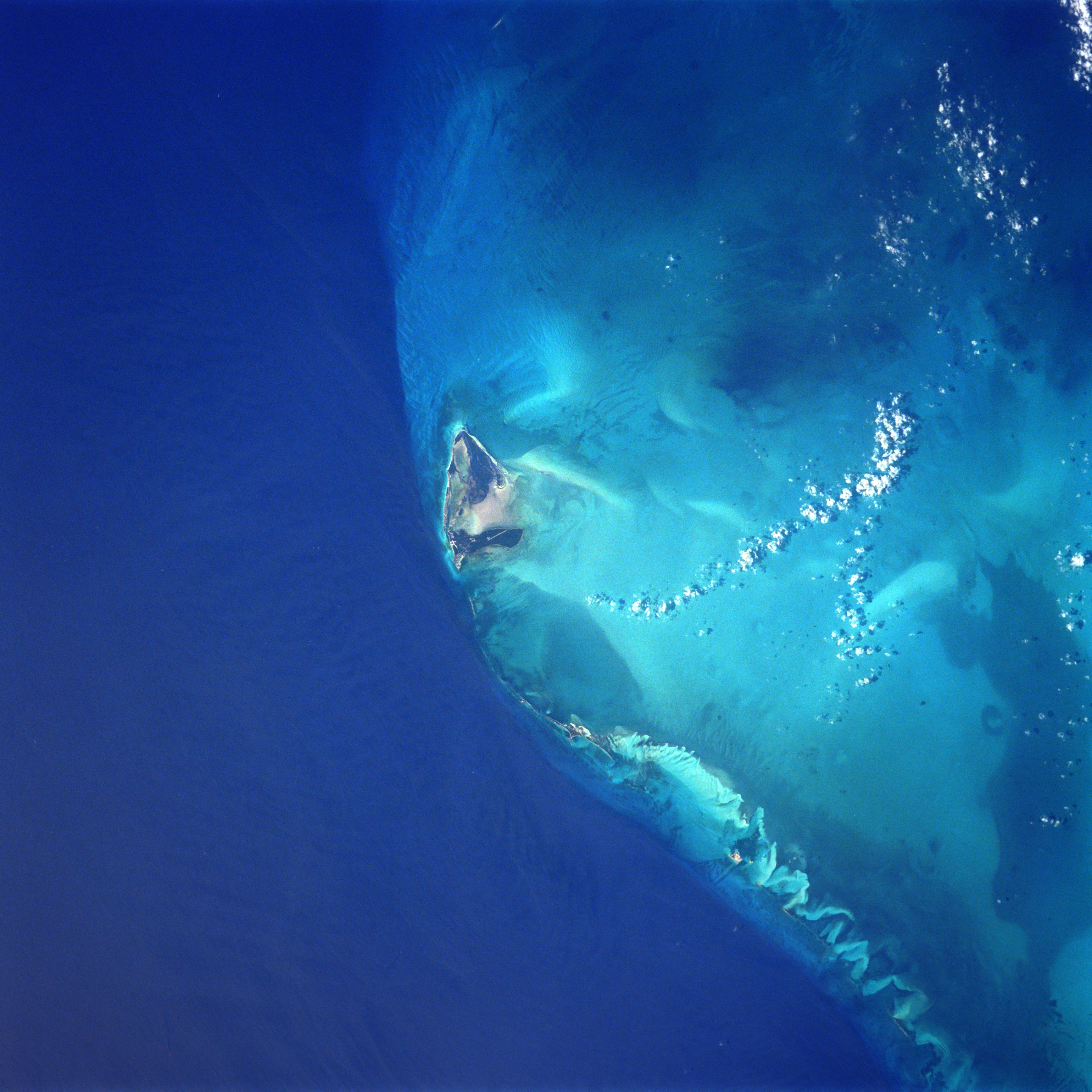
Off the North Bimini island, in the Bahamas, lies a long line of stone blocks on the seabed. It is called the Bimini Road. The formation runs for hundreds of meters in a curving shape, and it is made of large limestone slabs that look, from above, like a paved path.
Divers and visitors have been fascinated by it since it was first noticed in the late 1960s. Some see a man-made road or a harbor wall. Others see a natural rock formation that only looks planned.
The Bimini Road has also become tied to a famous prophecy about Atlantis. The story is worth telling, but it must be kept separate from the evidence of the stones themselves.
The Prophecy and the Discovery
In 1938, the American psychic Edgar Cayce, who gave health and spiritual readings while in a trance, reportedly said that remains of Atlantis would appear near Bimini around 1968 or 1969. Cayce's readings are a popular source for Atlantis stories, but they are not historical records. They are considered by many people as a spiritual belief, not as verified fact.
When the Bimini Road was reported in 1968, many people connected it with the prophecy. The timing made a dramatic story, and the story spread quickly. The connection, however, depends on Cayce's readings, not on any proof that the stones belong to Atlantis.
The Shape of the Stones
The formation is made of rectangular blocks of limestone, some of them quite long. Their edges look straight, and their corners seem to meet at right angles. These features are what made many observers think of a road or a harbor structure.
Yet the shape alone does not prove human work. Rock can break along layers and joints, and beach rock, a type of sandstone formed by the cementing of sand and shell, can split into blocks with fairly regular edges. Scientists who study the Bimini Road often compare it with this natural process.
The Natural Explanation
Many geologists favor the idea that the formation is beach rock. In this view, sand and shell cemented together near the shore, and later waves and storms broke the layer into blocks. The blocks then shifted and settled on the seabed. This explanation fits the geology of the Bahamas, where similar formations occur along other coasts.
Supporters of the natural view argue that the blocks lie in a pattern that matches the old beach, and that nothing found so far shows clear signs of human construction, such as tools, carved surfaces or dated objects.
The Human Hypothesis
Some researchers and writers have argued that the blocks show signs of human work. They point to the regularity of the edges, to the way some stones seem to sit on smaller pieces, and to the possibility that the ocean floor was once dry land. These arguments are interesting, and they have led to further investigation.
However, the claims have not convinced most of the scientific community. To support a human origin, researchers would need clear artifacts, dating of the rock layers and evidence of use. Such evidence has not been found in a convincing way.
Sea Levels and Dates
The idea that the area was dry land is connected to the changes in sea level after the last Ice Age. As the ice melted, the ocean rose, and many coastal areas that were once exposed became submerged. This is a real process, and it is important for understanding the history of the region.
Still, the fact that the land was once dry does not prove that people built the road. Researchers would need to date the rock surfaces and the sediments around them. That work is slow and expensive, and it is one reason the question remains open.
Atlantis and the Legend
The legend of Atlantis comes from the writings of the Greek philosopher Plato, who described a great island beyond the Pillars of Heracles that sank into the sea. Plato's story is a philosophical tale, and most scholars treat it as a fiction used to discuss politics and ideal states. Many later writers took the story as a historical record, and that is where the modern search for Atlantis began.
Linking Plato's tale with the Bimini Road combines two different kinds of sources: a literary text and a set of stones. It makes for a compelling story, but it does not show that Atlantis existed in the Bahamas.
Closing
The Bimini Road is a fascinating formation, whether it is natural, partly shaped by people or something still unclear. Its story reveals how easily the imagination joins a striking image with a famous legend. The best way to learn about it is to study the geology, to look at the dating evidence as it is produced, and to keep the prophecy and the legend in their proper place. The stones are real, and the search for the truth continues one measurement at a time.
Related Esoteric Inquiries
- The Enigma of the Fuente Magna Bowl: Sumerian Cuneiform in the Andes
- The Enigma of the Great Pyramid: The Piezoelectric Power Plant
- The Enigma of the Sphinx: The Hall of Records and the Water Weathering
Lux Esoterica.
2026.


Comments