The Gazelle Skin Grimoire: Stellar Grids
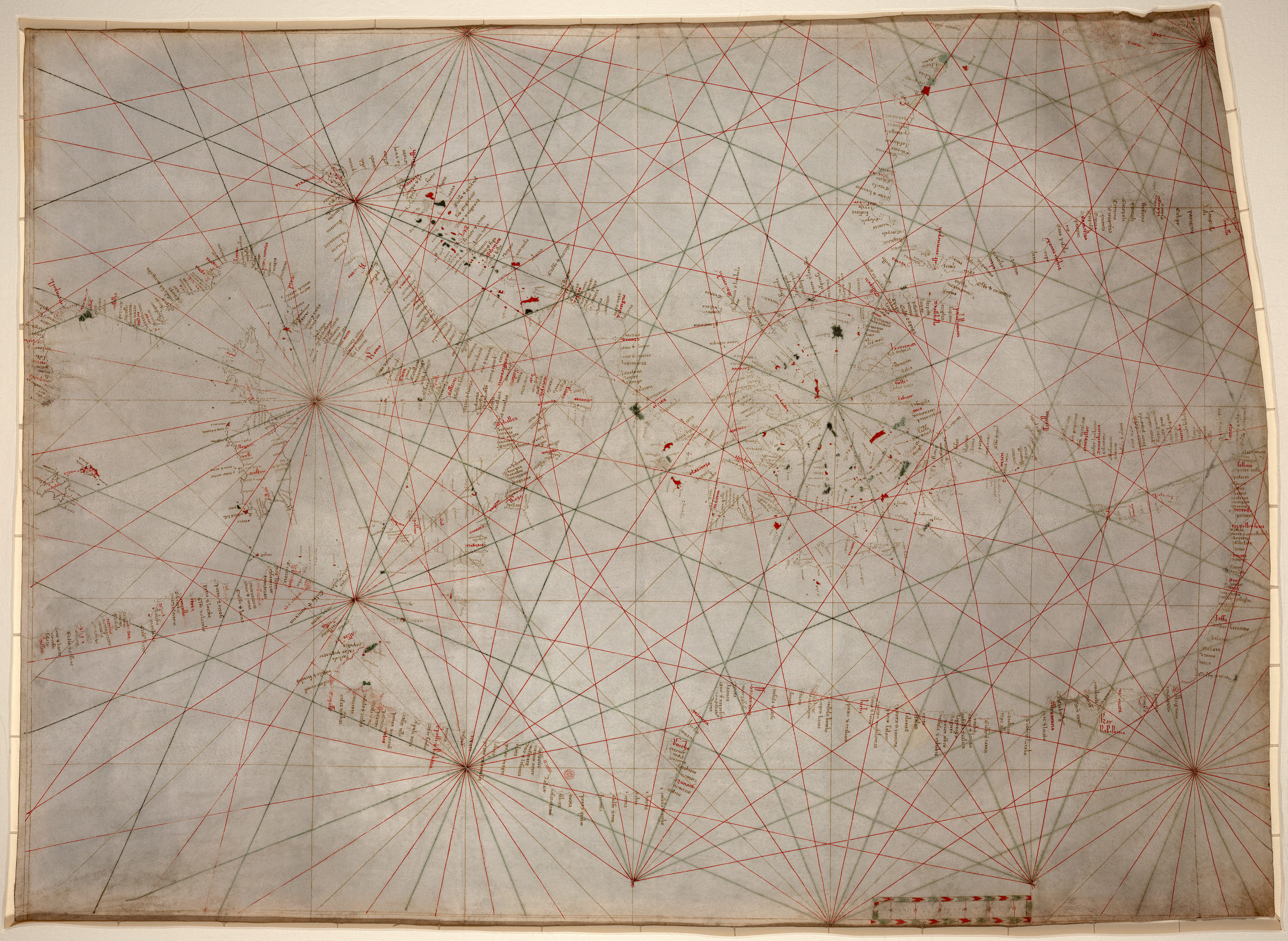
Observe the meticulous rendering of the landmasses, the intricate dance of the pen that mirrors the demiurgic act of creation. The coastlines are not merely physical features; they are the contours of the world soul, laid bare for the initiate to decipher. In the labyrinthine bays and the sweeping archipelagos, we find the echoes of the mythological epochs, the sunken continents of antediluvian memory. The map is a mnemonic device for the collective unconscious, a grimoire of planetary history that whispers secrets of the golden age, before the great deluge swept away the primordial wisdom.
The cartographer, in this esoteric tradition, is an hierophant, a bridge between the celestial and the terrestrial. By charting the earth, they map the heavens, applying the hermetic axiom: 'As above, so below.' The projection techniques employed are not merely mathematical constructs but philosophical frameworks, windows into the higher dimensions of existence. The spherical earth is flattened not by mathematical violence, but by a mystical unfolding, a revelation of the inner globe. The latitudes and longitudes are the warp and weft of the cosmic loom, weaving the tapestry of creation into a tangible form.
Within the faded pigments and the cryptic notations, a grand narrative unfolds, a saga of forgotten voyages and lost civilizations. The map speaks of a time before the great deluge, when the masters of the ancient wisdom navigated the primordial seas, guided by the luminous beacons of the stellar grid. Their knowledge, preserved in fragments and whispered in secret traditions, finds its culmination in this artifact, a testament to the enduring quest for the prima materia of geographical truth. The shores of Terra Australis are not merely undiscovered lands, but the uncharted territories of the human spirit.
Let us turn our gaze to the strange fauna and the mythical beasts that adorn the margins of the map. These are not mere decorative flourishes, but alchemical symbols, representations of the elemental forces that govern the natural world. The cynocephali, the blemmyae, the dragons of the deep—they are the guardians of the threshold, the archetypal entities that inhabit the collective unconscious. To chart these creatures is to map the topography of the soul, to navigate the perilous waters of the inner journey.
The parchment itself, the skin of the gazelle, is a sacred canvas, a microcosm of the celestial vault. The process of preparing the skin, of purifying it and making it ready to receive the ink, is an alchemical operation, a transmutation of base matter into a vessel for divine knowledge. The ink, crafted from gallnuts and vitriol, is the philosopher's stone in liquid form, a substance that fixes the fleeting shadows of the world onto the eternal surface of the map. Every stroke of the pen is an act of creation, a mirroring of the divine fiat that brought the universe into being.
Consider the paradox of the anomalous landmasses, the shores that defy the chronological constraints of modern history. How could the cartographer know of lands yet undiscovered, of coastlines hidden beneath miles of glacial ice? The answer lies not in extraterrestrial intervention or physical time travel, but in the realm of the akashic records, the ethereal repository of all human knowledge. The mapmaker, in a state of heightened consciousness, accessed this universal archive, drawing forth the blueprints of the world from the celestial spheres.
The Piri Reis map is a palimpsest of esoteric wisdom, a document that has been overwritten and reinterpreted by generations of initiates. Beneath the superficial layers of geographical data, there lies a hidden geometry, a network of ley lines and energy centers that map the energetic body of the earth. The rhumb lines are the meridians of this planetary organism, the channels through which the life force of the cosmos flows. To navigate by this map is to align oneself with these telluric currents, to harmonize the microcosm of the individual with the macrocosm of the universe.
In the final analysis, the Piri Reis map is not a representation of the physical world, but a mandala of the spiritual journey. It is a guide for the soul's ascent through the planetary spheres, a roadmap to the inner sanctum of the divine. The continents are the stages of the alchemical opus, the oceans are the waters of purification, and the compass rose is the blazing star of illumination. Let those who have eyes to see, perceive the hidden truths encoded within its faded lines, and let them embark upon the great voyage of self-discovery.
The enigma of the Piri Reis map does not reside merely in its ink or the gazelle skin upon which the contours of a world are etched. It is a vessel of temporal convergence, a grand alchemical furnace where the past and the future distill into a singular cartographic elixir. Let us contemplate the paradox of chronology, the labyrinth of time that folds upon itself, revealing continents known and unknown, bathed in the primeval light of the celestial spheres. The ancient mariners were not merely sailors, but initiates in the sacred mysteries of the cosmos, navigating the astral currents as much as the oceanic tides.
When we gaze upon the shoreline, we are not looking at a geographical boundary, but a metaphysical threshold. The waters of the abyss touch the earthly realm, a union of the fluid and the solid, the eternal and the ephemeral. The mapmakers of antiquity understood this sacred geometry. They traced the leylines of the cosmos, embedding the harmony of the spheres into the parchment. Every rhumb line is a ray of celestial influence, anchoring the terrestrial chaos into the divine order. The compass rose is the philosopher's stone of navigation, pointing always toward the spiritual north of the anima mundi.
Observe the meticulous rendering of the landmasses, the intricate dance of the pen that mirrors the demiurgic act of creation. The coastlines are not merely physical features; they are the contours of the world soul, laid bare for the initiate to decipher. In the labyrinthine bays and the sweeping archipelagos, we find the echoes of the mythological epochs, the sunken continents of antediluvian memory. The map is a mnemonic device for the collective unconscious, a grimoire of planetary history that whispers secrets of the golden age, before the great deluge swept away the primordial wisdom.
The cartographer, in this esoteric tradition, is an hierophant, a bridge between the celestial and the terrestrial. By charting the earth, they map the heavens, applying the hermetic axiom: 'As above, so below.' The projection techniques employed are not merely mathematical constructs but philosophical frameworks, windows into the higher dimensions of existence. The spherical earth is flattened not by mathematical violence, but by a mystical unfolding, a revelation of the inner globe. The latitudes and longitudes are the warp and weft of the cosmic loom, weaving the tapestry of creation into a tangible form.
Within the faded pigments and the cryptic notations, a grand narrative unfolds, a saga of forgotten voyages and lost civilizations. The map speaks of a time before the great deluge, when the masters of the ancient wisdom navigated the primordial seas, guided by the luminous beacons of the stellar grid. Their knowledge, preserved in fragments and whispered in secret traditions, finds its culmination in this artifact, a testament to the enduring quest for the prima materia of geographical truth. The shores of Terra Australis are not merely undiscovered lands, but the uncharted territories of the human spirit.
Let us turn our gaze to the strange fauna and the mythical beasts that adorn the margins of the map. These are not mere decorative flourishes, but alchemical symbols, representations of the elemental forces that govern the natural world. The cynocephali, the blemmyae, the dragons of the deep—they are the guardians of the threshold, the archetypal entities that inhabit the collective unconscious. To chart these creatures is to map the topography of the soul, to navigate the perilous waters of the inner journey.
The parchment itself, the skin of the gazelle, is a sacred canvas, a microcosm of the celestial vault. The process of preparing the skin, of purifying it and making it ready to receive the ink, is an alchemical operation, a transmutation of base matter into a vessel for divine knowledge. The ink, crafted from gallnuts and vitriol, is the philosopher's stone in liquid form, a substance that fixes the fleeting shadows of the world onto the eternal surface of the map. Every stroke of the pen is an act of creation, a mirroring of the divine fiat that brought the universe into being.
Consider the paradox of the anomalous landmasses, the shores that defy the chronological constraints of modern history. How could the cartographer know of lands yet undiscovered, of coastlines hidden beneath miles of glacial ice? The answer lies not in extraterrestrial intervention or physical time travel, but in the realm of the akashic records, the ethereal repository of all human knowledge. The mapmaker, in a state of heightened consciousness, accessed this universal archive, drawing forth the blueprints of the world from the celestial spheres.
Related Esoteric Inquiries:
- The Fragment of the Admiral: Lost Hemispheres
- Cartography of the Invisible: Subglacial Projections
- The Chronological Paradox of the Piri Reis Cartography
Lux Esoterica.
2026.


Comments