The Secret of the Yamabushi: Japan's Mountain Sorcerers of Shugendo
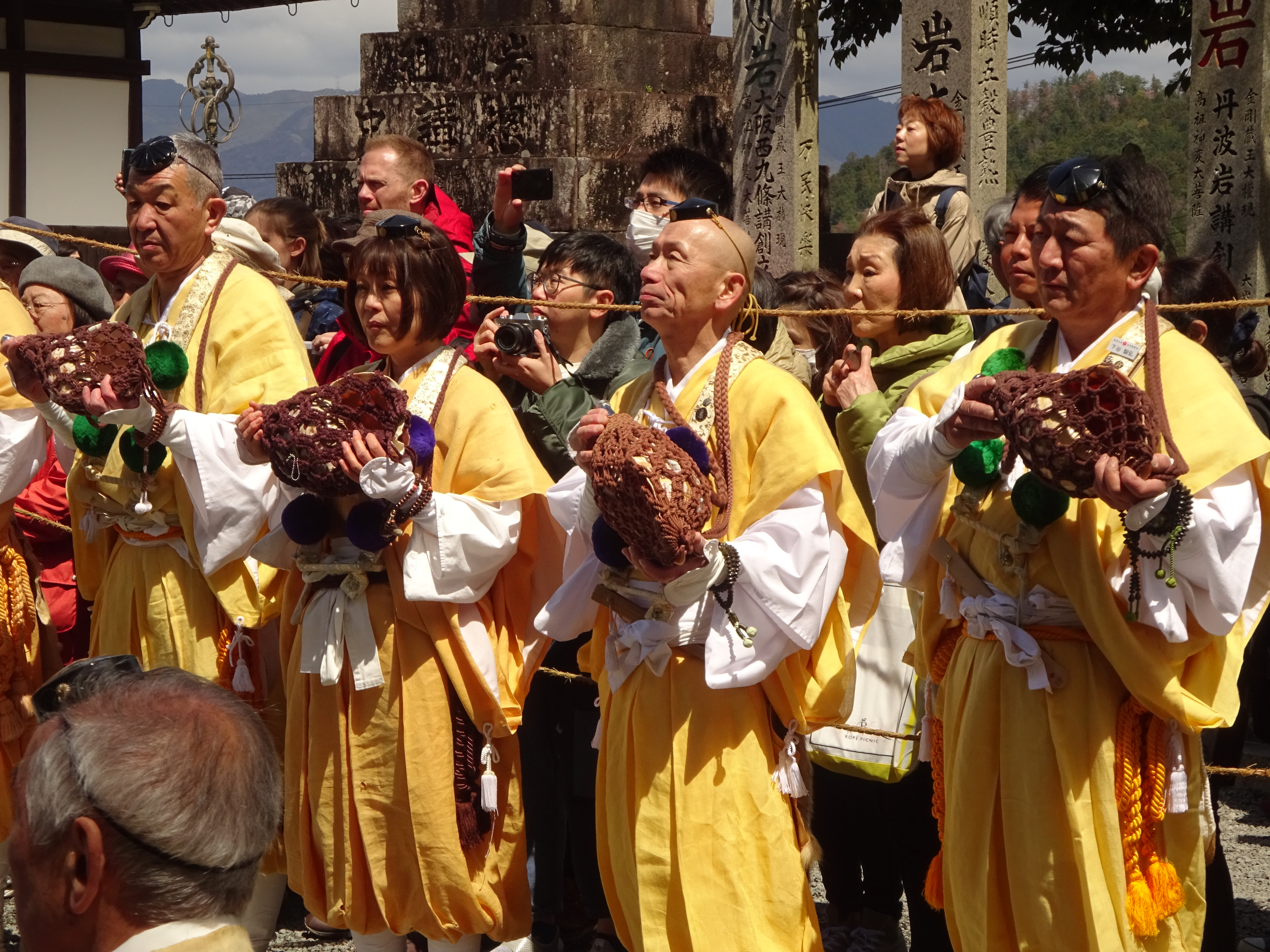
High in the mist-shrouded peaks of Mount Ōmine, Mount Haguro, and the sacred ridges of the Yoshino mountains in Japan, an ancient and mysterious brotherhood has practiced an extraordinary path of spiritual mastery for over a thousand years. Known as the Yamabushi (literally "those who lie down or dwell in the mountains"), these solitary ascetic warrior-monks, hermits, and mystic sorcerers walked a path unlike anything found in conventional monastic religion.
Their spiritual tradition is called Shugendō—"the path of cultivating spiritual and magical power through ascetic practice in nature." The Yamabushi did not seek enlightenment by sitting comfortably inside tranquil monastery walls. Instead, they plunged directly into the raw, unforgiving wilderness of Japan's sacred mountains. They stood under freezing glacial waterfalls in the depths of winter, hung suspended by their ankles over thousand-foot sheer cliffs to confront death, walked barefoot across beds of white-hot embers, and mastered secret hand gestures capable of cutting through the subtle fabric of the astral realm.
In Japanese folklore, the Yamabushi were whispered to possess supernatural abilities (genriki): command over mountain spirits, the power to summon rain and heal fatal illnesses, the ability to disappear into thin air, and direct communion with the legendary, winged mountain demigods known as the Tengu.
Who were these mountain adepts? What was the secret science behind their extreme physical and spiritual practices? To understand their path, we must ascend the sacred peaks and enter the living mandala of Shugendō.
The Legend of En no Gyōja: The Founder
The origins of Shugendō trace back to the late seventh century and the legendary mystic En no Gyōja (also known as En the Ascetic or En no Ozunu). Born near Mount Katsuragi, En was a natural prodigy in classical Chinese medicine, herbalism, and Taoist internal alchemy.
Rejecting the political intrigues and comfortable luxury of the imperial capital at Nara, En retreated into the wild mountain wilderness. For over thirty years, he lived in solitary caverns, subsisting entirely on wild pine needles, mountain herbs, and morning dew. He wore rough garments woven from tree bark and spent his nights in deep meditative trance perched on razor-sharp granite ledges.
According to ancient chronicles such as the Shoku Nihongi (compiled in 797 AD), En's intense ascetic discipline generated such immense spiritual magnetism that the local mountain spirits, nature deities, and even demonic entities yielded to his command:
- He is famously depicted flanked by two converted demon servants: Zenki (the front demon, wielding an iron axe to clear pathways through the wilderness) and Goki (the rear demon, carrying a sacred water vessel and seeds).
- When corrupt officials at the imperial court became jealous of his magical influence and banished him to the remote island of Izu, legends state that during the day he dutifully remained in exile, but at night he flew across the ocean waves to meditate upon the summit of Mount Fuji.
Before his disappearance into the celestial realms, En established the sacred pilgrimage routes across the Ōmine mountain range, creating an initiatory blueprint that would guide seekers for over a millennium.
The Sacred Synthesis: A Triad of Ancient Wisdom
Shugendō is not a single, dogmatic religion; it is a profound and harmonious synthesis of three distinct spiritual streams that flowed together in ancient Japan:
- Shinto Animism: The indigenous spiritual tradition of Japan, which recognizes that every mountain, ancient cedar tree, waterfall, river, and rock formation is inhabited by a living spiritual presence (Kami). To the Yamabushi, the wilderness was not raw material to be conquered, but a living cathedral of sacred intelligences.
- Esoteric Mikkyō Buddhism (Shingon and Tendai): The secret tantric doctrines brought from China by master adepts like Kūkai (Kōbō Daishi) and Saichō. This provided the Yamabushi with complex Sanskrit mantras, sacred geometric mandalas, and the intense veneration of Fudō Myōō (The Immovable Wisdom King)—the fierce protector deity enveloped in roaring flames, wielding a diamond sword to cut through ignorance and a rope to bind negative astral forces.
- Taoist Internal Alchemy (Fangshi): The classical Chinese arts of energetic cultivation, breath control (qigong), herbal medicine, and the mastery of the five elemental phases (wood, fire, earth, metal, water).
By weaving these three streams together, the Yamabushi created a practical, experiential science of the soul. They believed that true wisdom could never be found in intellectual book study alone; it had to be forged in the physical body through direct, visceral contact with the elemental forces of nature.
The Ritual Regalia of the Mountain Sorcerer
Every garment and tool carried by a Yamabushi is a consecrated talisman endowed with precise esoteric symbolism:
- The Tokin (Headpiece): A small, black, lacquered circular box worn on the forehead. It features twelve distinct folds representing the twelve links of dependent origination (Pratītyasamutpāda) in Buddhist philosophy. In practical survival, it could be untied and used as a drinking cup; in esoteric meditation, it protects the crown chakra (Sahasrara) from adverse astral influences.
- The Yuigesa (Surplice): A sacred chest sash adorned with six large, colorful pom-poms (fusa). These represent the six Buddhist perfections (Paramitas): generosity, moral discipline, patience, energy, meditation, and wisdom.
- The Horagai (Conch Shell Trumpet): One of the most iconic symbols of the Yamabushi. When blown, the giant conch shell emits a deep, piercing, multi-tonal acoustic blast that reverberates across mountain canyons for miles. Esoterically, the sound of the Horagai dispels lower phantom illusions, purifies the atmospheric ether, and represents the roaring lion's voice of the cosmic Buddha.
- The Shakujō (Ringed Staff): A wooden walking staff topped with metal rings that jingle rhythmically with every step. Practically, it warns small insects and snakes along the mountain path so they are not accidentally crushed; energetically, its metallic vibration grounds telluric currents and cleanses the energy field of the traveler.
The Extreme Ascetic Rites: Shugyō
The training of a Yamabushi (Shugyō) is designed to push the human organism to its absolute psychological, physical, and energetic limits, systematically breaking down the mundane ego until the primordial divine self emerges.
1. Takigyō (Waterfall Purification)
In the dead of winter, when mountain waters are near freezing, the Yamabushi strip down to white linen loincloths (fundoshi) and enter roaring glacial torrents. Standing directly beneath the crushing weight of the falling water, they maintain an immovable upright posture, clench their hands in sacred mudras, and chant the fiery mantra of Fudō Myōō at the top of their lungs.
The freezing impact of the water shocks the nervous system, clears all mental chatter instantly, forces the physical breath into total stillness, and purges stagnant emotional blockages from the physical and subtle bodies.
2. Nishi-no-Nozoki (The Abyss Initiation)
At the summit of Mount Ōmine stands a sheer vertical cliff dropping thousands of feet into a jagged gorge below. During the initiation rite known as Nishi-no-Nozoki ("Peering into the West"), the initiate is lowered headfirst over the edge of the precipice, held only by a single rope wrapped around his ankles by his elders.
Suspended upside down over the yawning abyss, looking into the jaws of certain death, the initiate is questioned by the master: "Will you honor your parents? Will you speak the truth? Will you protect the weak?" Staring directly into mortality, the lower, trivial anxieties of the personality shatter, awakening an unshakable, fearless reverence for life.
3. Hiwatari (Fire Walking)
At the climax of major ritual gatherings, the Yamabushi build massive consecrated pyres of cedar logs and fragrant cypress branches (Saitō Goma). Thousands of wooden prayer sticks are burned in the sacred fire. Once the flames subside into a roaring bed of glowing red embers, the Yamabushi, followed by purified lay practitioners, chant mantras and walk slowly, barefoot across the scorching coals without suffering burns—demonstrating the triumph of purified spiritual will over physical heat.
4. Kuji-Kiri: The Nine Syllables of Power
One of the most secret and potent magical arts preserved by the Yamabushi is Kuji-kiri ("The Nine Symbolic Cuts"). Derived from ancient Taoist and Mikkyō sources, this practice involves chanting nine sacred syllables (Rin, Pyō, Tō, Sha, Kai, Jin, Retsu, Zai, Zen), each accompanied by an intricate hand mudra (Kuji-in).
With their fingers weaving dynamic geometric matrices in the air, the adept visually slices the atmospheric ether with four vertical and five horizontal cuts. In the esoteric tradition, this nine-fold grid acts as an impenetrable psychic shield, freezing hostile astral entities, cutting through energetic cords, and aligning the practitioner’s personal auric field with the immutable geometric order of the cosmos.
The Mountain as a Living Mandala
In the deep philosophy of Shugendō, the sacred mountain is not an obstacle to be conquered or a picturesque view to be admired; it is the physical, living incarnation of the cosmic Buddha (Dainichi Nyorai, the Great Sun Buddha).
The pilgrimage through the mountains is conceived as a literal journey through the Ten Realms of Existence (Jikkai):
- The muddy lower valleys and tangled thorns represent the Hell realms and the sphere of Hungry Ghosts.
- The steep rocky scrambles test the realm of Animals and human passions.
- The high alpine meadows represent the realms of celestial beings and demigods.
- The barren, wind-swept summit represents the ultimate breakthrough into Buddhahood and transcendent unity.
To enter the mountain is to die to the mundane world. The white robes worn by the Yamabushi are identical to the traditional burial shrouds used in Japanese funerals. When the adept emerges from the mountain weeks later, he is considered to have undergone a literal resurrection—a living enlightened being (Sokushinbutsu) reborn from the cosmic womb of the Great Mother.
The Eternal Flame of the Mountain Path
In our modern era, marked by constant digital noise, mental exhaustion, and a profound disconnection from the natural world, the ancient path of the Yamabushi shines with renewed urgency.
They remind us that human beings are not fragile machines meant to live insulated in artificial boxes of concrete and glass. We are children of the living earth, endowed with latent spiritual capacities that only awaken when we dare to step outside our comfort zones, confront our deepest fears, and listen to the silent whisper of the sacred peaks.
The call of the conch shell still echoes across the mist-shrouded valleys of Japan. The Yamabushi still walk the mountain trails under the stars, preserving that ancient, fiery spark of human freedom and mystical power that no passage of centuries can ever extinguish.
Related Esoteric Inquiries:
- Shugendo: The Way of Mountain Asceticism, the Yamabushi Warriors, and the Physical Mandala of Death and Rebirth
- The Secret of the Yonaguni Monument: The Submerged Pyramid of Japan
- The Tengu: Mountain Lords of Japan, Martial Masters, and the Demons Who Guard the Sacred High Places
Lux Esoterica.
2026.


Comments