The Sixth and Seventh Books of Moses: A Popular Grimoire
The Forbidden Library of the Lawgiver
In the vast archive of Western magical literature, few texts have achieved the level of widespread, popular influence as the volume known as the Sixth and Seventh Books of Moses. First printed in Germany in the mid-nineteenth century by the publisher Johann Scheible, the text presents itself as a collection of lost biblical apocrypha. It claims to contain the secret, magical instructions that the creator of the universe bestowed upon Moses on Mount Sinai—wisdom that allowed the Hebrew lawgiver to perform the miracles of the plagues, part the Red Sea, and lead his people through the wilderness.
Johann Scheible compiled these materials between 1845 and 1849 as part of his monumental series Das Kloster ("The Cloister"), a scholarly and folkloric project that sought to document and rescue obscure medieval magical works, popular legends, and occult treatises from obscurity. The work was translated into English in 1880, published in New York, and rapidly circulated through the networks of popular print culture, reaching a massive audience that transcended traditional occult circles. Unlike the high, intellectual Hermeticism of the Renaissance, which was preserved in scholarly Latin manuscripts for the elite, the Sixth and Seventh Books of Moses was a product of the industrial printing press, designed for mass circulation among the literate working classes. It quickly crossed the Atlantic, arriving in the United States with German immigrants, where it became a foundational text for various practical, folkish magical traditions. The grimoire represents a democratization of ceremonial magic, transforming the elaborate rituals of the Solomonic tradition into a collection of practical seals and talismans that could be utilized by the common farmer or urban laborer.
To the historian of occult literature, the publishing history of the book is as fascinating as its content. Scheible compiled the text from a variety of older German manuscripts, folk grimoires, and kabbalistic sources, appending them to a fictional narrative that established their ancient pedigree. This synthesis created a highly potent magical manual, combining the prestige of biblical history with the practical methods of rural folk sorcery, resulting in a text that was both feared and revered by the communities that adopted it.
The Mythology of the Lost Books: Biblical Apocrypha and Occult History
The core mythological premise of the Sixth and Seventh Books of Moses is the existence of a "lost library" of the biblical patriarchs. The text argues that the Pentateuch—the first five books of the Bible—represents only the public, exoteric law that Moses delivered to the Israelites. Beneath this public law, according to the grimoire, lay a secret, esoteric instruction—the sixth and seventh books—which contained the practical keys to command the elements and summon the celestial and terrestrial spirits.
This mythos draws upon a long tradition of Jewish and Christian apocryphal literature, which frequently positioned biblical figures as master magicians and keepers of secret wisdom. In the midrashic legends and the medieval Heikhalot literature (the palaces of heaven), Moses is depicted as an initiate who ascended through the celestial spheres, confronting the archangels and receiving the Ineffable Name of God, which was carved onto his magical staff. In this narrative, Moses is not merely a prophet and a lawgiver, but the ultimate high magician of antiquity. His staff, his prayers, and his confrontations with Pharaoh’s sorcerers are reinterpreted as demonstrations of Goetic and planetary magic, performed under the authority of the secret names of God.
By placing these books in the hands of the reader, the grimoire promised to restore this lost power. The magician was no longer a passive supplicant in the temple, but an active operator who could command the same forces that had brought water from the rock and summoned the pillar of fire. This promise of direct, unmediated spiritual authority was incredibly appealing, especially in the context of the nineteenth century, when traditional religious structures were being challenged by the forces of modernization and scientific skepticism.
The Seals of Scheible: The Visual Taxonomy of Hebrew Talismans
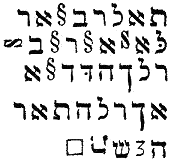
The practical operations of the Sixth and Seventh Books of Moses are centered on a series of elaborate plates displaying magical seals and talismans. These seals—such as the Seal of Eoluth (Figure 21)—are characterized by a complex visual taxonomy that mixes Hebrew characters, Latin letters, planetary symbols, and geometric designs. The drawings are intentionally mysterious, designed to bypass the analytical mind and project a powerful, archetypal influence into the subconscious mind of the magician.
Each seal is associated with a specific planet, spirit, or magical operation, and is accompanied by a brief instruction detailing its manufacture and use. The Seal of Eoluth, for instance, is described as a protective and commanding seal, used to summon the spirits that govern the treasures of the earth and the movements of the winds. Figure 19, depicting the Cherubim and Seraphim, is used to bring peace, health, and spiritual alignment to the household. The magician must draw the seal on virgin parchment or engrave it on specific metals, reciting the corresponding prayers and names of power during the planetary hour of the operation.
The visual character of these seals distinguishes them from the geometric sigils of the Goetia or the traditional pentacles of the Key of Solomon. They have a rustic, hand-drawn quality that reflects their origin in the folk manuscripts of the German countryside. Yet, despite their simplicity, they carry a dense symbolic weight, utilizing the prestige of the Hebrew language and the traditional cosmology of the planets to establish a protective and creative boundary within the ritual chamber.
The Folk Migration: From German Braucherei to Southern Hoodoo
The historical legacy of the Sixth and Seventh Books of Moses is defined by its extraordinary migration across cultural and geographical boundaries. When German-speaking immigrants from the Rhineland and Switzerland settled in Pennsylvania in the eighteenth and nineteenth centuries, they brought with them their traditional folk magic, known as Braucherei or Powwowing. The Sixth and Seventh Books quickly became a cornerstone of this tradition, used by Powwowers alongside the bible and Johann Georg Hohman's Long Lost Friend to cure illnesses such as erysipelas (known locally as "wildfire"), stop bleeding, protect cattle from disease, and ward off the malicious influence of witch-craft (Hexerei).
As the book circulated through the American landscape, it crossed racial and cultural lines, finding a highly receptive audience among African-American practitioners in the American South. In the context of Hoodoo or Rootwork, the Sixth and Seventh Books of Moses assumed a legendary status. The book was viewed as a source of immense, almost dangerous power. Hoodoo practitioners, drawing upon their own traditions of biblical magic and spirit communication, adopted the seals of Moses for their own operations, drawing them upon red flannel bags (known as mojo bags or nation sacks) combined with graveyard dirt, lodestones, and planetary roots to protect homes from negative spirits, gain influence in legal matters, and secure financial success.
This cross-cultural adoption highlights the universal appeal of the grimoire's practical focus. The book did not require a deep knowledge of classical languages or access to expensive ceremonial tools. It offered a direct, visual technology that could be adapted to the immediate needs of the community, showing how the magical heritage of early modern Europe could find a new, vital life in the syncretic folk traditions of the American wilderness.
Esoteric Analysis: Practical Magic, Divine Authority, and the Will of the Soil
From a Hermetic perspective, the Sixth and Seventh Books of Moses represents a practical application of the concept of the "power of the word." The seals and the secret names of God contained in the text are not arbitrary markers; they are descriptions of the structural laws that govern the cosmos. By drawing the seals and reciting the names, the magician is attempting to bring their own localized will into alignment with the grand architecture of creation.
This operation is closely aligned with the Neoplatonic concept of sympathetic magic, where physical objects and symbols act as conduits for divine force. The staff of Moses and the seals of the grimoire are synthemata—divine signatures left in the material world. By working with these signatures, the magician coordinates the elemental forces of the earth, translating spiritual knowledge into tangible physical protection. The figure of Moses himself acts as the ultimate archetype of this integration: he is the mediator between the divine height of Mount Sinai and the material density of the wilderness. The magic of the grimoire is thus an attempt to participate in this same mediatorial function, utilizing the tools of the lawgiver to shape the physical environment. The wealth and protection that the seals promise are symbols of this accomplished alignment—the tangible proof that the magician has succeeded in coordinating the forces of the cosmos in the service of their earthly life, bridging the gulf between the human intellect and the divine mind.
Related Esoteric Inquiries:
- Geometry of the Will: Visual Semiotics and Sacred Alphabets in Grimoire Magic
- The Sword of Moses (Harba de-Moshe): Ancient Hebrew Practical Magic, Angelic Coercion, and the Power of the Word
- The Secret Grimoire of Turiel: Priest-Magic, Angelic Conjuration, and the Secrets of the Earth
Lux Esoterica.
2026.


Comments