The Book of Soyga: John Dee, Cryptographic Tables, and the Secret Code of the Angels
The Lost Codex of Mortlake
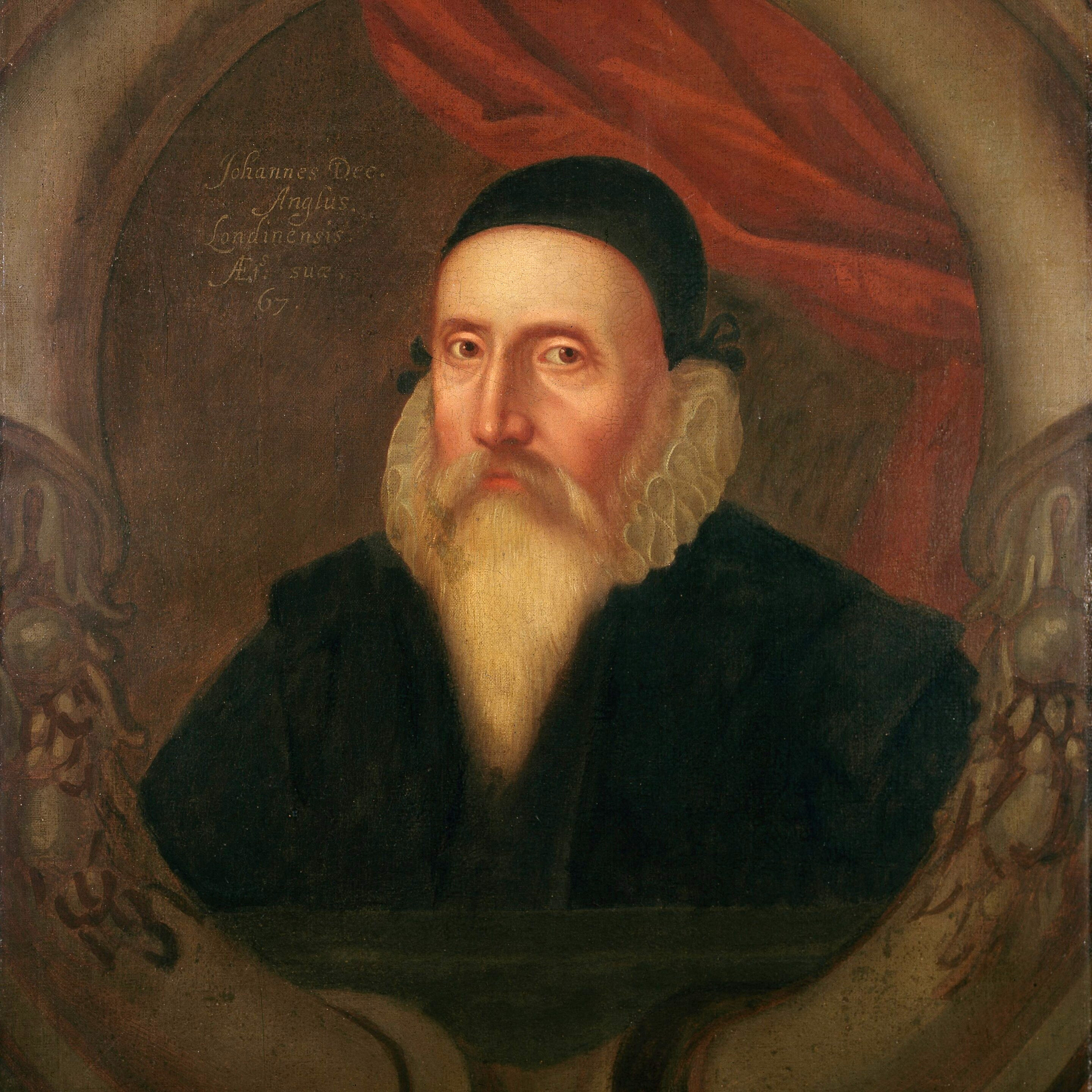
In the late sixteenth century, the house of Dr. John Dee at Mortlake, situated along the River Thames, was home to the largest and most sophisticated scientific and esoteric library in England. Dee was a trusted advisor to Queen Elizabeth I, providing her with astrological calculations and navigational charts for England's expanding maritime empire. Among the thousands of volumes of mathematics, astronomy, navigation, and Hermetic philosophy in his collection was a manuscript that Dee valued above almost all others: a Latin grimoire known as the Book of Soyga, or Aldaraia. Following the plundering of Dee’s library by an angry mob during his travels on the European continent with his scryer Edward Kelley—visiting the courts of Poland and Bohemia—this enigmatic text was lost to history, surviving only as a legendary reference in Dee’s personal diaries. For four centuries, scholars assumed the book was gone forever, until its dramatic rediscovery in 1994 by the historian Deborah Harkness, who located two surviving copies in the British Library and the Bodleian Library at Oxford.
The Book of Soyga is a complex, sixteenth-century magical treatise written in Latin. Its title is widely believed to be an anagram of the Greek word agios, meaning "holy," or a corruption of the Arabic word shaya, meaning "thing" or "revelation." The manuscript presents the reader with a dense system of practical magic, combining the traditional Solomonic conjurations of angels and planetary spirits with an elaborate mathematical structure. It is a work of high intellectual esotericism, reflecting the Renaissance belief that the universe was constructed according to the laws of mathematics, geometry, and linguistic harmony, and that the magician could navigate this structure by mastering the secret codes of the creation.
To the historian of occult science, the rediscovery of the Book of Soyga has provided invaluable insight into the intellectual world of John Dee. It shows that his interest in angelic communication was not a late, desperate departure from his scientific work, but an extension of his mathematical and cryptographic studies, wherein he sought to decode the fundamental programming language of the cosmos.
The Structure of the Codex: Letters, Tables, and Celestial Mathematics
The internal structure of the Book of Soyga is characterized by its rigorous, almost obsessive organization. The text consists of several books detailing the names, characters, and offices of various angels and spirits, the preparation of magical instruments, the calculation of planetary hours, and the proper perfumes and incenses for ritual operations. The manuscript is divided into 18 distinct sections, each corresponding to a specific branch of practical magic and angelic hierarchy. However, the most famous and baffling feature of the manuscript is the inclusion of thirty-six large tables of letters, placed at the end of the text.
Each of these tables is a square grid measuring thirty-six by thirty-six characters, filled with apparently random letters of the Latin alphabet, totaling 46,656 letters across the entire book. The tables are named after the stars, the constellations, the planets, and the elements, and are associated with specific angelic intelligences. For centuries, these grids were assumed to be gibberish or arbitrary designs intended to confuse the uninitiated. However, the sheer size and complexity of the tables suggested that they contained a coherent, mathematical code.
The grids functioned as a celestial cipher system for angelic magic. The magician was meant to utilize these tables to construct the secret names of the angels and translate their intent into mathematical formulas. The use of such tables was a common feature of Renaissance cryptography, popularized by figures like Johannes Trithemius in his Steganographia. In the context of the Book of Soyga, this cryptographic technology was elevated to a sacred science, where the grids were seen as the mathematical coordinates of the spiritual world, allowing the magician to locate and interact with the subtle forces of the cosmos.
Dee's Quest: The Dialogue with Uriel
John Dee’s relationship with the Book of Soyga was defined by a desperate quest to decipher its secret tables. In 1582, as Dee began his famous scrying sessions with the medium Edward Kelley, the Book of Soyga was one of the first topics of inquiry. These seances, recorded in Dee's Mysteriorum Libri (Books of Mysteries), took place in a dedicated chamber at Mortlake, where Kelley would gaze into a polished crystal showstone while Dee recorded the visions and dictations of the spirits in his notebooks.
During a session on March 10, 1582, Dee petitioned the archangel Uriel, who appeared in Kelley’s scrying stone, for the key to reading the tables, noting that he had spent years studying the text without success. Dee asked Uriel if the book was of good or evil origin, and if the tables could be decrypted. Uriel responded that the book was holy, having been revealed to Adam in the Garden of Eden by the good angels of God. However, Uriel delivered a sobering warning: he asserted that only the archangel Michael possessed the key to deciphering the thirty-six tables, and that no human intellect could decode them without divine assistance. Furthermore, Uriel predicted that Dee would live for exactly one hundred years unless he succeeded in unlocking the secrets of the book, framing the decipherment as a matter of cosmic significance and personal survival.
This dialogue highlights the profound spiritual stakes of Dee’s occult work. For Dee, the Book of Soyga was not a mere curiosity or a collection of simple spells. It was the key to the lost, primordial language of humanity—the tongue spoken before the Fall and the confusion of Babel. To decode the tables was to restore the direct communication between the human mind and the divine intellect, regaining the scientific and spiritual mastery that Adam had possessed in Eden.
The Cryptographic Code: Reconstructing the Angelic Algorithm
The mystery of the Book of Soyga’s tables remained unresolved until the late twentieth century, when the mathematical historian and cryptanalyst Jim Reeds undertook a systematic study of the grids. Utilizing computer analysis, Reeds discovered that the tables were not filled with random letters, nor were they simple grids of transposition. Instead, they were generated by a highly sophisticated mathematical algorithm starting from a specific key-word, using a 23-letter Latin alphabet.
Reeds demonstrated that the letters in each grid are determined by a recursive formula that operates on the preceding characters. The algorithm uses a key-word (such as Adonay or Soter) written along the top row and the left-hand column of the grid. Each subsequent letter is calculated based on the numerical value of the letters above it and to its left, using modular arithmetic and a specific shift-factor. This mathematical consistency proved that the tables were the product of a highly structured, coherent design, representing one of the earliest and most complex examples of a cryptographic block cipher in the Western world.
This discovery confirms the intellectual depth of the grimoire's compiler. The Book of Soyga was not the work of an illiterate charlatan, but of a sophisticated mathematician who understood the principles of modular arithmetic and algorithmic generation. By using this mathematical structure, the compiler created a system that was virtually impossible to decrypt by hand, preserving the secrets of the angelic names from the uninitiated while demonstrating the profound, mathematical order that underlies the apparent chaos of the material world.
Esoteric Synthesis: Holy Gematria and the Language of the Angels
From a Hermetic and Kabbalistic perspective, the Book of Soyga represents the ultimate expression of Christian Kabbalah, which flourished during the Renaissance. In this worldview, the universe is understood as a linguistic and mathematical construction. God spoke the cosmos into existence, and the letters of the alphabet are the physical elements, the creative atoms through which the divine will is materialized.
This early work paved the way for Dee's later receipt of the Enochian language—the angelic tongue dictated by the spirits in later scrying sessions—and his writing of the Monas Hieroglyphica. The thirty-six tables of the Book of Soyga are descriptions of this linguistic architecture. By working with the grids, the magician is performing a form of holy Gematria—the study of the numerical values of letters to discover hidden spiritual relationships. The key-words and the shift-factors are the laws of sympathetic resonance, allowing the magician to tune their own intellect to the specific frequencies of the angelic realms. The magic of the grimoire is not an act of coercion; it is an act of translation. By speaking the mathematical language of the angels, the magician seeks to align their will with the grand architecture of the cosmos, returning the human soul to its proper place as a conscious participant in the divine creation, bridging the gulf between the human seeker and the infinite intelligence of the supreme architect.
Lux Esoterica.
2026.


Comentarios