The Púca: The Shapeshifter of the Irish Night and the Blackberries After Samhain
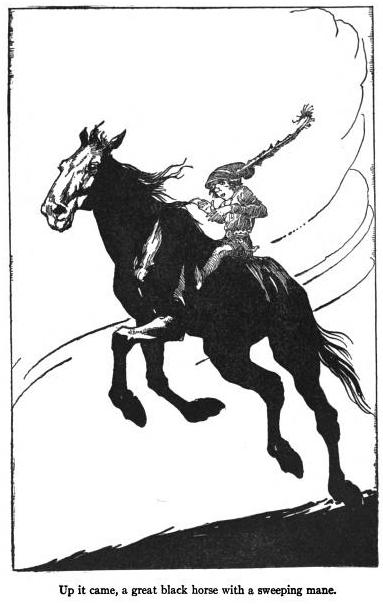
Ireland's fairy world is a hierarchy of great precision—courtly sídhe at the top, solitary craftsmen and keeners below—and then, outside every ranking, running the night roads on its own errands entirely, comes the Púca. The name may share an ancestry with half the sprites of northern Europe—the English Puck, the Welsh pwca, the Norse púki—but the Irish night-goer outgrew all its cousins in strangeness and in stature. The Púca is the shapeshifter: appearing now as a sleek black horse with sulfur-yellow eyes and a mane like falling night; now as a goat, a hare, an eagle, a great black dog; now—rarest and most unsettling—as a lean old man in rags with animal patience in his face. It comes after dark, in the waning of the year above all; it talks—the Púca is a speaking spirit, with a taste for naming men aloud on empty roads; it spoils the last of the blackberries on the first of November and claims the unharvested fields; and it performs, upon the unwary and the deserving alike, the one operation that is its signature in every county that knows it: the ride. The Púca takes people up—onto its back, into the air, over bog and mountain and thorn—and puts them down at dawn, shaken, muddied, and changed. It is Ireland's great enforcer of a law the daylight forgets: that the night, and the leavings, and the untamed remainder of every field and every soul, belong to someone.
The Wild Ride and the Spurs of Courtesy
The classic Púca tale is the abduction-ride, and its finest form is the story of the piper of Dunmore. A half-drunk piper, stumbling home from a wake with his pipes under his arm, is taken up by the Púca in horse-shape—thrown across its back at a bridge and carried at impossible speed across Connacht, protesting all the way. But the ride, mark well, is not malice: the Púca carries him to a feast of the dead and the good folk on a wild hill, bids him play, and the piper plays as he never played living—the company pays him in gold, the women of the sídhe praise him, and the Púca carries him home by dawn, setting him down gently with the instruction to look in his pockets. Gold in one pocket; and in his hands, from that night, the sweetest pipes in Ireland—though when he first tries to boast of it at the priest's house, the pipes will play nothing but the screeching of geese until he confesses the whole tale honestly. The piper of Dunmore is the Púca's character in one story: the terrifying ride that is actually a commission; the roughness that is actually an audition; the gift that works only in honesty.
Yet the tradition keeps the other ledger too. The Púca's rides could be punitive—drunkards who cursed at crossroads, men abroad on nights that belonged to the dead, misers and land-grabbers, found themselves galloped through gorse until sunrise and dumped in bog-holes with their dignity in shreds. The discriminating principle, the old people said, was conduct: the Púca tested. And Ireland preserves, with characteristic delight, the tale of the one man who reversed the test: Brian Boru himself, the high king, is said to have mastered the Púca—bridling it with three hairs of its own tail, riding it to a standstill, and exacting from it two promises: that it would no longer torment Christian men and destroy their property, and that it would never again attack an Irishman except one drunk with malice aforethought. The Púca, being of the honorable dark, has kept the bargain approximately—which is to say, in the manner of all bargains with the dark: to the letter, and no further.
The Blackberries and the Púca's Share
But the deepest of all the Púca's offices has nothing to do with rides. Ask any country child of the old stock why blackberries must not be eaten after the first of November, and the answer comes without hesitation: the Púca has spat on them (or worse, say the blunter parishes). Samhain is the Púca's feast-day; the night the year turns is his lawful property; and every fruit left on the bramble past that date, every sheaf left standing in the field, every apple unpicked, passes at that hour from human ownership to his. The farmers of Leinster—where the creature was taken so seriously that November first was called the Púca's Day in places—left a strip of the harvest standing in the field, the Púca's share, deliberately unreaped; fishermen and orchard-men had their own versions of the toll. The rationalist will note that blackberries after the first frost do in fact turn watery and moldy, and the note is welcome and beside the point—for the custom's meaning lies not in mycology but in jurisprudence: the old agricultural world held, as a matter of settled law, that the human claim on nature's yield expires at the boundary of the season, and that what remains beyond the boundary must be formally ceded to the powers of the wild. The Púca's spit on the November blackberry is the seal on nature's repossession order. Take past the term, and you eat what is no longer yours.
Here stands the whole esoteric doctrine of the creature. The Púca is the personified remainder: the unharvested, the after-hours, the season's leavings and the soul's—everything that diligence did not gather by the appointed dusk. The old world knew that the remainder must not be seized to the last berry: a life gleaned to zero, a field stripped to the hedge-root, a day worked to the final hour, leaves nothing for the dark to own—and the dark, disinherited, comes into the house instead. The Púca's share is the tithe that keeps the wild in its own territory: paid in standing corn, in unpicked fruit, in unplanned hours, in the margin of every enterprise left deliberately unexploited. The households that paid it found the payer's reward—for a Púca honored was, by wide testimony, a helpful neighbor: there are tales, Kildare keeps the best of them, of the little Púca in ragged form threshing a farmer's whole barn by night, week upon week, until the grateful family made him a fine coat—whereupon, like every laboring spirit clothed, he looked at himself, declared himself too grand for threshing, and vanished. Even his departures teach: the wild remainder serves so long as it is left wild; dress it in the house's livery and it must go.
Horse of the Threshold
In its great black horse-form, the Púca joins a fellowship we have ridden with before: the night-horses of the Celtic and northern world that carry mortals across the border of the ordinary—some to drowning, like the water-horse that polices the Scottish fords, some to knowledge, like the piper's mount. The Púca stands apart from its terrible cousin in one decisive clause: it does not kill. In all the breadth of the tradition, the Púca drowns no one, devours no one; it frightens, tests, transports, and returns. It is the tamed-terror of the family—darkness operating under Brian's old treaty—and precisely therefore it could become what the kelpie never could: a teacher. The ride it gives is the initiatory ride: seizure by the untamed at the year's thin turning, the night-journey over every hedge the day-self planted, the dawn deposit at one's own gate with gold in one pocket and humility in the other. Those who fought the ride arrived bruised; those who gripped the mane and let the black thing run arrived changed. The Púca's password, the tales agree, was never courage but civility: it speaks first on the dark road, and the traveler who answers courteously—who treats the sudden horse-shaped night as a fellow-being with rights and a name—receives the rider's version of every fairy blessing: safe passage, true music, and the location of things lost.
November still comes; the brambles still carry their last watery berries past the turn, and in half the townlands of Ireland somebody's grandmother still says, half-smiling and wholly serious, don't eat those—the Púca's been at them. The smile is the modern part; the seriousness is the old treaty holding. Somewhere between the gleaned field and the wild hedge, every life still draws the line the Púca patrols—and the terms have not changed since Brian bridled him with his own tail-hairs. Gather diligently until the appointed dusk. Leave the share standing. Speak civilly to whatever speaks to you on the night road, and if the black horse kneels—the old people were clear on this point—it is often wiser to mount than to run, for the Púca has thrown no honest rider yet, and the pipes play sweeter in the morning for everyone who let the darkness carry them once, all the way to the feast on the hill and home.
Lux Esoterica.
2026.


Comentarios