Am Fear Liath Mòr: The Big Grey Man of Ben Macdui
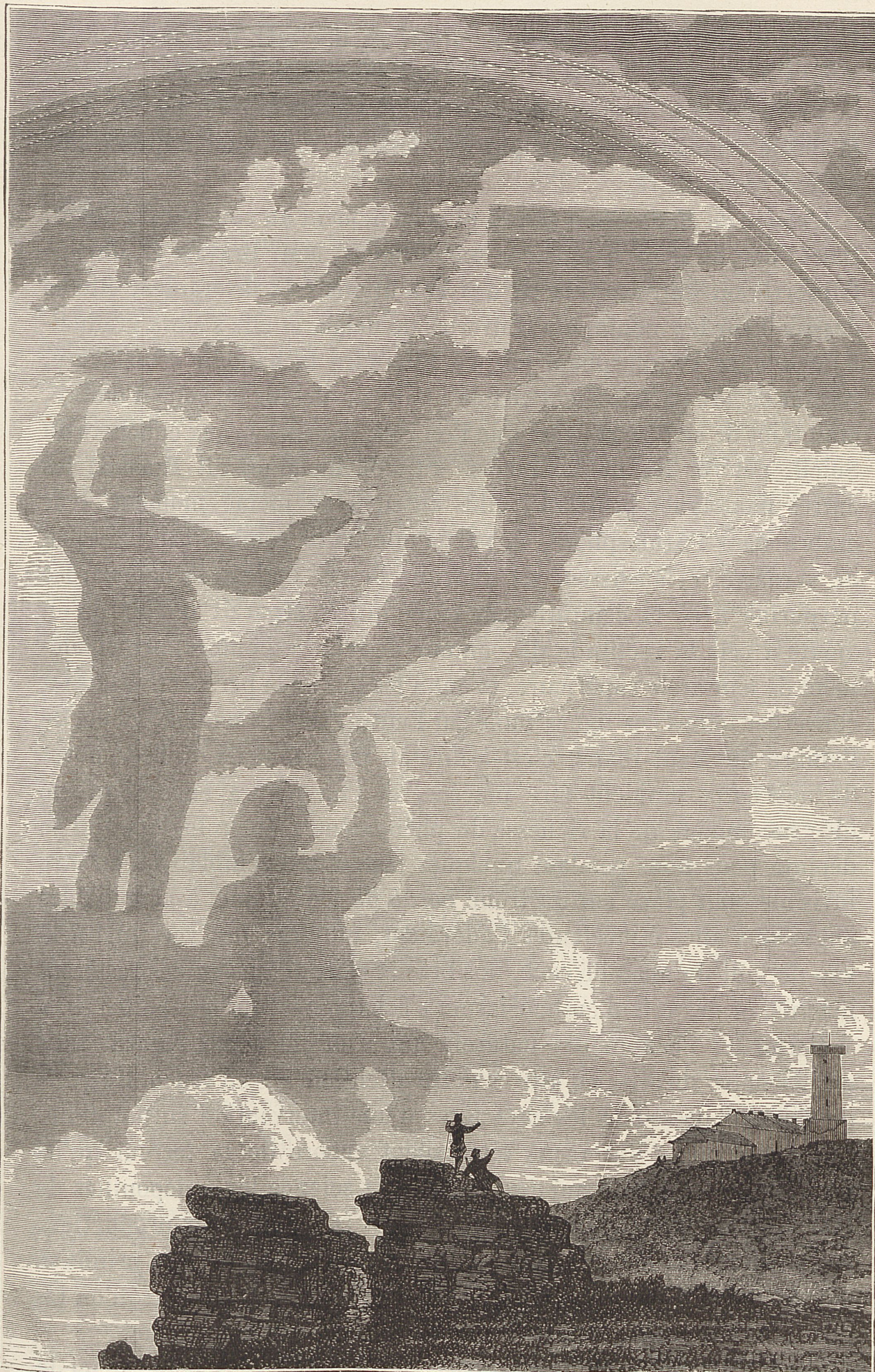
In 1925, at the annual dinner of the Cairngorm Club in Aberdeen, one of the most distinguished mountaineers alive stood up and told a room full of hard-headed Scottish climbers something he had kept mostly to himself for thirty-four years. Professor J. Norman Collie was no teller of tales: a chemist of international reputation, a pioneer of climbing in the Alps, the Himalaya, and the Canadian Rockies, a Fellow of the Royal Society. And what he told them was this. In 1891, descending alone in mist from the summit of Ben Macdui — the second-highest mountain in Scotland, the great brooding dome of the Cairngorm plateau — he began to hear footsteps behind him. Not echoes of his own: for every three or four steps he took, he heard one crunch in the gravel behind him, as of something walking with a stride three times the length of a man's. He stopped; the crunch stopped. He walked on; it resumed, gaining. "I was seized with terror," the old scientist admitted, "and took to my heels, staggering blindly among the boulders for four or five miles nearly down to Rothiemurchus Forest." And he finished with a sentence the newspapers carried around the world: there is something very queer about the top of Ben Macdui, and I will not go back there again by myself.
The Highlanders of Speyside and Deeside could have told him. The mountain has a tenant, and the Gaelic name for him was old before Collie was born: Am Fear Liath Mòr — the Big Grey Man.
The Presence on the Plateau
The Grey Man's dossier is unlike that of any other being in British folklore, because it is written largely by mountaineers — laconic, weather-beaten witnesses with reputations to lose — and because it is a dossier less of sightings than of experiences. The pattern repeats with uncanny consistency. A walker is alone, or nearly so, on the high Macdui plateau — a sub-arctic tableland of pink granite and gravel, the loneliest ground in Britain, where the mist can erase the world in a minute. First come the footsteps: the slow, giant crunch-crunch keeping pace behind, stopping when the walker stops. Then, sometimes, the sensation — described again and again in the same helpless words — of a presence: something vast, close, and attentive, and with it a fear out of all proportion to anything seen, a panic that seasoned mountaineers, men who had faced avalanche and storm with level pulses, describe as an irresistible command to run. During the Second World War, Peter Densham — a rescue worker whose job was recovering crashed airmen from these very summits, a man professionally acquainted with the mountain's horrors — heard the crunching and felt the presence near the summit cairn, and found himself sprinting toward the cliff-edge of Lurcher's Crag, fighting his own legs as though they belonged to someone else. "Tell me," he said afterward, "that I was running away from nothing."
Actual sightings are rarer, and stranger. A big grey figure, far taller than a man — ten feet, twenty — seen striding through mist or standing between the walker and the sky; a shape that gives the impression, several accounts agree, of waiting. Out of such reports the twentieth century assembled its Grey Man: Scotland's answer to the yeti, the newspapers said. But the older stratum is subtler. The Gaelic tradition of the region did not describe an ape or a giant so much as a power — the spirit of the high place itself, grey as its granite and its weather, which does not want you there past a certain hour, and lets you know.
The Shadow That Explains, and Doesn't
The rational accounting was proposed early, and it is genuinely beautiful. The mountains of the world produce, in exactly the Grey Man's conditions, one of the most unnerving optical wonders in nature: the Brocken spectre — named for the haunted summit of the German Harz where it was first made famous. When the sun stands low behind a climber and mist fills the air before him, his own shadow is cast onto the fog: enormous, grey, strangely three-dimensional, striding when he strides, halting when he halts, often wearing a ring of rainbow light about its head. Men have been terrified by their own magnified selves on mountains for as long as records exist. Add the plateau's other tricks — the way mist plays tempo games with sound, so that gravel crunching underfoot returns delayed and deepened off unseen banks of fog; the infrasound of wind milling over granite, below hearing but not below feeling, which laboratory work has linked to sourceless dread; the sensory starvation of walking hours in a grey void, in which the brain, denied a world, begins to furnish one — and science can assemble a very respectable Grey Man from parts. The "presence" itself is known to the literature of extremity: polar explorers, solo sailors, and stressed mountaineers report the sensed companion — the third man who walks beside the exhausted — often benign, occasionally dreadful.
And yet the file will not quite close, and even the debunkers say so with a certain respect. The Brocken spectre requires sun behind and mist before; many of the classic encounters occurred in flat, sunless murk, or clear darkness. The footsteps that pace a walker — one stride to his three, in contact with gravel — fit an echo poorly and a shadow not at all. And the panic: those who have felt it insist, with the stubbornness of men describing a taste, that it was not like fear of the unknown. It was like being told to leave. Norman Collie, who as a Fellow of the Royal Society knew everything his era knew about optics and acoustics, weighed all of it — and never went back alone.
It is worth saying that the Cairngorms sit in the oldest haunted landscape in Scotland — this is the country of the Cailleach, the blue-faced winter hag who shaped these very mountains and pastures her deer on their high ground. Some folklorists read the Grey Man as her kin or her successor: the genius of the summit, the old ownership of the high places, surviving every change of theology below the snowline. Mountains, in every tradition on earth, have owners. Sinai smokes; Olympus thunders; Kailash may not be climbed. Ben Macdui merely walks behind you in the mist, which is the Scottish way of saying the same thing.
An Esoteric Reading
Read with the inner eye, the Big Grey Man is the guardian of the summit in its purest surviving form — and the tradition's mechanics are a whole doctrine of the sacred. Notice what the Grey Man does not do. He does not attack; no one, in a century and a half of reports, has been touched. He does not appear at the mountain's foot, among the forests and the human paths. He manifests only at the top, only in the blinding grey, only to the solitary — and his single instrument is a fear that arrives from nowhere and says one word: down. This is precisely what the old traditions meant by the guardian of the threshold: the power stationed at the boundary of the holy, whose office is not to harm the pilgrim but to test his readiness — and to turn back, by terror if need be, those who have wandered up casually, alone, unprepared, into a place that is not for casual visiting. The summit in every symbolic language is the place of vision, the meeting-ground with what is higher; and every language of the spirit agrees that the approach to such places has a doorkeeper, and that the doorkeeper's face is fear.
And the skeptic's explanation, far from dissolving the teaching, completes it — for what is the Brocken spectre? The climber's own shadow, thrown huge upon the mist, crowned with light, striding when he strides. The thing that meets you at the top of the mountain, science and mysticism agree for once, is yourself — magnified, grey, inescapable, wearing a halo you did not earn yet. The unprepared soul meets its own shadow at altitude and is rightly terrified; the prepared one bows to the doorkeeper and passes. Perhaps that is why the mountain's warning falls so heavily on the solitary: the shadow is largest when nothing human stands beside you to give it scale. The old Gaels, who sent no one to the high shielings alone, and Professor Collie, who would not go back by himself, arrived at the same rule from opposite ends of the world: what waits on the summit is real, whatever it is made of — and the mountain will tell you, in crunching gravel three strides to your one, whether this is your day to meet it. If the answer is no, there is no shame in what Collie did. Some knowledge begins as four miles of running, and matures, over thirty-four years, into the honest sentence that there is something very queer about the top — and that one does not go there casually, or alone, or unannounced.
Lux Esoterica.
2026.


Comentarios