La Patasola: The One-Legged Terror of the Colombian Forests
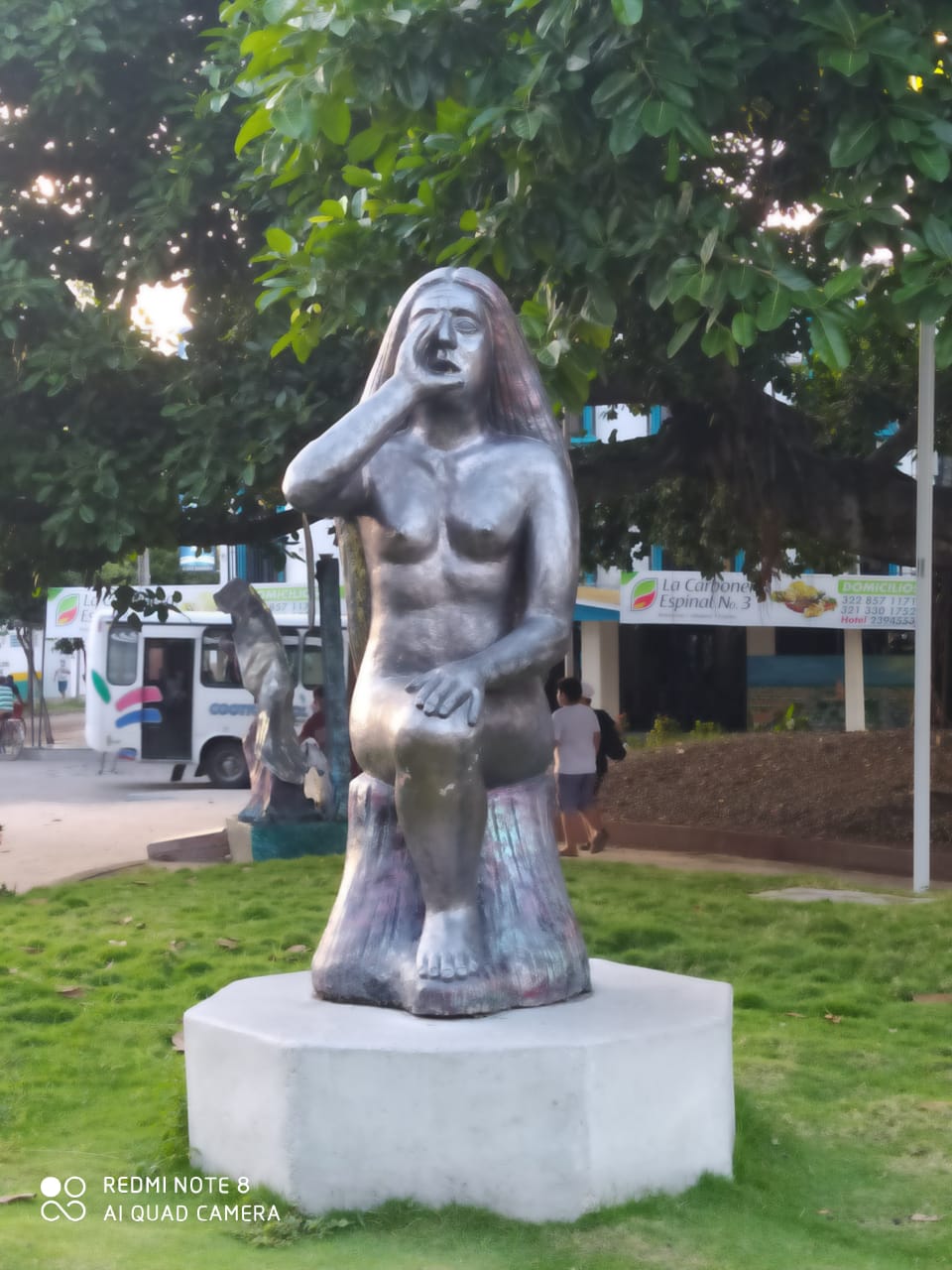
The men who worked the edges of the Colombian wilderness — the woodcutters, the mule-drivers, the rubber-tappers and hunters camped for weeks beyond the last farms of the Andes and the upper Amazon — knew that the most dangerous sound in the forest was not the jaguar's cough. It was a woman's voice. Far off among the trees at night, weeping; or singing, low and sweet; or calling — help me, I am lost, I am alone. A camp of lonely men, months from their wives, would go quiet around the fire. Some remembered the stories. Some — always — did not, and one of the forgetful would take a torch and go, and the voice would recede as he advanced, deeper and deeper into the dark that has no paths, always a little farther, always almost there. And when at last he reached her — a beautiful woman, dark-haired, half-turned away in the gloom — she would turn the rest of the way around.
What stood before him then, the tales agree, was on one leg. A single leg, ending the body's center-line like a tree trunk — and above it a face no longer beautiful at all: bulging eyes lit like coals, a hooked nose, a lipless mouth crowded with feline fangs, and hair like a torrent of black moss. La Patasola — "single-foot," the one-legged one — the great female terror of the Colombian montes, who lures men from their camps by their loneliness, and drinks them by their blood, and leaves the forest, by morning, exactly as trackless as it was.
The Leg That Was Taken
Every dark spirit of the Latin American forests carries an origin story like a concealed wound, and La Patasola's is among the cruelest — a story not of magic, but of a machete. She was a woman, the tellings begin: beautiful, married, a mother in most versions — and unfaithful. Her husband caught her with another man — in the oldest rural tellings, with the patrón, the landowner, which gives the tale an edge of class rage it has never lost — and in his fury he swung at her with his machete, or his axe, and took off her leg at the thigh. She died of it — in the deep versions, bleeding in the forest where she had fled — and the forest, which receives all the region's spilled blood and grief, took her in and remade her: one-legged forever, undying, and turned wholly against the kind of creature that had loved her, betrayed her, judged her, and maimed her. Which is to say: against men.
Note — as the tale itself insists on noting — who is punished, and how much, and for what. The lover, in most tellings, dies quickly by the same machete; the husband walks away into anonymity, unpursued by any curse; and the woman receives eternity — monstrous, mutilated, and alone. She joins that sorrowful sisterhood of Latin American night-women whose sins were loved into them and then avenged upon them alone: the weeping Llorona of the rivers, and the flame-headed Headless Mule of Brazil, that other woman transformed for a shared sin no man ever burned for. Folklore is often the countryside's honest ledger of its own injustices, kept in monsters where it could not be kept in courts.
And yet — this is the strangest and most Colombian turn of her legend — La Patasola is also, in a whole line of tellings, a guardian. In the versions kept by hunters and loggers, she is the fierce mother of the wild places: the protector of game animals, the scourge of those who cut too much, hunt too much, take too much. She rides the leading edge of storms into the high forest; she confounds the dogs of hunters who kill for sport; she is called, in some regions, a madre del monte — a mother of the wild — kin to the great backwards-footed Curupira of the Brazilian forests in her office if not her temper. The woman destroyed by the human world became the wilderness's own advocate against it: whom the village casts out, the forest hires.
The Rules of the Single Foot
Her habits, assembled from a hundred campfire testimonies, have the precision of all great folk-dossiers. She hunts at night, and she hunts the edges — not the town, never the town, but the camps, the clearings, the half-made roads: the exact frontier where men are actively taking the forest apart. She announces herself by voice, and the voice is a test with only wrong answers for the wrong-hearted: the lustful hear a seduction, the greedy hear a woman in treasure-worthy distress, and both follow. Her travel is the stuff of nightmare ballistics — on her single foot she moves in vast bounds, faster than a horse through country a horse cannot enter, and men who fled her swore the thump... thump... of the one foot behind them was worse than any galloping. Her cry, heard at a distance on bad nights, is a piece of pure folk-poetry: "¡Soy más que sola!" — "I am more than alone" — loneliness itself announcing its patrol.
The forest itself keeps her weather. Muleteers of the coffee country said the mules knew her first — ears flat, refusing a trail that had been fine at noon — and no arriero worth his salt ever forced a mule past a refusal after dark. Dogs would not bark at her approach, only whine and press to the fire, which the old hands read as the surest sign of all: what silences a hunting dog outranks the jaguar. And on certain nights of storm, when the wind came down the cordillera tearing at the camp tarps, the men would hear the weeping running with the wind, pass overhead, and fade toward the high forest — the Patasola riding her border patrol — and no one went out for firewood until morning.
And she can be survived, for the tradition, as always, armed its listeners. The charms against her are the tools of her own mutilation: show her an axe, a machete — lay it blade-up before you, or grip it and name it — and she recoils from the instrument of her wound, shrieking, and is gone. In other tellings the names of the saints unmake her glamour at a word, or tobacco smoke blown toward the voice reveals the truth of it before a man has taken ten steps. But the deepest defense in every version is the first one: do not follow the voice. Answer it, if you must, from the fire — call the saints' names into the dark, and listen to what answers back. Nothing that means you well, the old woodsmen said, refuses to approach a lit fire in company.
An Esoteric Reading
Read with the inner eye, La Patasola is the returning shape of everything maimed and exiled by judgment — and her anatomy states the doctrine with terrible economy. She stands on one leg because that is what mutilating judgment leaves of a whole person: a being deprived of its balance, its stride, its second point of contact with the earth — and the tale's physics are exact, for what has been so reduced does not thereby become weak. It becomes bounding: unbalanced force moves in leaps, covers impossible country, and pursues with a rhythm — thump, thump — that whole two-legged men cannot outrun. Every household, every community, every heart that has ever amputated some inconvenient part of itself and driven it into the trees should listen for that footfall. What is cut off is not killed. It goes to the wilderness, takes service with everything else that was ever cast out, and comes back at night wearing beauty over its wound, calling from the dark edge of the cleared land in the exact voice its judges most want to hear.
For note whom she can actually take: only those who leave the fire — who abandon the circle of fellowship and light to follow, alone, a desire that flatters them in the dark. Her power is not force but lure; she is fed exclusively by pursuit. And the countercharms are a complete moral instruction. The machete that unmakes her is the truth of her story made visible: the glamour of the returning wound cannot survive the frank display of what was done to it — name the original violence, hold it up blade-bare between you, and the vengeful enchantment collapses into what it always was, a grief. The mystics would say: every haunting loses its teeth the hour its history is told honestly. And her own cry, rightly heard, is not a war-whoop but a confession — I am more than alone — the sound of exiled pain declaring the arithmetic of exile: that loneliness compounds, that what is banished beyond the firelight grows lonelier than alone, and hungrier for company than blood. The old muleteers crossed themselves at the sound. The wiser ones, perhaps, also counted the camp — the fed, the included, the ones within the light — and put another log on the fire, and made the circle one seat wider. For the forests of every country are patrolled by what the settlements maimed and cast out; and the only settlement the single foot has never breached is the one that stopped making exiles.
Lux Esoterica.
2026.


Comentarios