The Alp: The Night Presser of German Folklore
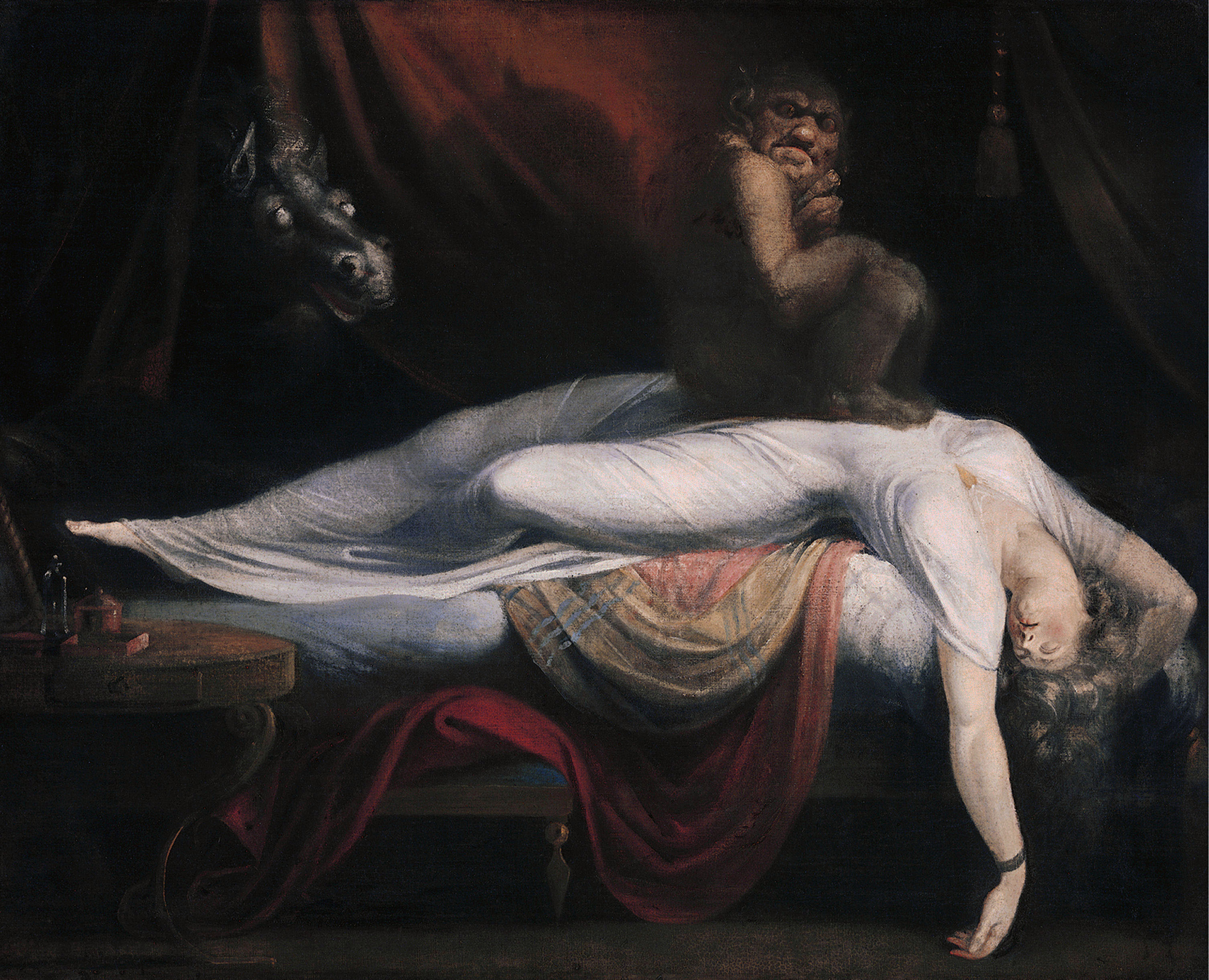
You wake — or think you wake — in the familiar dark of your own room, and you cannot move. Not a finger. Something is sitting on your chest. You cannot see it, or you can: a small, dense, grinning weight, heavier than anything its size has a right to be, pressing the breath out of you with the patience of a millstone. You try to cry out; your voice has been taken with your limbs. The pressure builds until the room swims — and then it is gone, all at once, like a knot cut, and you sit up gasping in an empty room with the door still locked and your heart going like a drum.
Every people on earth knows this visitor, because every human nervous system carries the door he comes through. Medicine, in our era, calls the experience sleep paralysis. The Germans of the long centuries before had a more personal name for the thing on the chest: the Alp — and around him they built one of the richest and strangest bodies of night-lore in Europe: the lore of the Alpdruck, the "elf-pressure," the nightmare not as a bad dream but as a being with habits, weaknesses, a wardrobe, and an address.
The Weight and the Ways In
The Alp of the traditions is small — dwarfish, compact, often described as wearing a broad hat or hood — and his name betrays his lineage, for Alp is simply the old word "elf," soured over centuries from the bright folk of the meadows into a single malignant office. He is usually male, in contrast to his sister-shape the Mahr or Mare — the pressing she-spirit whose name still rides inside the English word "nightmare," and whose Slavic cousin, the mora, lends her syllable to the Kikimora who troubles Russian sleep from behind the wall. Whatever the gender, the method is the same everywhere: the visitor comes at the dead hour, settles upon the sleeper's breast, and presses — and the old accounts render the sensation with a precision that startles anyone who has felt it: the waking that is not waking, the total paralysis, the certainty of a presence, the suffocating weight, the terror beyond all proportion.
What makes the German lore so rich is its engineering. The Alp, the tradition insists, cannot be locked out, because he does not use doors as doors. He comes through the keyhole, the knothole, the gap under the eaves — any smallest breach in the house's skin — flowing through as mist, or entering in the shape of a cat, a pig, a moth. (The old Germans called some moths Alp outright, and the butterfly fluttering into the bedroom at dusk was watched with a certain reserve.) He may be a spirit outright; but in many tellings he is the night-self of a living person — a neighbor, even a family member, whose soul slips out in sleep, sometimes without its owner's knowledge, and goes pressing. A witch might send her Alp deliberately against an enemy; but there are sadder tales of people who were Alps unawares — who woke each morning heavy and unrested, and learned only by village detective-work that their sleeping self had been sitting on the chests of others, as innocent and as guilty as the Rokurokubi of Japan, whose neck wanders the dark while the woman sleeps blameless on her pillow. The night-self, the old lore keeps discovering on every continent, is not always on speaking terms with the day.
The Tarnkappe: The Monster's One Treasure
And then there is the detail that makes the Alp unique among the world's night-pressers, the detail every child of the old villages knew: the cap. The Alp wears a Tarnkappe — a hood or little hat of concealment, cousin to the famous cloak of the hero-legends — and in it resides his power and his invisibility. He is vain of it and helpless without it. If, in the struggle, the sleeper or a watcher can knock or snatch the cap from the creature's head, the whole balance of the night reverses on the instant: the terrible presser becomes a small, frantic, pleading thing, begging for its property back — and it will pay any ransom: reveal its name, swear to leave the house in peace forever, even (in the greedier tales) fetch treasure. There are stories of an Alp returning night after night, wheedling at the window for its cap like a cat asking in, and of householders driving iron bargains before handing it over. The symbol could not be plainer if it were painted on the wall: the terror of the night rules only while it stays covered. Uncover it — name it, see its face, take its hood — and it shrinks at once to something small enough to bargain with.
Around this central drama the villages deployed a whole science of defenses, half practical, half poetry. Plug the keyhole; stop the knotholes; for the Alp must use the gap and the gap can be filled. Set your shoes at the bedside with the toes pointing toward the door, and the visitor, bound by some deep etiquette of direction, must go back the way they point. Sleep with a broom by the bed or steel under the pillow; lay the pillow crosswise; answer the pressure, if you can find your voice, with an invitation to come back in the morning for coffee — for like many night-things the Alp is bound by an offered appointment, and the thing that must return by daylight, in its own person, to a kitchen smelling of breakfast, is a thing defeated. Morning is the great solvent of all such visitors. They do not survive being seen at eight o'clock.
In 1781 the Swiss-English painter Henry Fuseli hung the whole tradition on a gallery wall: The Nightmare — the sleeping woman flung back across the bed, and on her chest, squatting, chin on fist, the small dense incubus looking out of the canvas directly at us, while the mare's blind head thrusts through the curtain behind. The painting scandalized and mesmerized London, was engraved and pirated across Europe, hung in Freud's waiting room as a print, and remains, two and a half centuries on, the most famous image of a folk-belief ever made. Fuseli painted no allegory; he painted the report — the exact scene ten thousand villages had described for a thousand years — and its power is that anyone who has ever half-woken under the weight recognizes it not as art but as memory.
An Esoteric Reading
Read with the inner eye, the Alp is the great parable of the pressure that visits at the threshold — for note precisely when he has power: neither in waking nor in sleep, but in the sliver between, when the soul stands in the doorway of its own house, half in and half out. All the old traditions mark this hour as both the most dangerous and the most precious of the night: the borderland where the deep mind's contents can walk into the bedroom wearing bodies. What comes then, says the lore, is a weight — and the symbol reads itself: the uncarried burden, the pressed-down grief or guilt or dread that daylight consciousness refuses to lift, comes and lies upon the chest — upon the breath, the very rhythm of spirit — at the one hour when the refuser cannot move. Paralysis before the unfaced thing: the night states the soul's position more honestly than the day ever admits it.
But the German lore, unlike the terror itself, is all remedy, and its remedies are a complete spiritual method. Stop the small gaps — for what presses us enters not by the great doors of life but by the neglected keyholes, the little unattended breaches in the soul's house. Point your shoes toward the door — keep, even in sleep, an orientation, a declared direction of departure for whatever visits. And above all, go for the cap. The night-presser is sovereign only while it remains hooded — anonymous, faceless, unexamined dread — and the moment it is uncovered it stands revealed as small: a specific fear, with a name, negotiable. Every confessor, every honest physician of the soul, knows the transformation the folktale promises — the crushing weight of three in the morning, unhooded by one daylight sentence spoken aloud, dwindling into a manageable, even pitiable thing that can be bargained with across a kitchen table. Invite it to coffee. That is not a joke but the deepest of the old instructions: summon the night's tyrant into the morning's company, insist that it appear by light, in its own person, at your table — and see what is actually there when it arrives, cap in hand, small, and suddenly the one who must ask. The weight on the chest, the grandmothers of the old villages would tell you, has never once survived breakfast.
Lux Esoterica.
2026.


Comentarios