The Menehune: The Little Master Builders of Hawaiian Legend
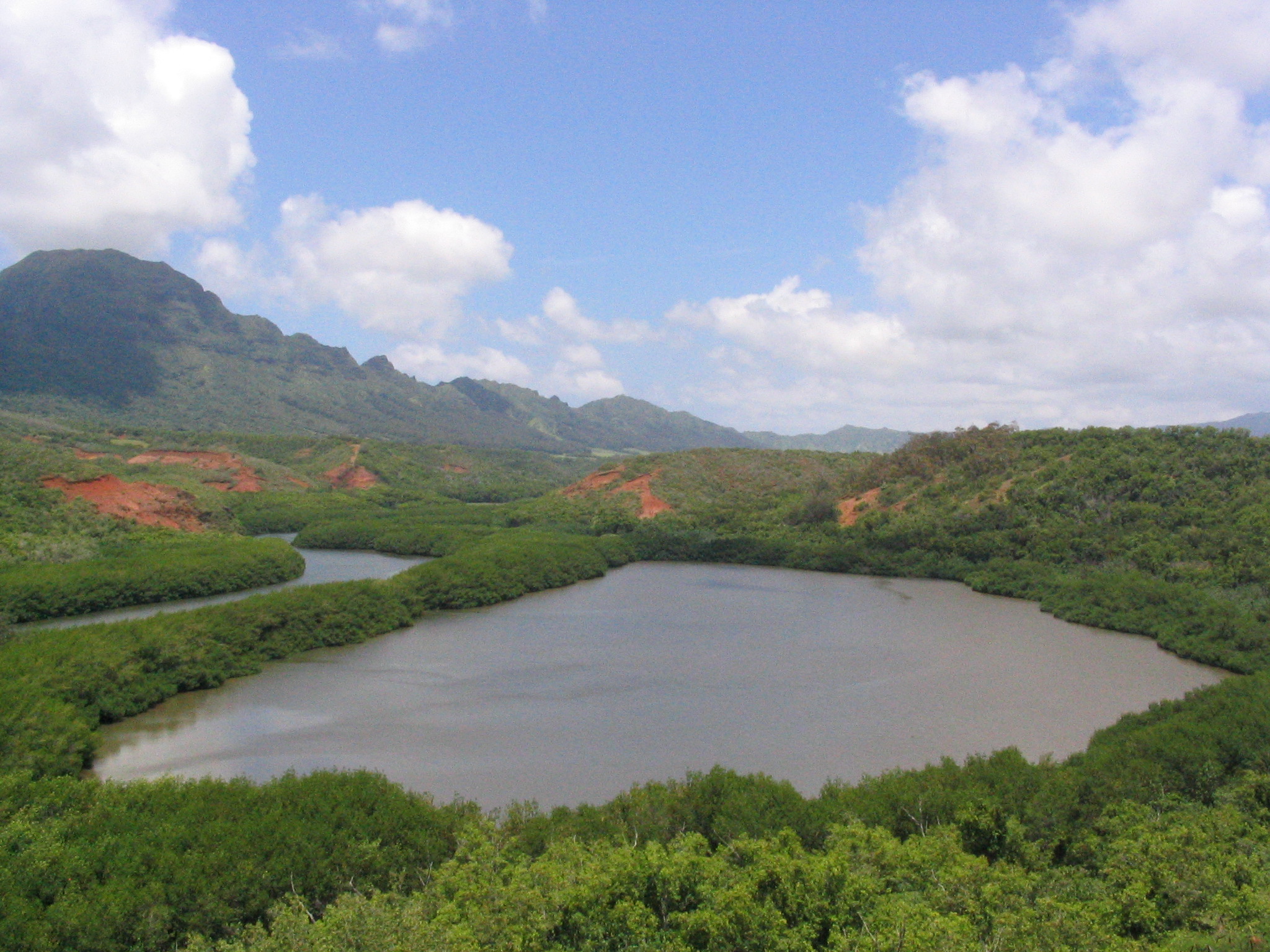
On the island of Kauai, a bend of the Hulēʻia River is closed off by a stone-and-earth wall some nine hundred feet long—the Alekoko fishpond, old beyond the genealogies, its masonry unlike the islands' ordinary work. Ask tradition who built it and the answer is immediate and detailed: the Menehune built it—in a single night. The Menehune are Hawaii's people of the deep past: small—two or three feet tall in the classic accounts—muscular, shaggy-browed, shy of daylight and of scrutiny; they live in the mountain forests, the hidden valleys, the banana groves above the settlements; and they are, before all else, builders: the master engineers of the islands' legendary infrastructure. The Menehune Ditch at Waimea—an aqueduct lined with dressed and fitted stone, a technique essentially unique in old Hawaii—is theirs; temple platforms on several islands are theirs; causeways, fishponds, heiau: wherever the stonework is anomalous, cyclopean, or simply older than memory, the tradition assigns it to the little people, and always with the same two clauses. They work only at night; and the work must be finished in one night—for if dawn breaks before the task is done, the Menehune abandon it forever, and the islands show, say the guides to this day, the unfinished projects to prove it: walls that stop mid-course, ditches that die in the grass, the visible high-water marks of jobs the sunrise interrupted.
The Wage of a Single Shrimp
The Menehune's terms of employment are as fixed as their hours. They do not work for accumulating wages; they work—when they consent to work for humans at all, at the asking of a chief who has approached them rightly—for a feast: the classic price of the Alekoko pond was one shrimp per worker (or, in other tellings, fish and poi in abundance for all), delivered on completion; and the tradition delights in the arithmetic—for the Menehune workforce is never small: they came to the pond, says the Kauai telling, in a double row stretching twenty-five miles from the quarry to the site, passing the stones hand to hand down the whole line, no worker moving from his place, the wall rising through the dark hours to the rhythm of their hum. Their voice is part of their legend: the low murmur and buzz of the Menehune at work—like the surf, like a hive—was heard across the valleys on their building nights; and their festivals, when a great job was done, were loud enough, say the old accounts, to frighten the birds of two islands. But let a human watch them—let the curious climb the ridge to see the famous night-work with their own eyes—and the law of all their kind takes hold: the work stops, the little people melt into the mountain, and the wall stands unfinished until the end of the world. At Alekoko itself, the telling goes, the two royal children for whom the pond was built could not resist spying from the ridge; the Menehune caught the watching eyes, ceased work—the gaps in the old wall were long pointed out—and turned the two spies to the twin pillars of stone that stand on the mountain above the pond.
Who were they? Hawaiian scholarship has circled the question with proper care. The name echoes across Polynesia—manahune in old Tahiti named the common people, the lowest social stratum—and one sober school reads the Menehune as social memory: the descendants, diminished in status and then in stature by the storytelling centuries, of an earlier population of the islands, perhaps the first settlement wave, absorbed or subordinated by later, larger migrations—the "little people" as the earlier people, their real and anomalous stoneworks surviving to demand explanation. An eighteenth-century census of Kauai, the historians note with pleasure, famously counted some sixty-five Menehune as living persons in a mountain valley. However the ethnology settles, the mythology is doing what such mythologies always do: crediting the visible works of a vanished predecessor to a hidden nation that never really left—still up there, above the taro terraces, humming; the same instinct by which old Europe peopled its mounds and its green hollows with earlier races gone under the hill, as the strange arrivals at Woolpit once seemed to confirm in person.
Their society, in the fuller traditions, is complete and engaging. They have districts, chiefs, and crafts—canoe-builders, stone-cutters, dam-setters, each guild with its own valley; their games and sports fill the tellings—cliff-diving, sledding, spinning-tops, their laughter audible from the ridges; their diet is bananas, fish, and the shrimp of their wages; and their dealings with the large Hawaiians ran from patronage to marriage—the genealogies of more than one Kauai family, the old people said without embarrassment, carried Menehune blood, and carried with it a talent for stone. Their departure, too, is remembered: when the islands filled and the watching eyes multiplied, a king of the Menehune—so the Kauai telling goes—mustered his whole nation on a night of the full moon and led them away, by rainbow or by sea, to islands no ship has found; the census-takers' sixty-five were the families who hid rather than leave. The floating islands of the little people are still sighted from Kauai's north shore on certain evenings—cloudbanks with a architecture to them, gone by full dark—and the tradition keeps, for the emigrants, the door all such traditions keep: they will return, it is said, when the islands are again worth building in by night.
The Esoteric Reading: The One-Night Rule
The Menehune take their seat, of course, in the world assembly of the little night-builders—their Rhenish cousins hammered Cologne's trades until a housewife's peas ended everything, and the family's universal statutes (night work, no watching, modest fixed wages) are by now familiar to the reader. But the Hawaiian masters contribute two clauses found nowhere else in such purity, and both are of the first esoteric importance. The single night: the Menehune do not carry work over. Whatever is undertaken must be completed between dusk and dawn—one darkness, one deed—or abandoned forever at the light. Read inwardly, this is the deep's own law of execution: the works of the unconscious—the leaps of integration, the healings, the creative assemblies that build nine-hundred-foot walls in the psyche—are performed whole, in one darkness: in one night's sleep, one retreat, one submersion; they cannot be resumed by the same magic on a second night, and what dawn interrupts—what the returning daylight mind catches half-built and drags into consciousness for inspection—stays half-built: the islands of every inner life are marked with the beautiful, dead, unfinished ditches of processes examined too early. The corollary is the practical mysticism of the one-night rule: size the task to the darkness—ask of the deep only what one full surrender can complete, and give it the whole night unwatched. And the hand-to-hand line: the Menehune move mountains without anyone leaving his place—twenty-five miles of small workers, each passing the stone one arm's length. It is the most exact image any tradition offers of how the deep actually works: not by heroic transport but by relay—innumerable small agencies, stationary, each doing one hand-off, the great wall rising from the sum of gestures too small to observe. The builder who would work like the Menehune organizes his labor, and his soul, accordingly: everything in place, everything passed along, nothing carried alone the whole way.
The Alekoko wall still stands—silted now, mangrove-grown, on the national registers, its stonework still cited by engineers for the puzzle of its dressed facing, unlike anything else in the islands' pre-contact masonry—and the Menehune Ditch still carries water at Waimea as it has past all memory; the little people, meanwhile, have been merchandised into golf mascots and hotel logos with the cheerful thoroughness the islands apply to all their treasures, and the older Hawaiians smile and let the visitors buy the keychains, the way one lets children play at the edge of something. The tradition's own working terms, meanwhile, remain posted and unchanged for anyone in any century with a wall to raise, a pond to close, or a great work to assemble, whether in island stone or in the quarries of the self: approach the hidden workforce respectfully, through its proper chiefs; feed it honestly—one shrimp per worker, delivered without fail, for the deep works for acknowledgment, not accumulation; give it the whole night, sized to one darkness; and above all, whatever you hear humming in the valley—the surf-murmur of a great work assembling itself in the dark of you—do not climb the ridge to watch. The pillars above Alekoko are the tradition's last word on that clause, standing where the two spies stood, facing the unfinished gap in the wall forever: the monument, in Hawaii as in Cologne, to everything curiosity has ever cost the watched night. The statute of all the hidden helpers, on every island and in every soul, has never needed more than one line: the work is for you; the working is not.
Listen for the humming in the valley; feed the line its shrimp; and sleep while the wall rises.
Lux Esoterica.
2026.


Comentarios