The Stoor Worm: The World-Serpent of Orkney Whose Teeth Became the Islands
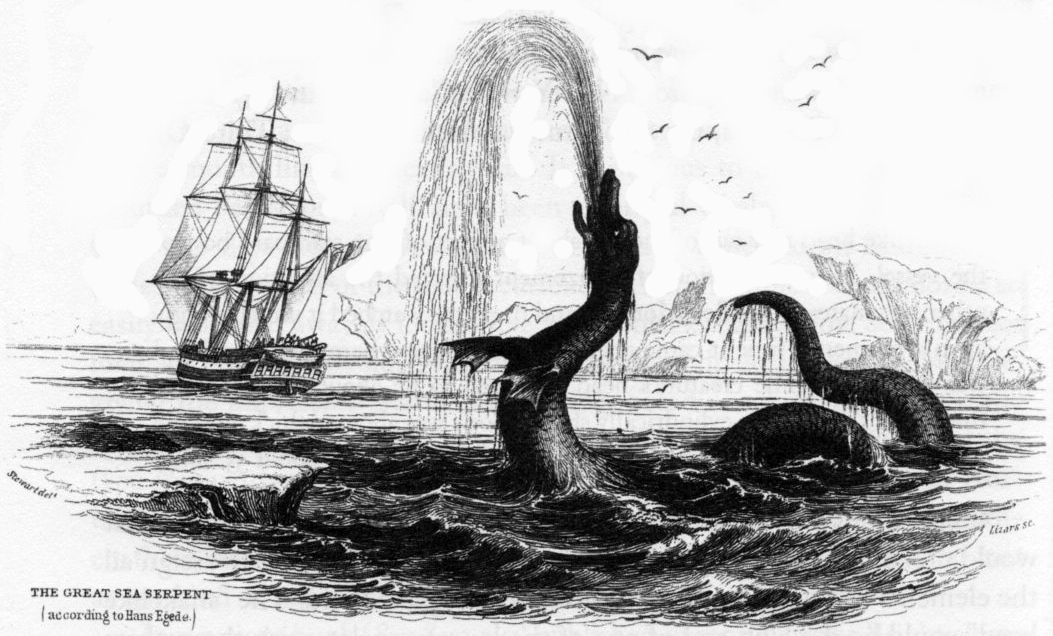
Before Orkney had its islands, says the oldest tale the islanders kept, the sea had a tenant that made the ocean itself seem small. The Stoor Worm—the Great Worm, stoor being the old Norse-descended word for vast—was the first and worst of the nine fearsome things that plague mankind: a sea-serpent so enormous that its body girdled the earth, that the flick of its tail could sweep towns into the sea, and that its breath—venomous, blighting, killing every green thing it touched—poisoned the coasts of whole kingdoms. When it woke hungry, it yawned: nine times it yawned before feeding, and with each yawn the tide poured into its gullet and whole shoals, and worse than shoals, poured with it. It anchored itself off a kingdom's shore and made its terms known through the terror of the people: it would depart only if fed, each Saturday at sunrise, seven virgins, bound and delivered on the rocks. The kingdom complied, weeping; the flower of its daughters went, week by week, down the Worm's throat; and when at last the lot fell on the king's own daughter, the princess Gem-de-lovely, the king in despair proclaimed the oldest of all royal tenders—kingdom, sword, and daughter to whoever could destroy the beast—and sent riders through the lands. This is the tale of Assipattle and the Stoor Worm, the masterpiece of Orkney storytelling, and it ends with the monster's teeth scattered across the northern sea where they stand to this day: for its teeth, falling, became Orkney, Shetland, and the Faroe Islands, and its body, curled in death, became Iceland—whose fires, the tellers finished, lifting one finger, are the Worm's liver burning still.
The Boy in the Ashes
Against the greatest monster of northern legend, the tale sets the least promising hero in all folklore. Assipattle—the name means, roughly, ash-paddler: he who grubs in the ashes—was the seventh son of a farmer, and the family disgrace: idle, dreamy, unwashed, sprawled all day by the fire raking the embers while his brothers worked, telling enormous stories in which he himself was always the hero. His brothers kicked him; his mother despaired of him. Only he, of all the household, listened when travelers spoke of the Worm—listened, and said calmly that he would kill the beast himself, and was laughed out of the room.
The champions of the world answered the king's tender first: six-and-thirty knights came, saw the Worm's head rise on the horizon like an island with eyes, and rode home again by inland roads. The king himself, old as he was, took down the sword of his ancestors—Sickersnapper, the heirloom blade—and vowed to die fighting before his daughter fed the beast. And on the eve of the appointed Saturday, Assipattle rose in the night, stole a kettle from his mother's hearth, took a live peat from the fire, stowed both in his father's fastest boat—having first delayed pursuit by the family's own magic (he knew, from eavesdropping, the words that made his father's horse stand still or fly)—and sailed out in the dark toward the sleeping head.
What follows is the finest single stratagem in northern legend. Assipattle did not attack the Worm. He timed it. He waited off the great jaws for the first yawn of the morning feeding—and let the inrushing tide carry him, boat and kettle and burning peat, down the monster's throat. Down he went, mile after mile through the dim tunnel of the gullet, the water shallowing as it drained through the vast body, until he grounded; and there, by the glow of his one peat, he found what he had come for: the Worm's liver, huge as a hall, oozing its oil. He cut a hole in it, thrust in the burning peat, and blew—blew till he thought his lips would crack—until the liver-oil caught. Then he ran for his boat; and the Worm, waking to the fire in its vitals, retched—and the outrush of water hurled boat and boy back up the gullet and out upon the sea, where king and kingdom stood gathered on the cliffs to watch the end of the world. It was instead the end of the Worm. In its death-agony the creature flung its tongue to the sky and let it fall—tearing out the gap that became the Baltic Sea; its teeth rained from its head as it thrashed—the first fall of teeth became Orkney, the second Shetland, the third the Faroes; and at last it coiled its dying bulk into a knot and stiffened: Iceland, with the liver burning under it forever, as the geysers and volcanoes testify to any doubter. Assipattle married Gem-de-lovely, took the kingdom, and—the tellers never omitted it—was kind to his brothers.
The World-Serpent's Lineage
The islanders were telling, in nursery form, one of the oldest stories mankind owns. The Stoor Worm is Orkney's homely descendant of the Midgard Serpent itself—Jörmungandr, the world-encircling worm of the Norse cosmology that the islands' ancestors carried west, the beast that lies about the earth biting its own tail until the last battle; and behind the Norse image stands the whole ancient family of the chaos-serpent slain to make the world: the dragon of the deeps whose divided body becomes sky and earth in Babylon, the sea-monsters of a dozen coasts, the Leviathan of the psalms. In every branch of the family the doctrine is the same and the Orkney tale states it with perfect clarity: the world is made of the monster. The islands men farm, the seas they sail, the very geography of home, are the settled remains of a terror—chaos not abolished but decomposed into landscape. The Orcadian could stand on his own headland and know it for a tooth—and the medieval navigators who threaded those same tooth-islands westward carried the sense of it in their sailing-prayers, as we have seen in the wonder-voyage of Saint Brendan among the Atlantic isles, where more than one "island" proved to be a sleeping back. No cosmology ever put the matter more honestly: we live on the wreckage of what once devoured us, and the fires under Iceland are the reminder that the decomposition is not quite complete.
The Esoteric Reading: The Peat, the Liver, and the Yawn
As initiation-text, the tale of Assipattle yields its clauses like a well-cut peat-bank. The monster is fed on postponement: seven virgins a Saturday—the kingdom's future, rationed out weekly to buy one more week; every soul knows the arrangement, and knows what it costs and where it ends: at the king's own daughter, the last and central treasure, for the appetite always works inward to the heart. The champions fail by approach: the knights who come to fight the Worm from outside see the size of the thing truly and correctly despair; the outer approach is hopeless, and their retreat is not cowardice but accurate measurement. The hero is the ash-sitter: like his cousin at the glass mountain, Assipattle is the despised seventh, the fire-tender, the teller of impossible stories—the faculty in every household that keeps company with the embers, unfit for the fields, secretly apprenticed (by long idleness at the hearth) to the one element the Worm's bulk cannot answer. The way in is the yawn: the monster cannot be boarded by force, but it opens itself, rhythmically, at its feeding-hours—and the adept's whole art is timing: to ride the intake of the very appetite that devours everything, down its own throat, in a small boat, with a kettle and one live coal. The target is the liver: not the head, not the heart—the liver, the old seat of appetite itself, the oil-store of the creature's own hoarded consumption; the fire is set in the monster's fuel, and the beast is destroyed by the combustion of what it had swallowed. And the weapon is the smallest fire faithfully kept: one peat, carried burning from the home hearth in a kettle, blown upon till the lips crack. Not the ancestral sword—Sickersnapper never touches the Worm—but the ember of the despised fireside, transported intact into the belly of the darkness and fanned there. Every contemplative tradition recognizes the operation, and none has bettered the Orkney statement of it: the devourer of worlds is finished from inside, at its own hour of opening, by a single live coal from home, and by the breath—the long, cracking, deliberate breath—of the one who kept it alight through the passage.
And when it is done, the tale insists, the terror does not vanish: it becomes the map. Teeth to islands, tongue-gap to sea, body to the fire-mountained north: the conquered appetite is not deleted from the soul's geography but settled, solidified into the very ground of the subsequent life—home itself built on the calmed remains, with one warm region always underfoot where the old liver smolders, and honest vapors rising, to remind the islander what the islands are. His skinless cousin the Nuckelavee still rides the same shores in the dark half of the year; but the Worm's own account is closed, paid in geography.
The tale was told in Orkney to the very edge of living memory—the great folklorist Traill Dennison had it whole from the old tellers—and it keeps its home truth for every hearer since. Somewhere off the coast of any life lies a Stoor Worm, fed weekly on the future; the knights of the outer approach have already ridden home; and the only vessel that ever made the passage is still the same: a small boat, a kettle, one live peat from your own fire, and the nerve to wait, right in the jaws' shadow, for the appointed yawn. Keep the coal burning. Time the tide. And blow until your lips crack—the liver of the dark is drier than it looks, and morning found the islands where the teeth came down.
Lux Esoterica.
2026.


Comentarios