The Tikbalang: The Horse-Headed Trickster of Philippine Forests
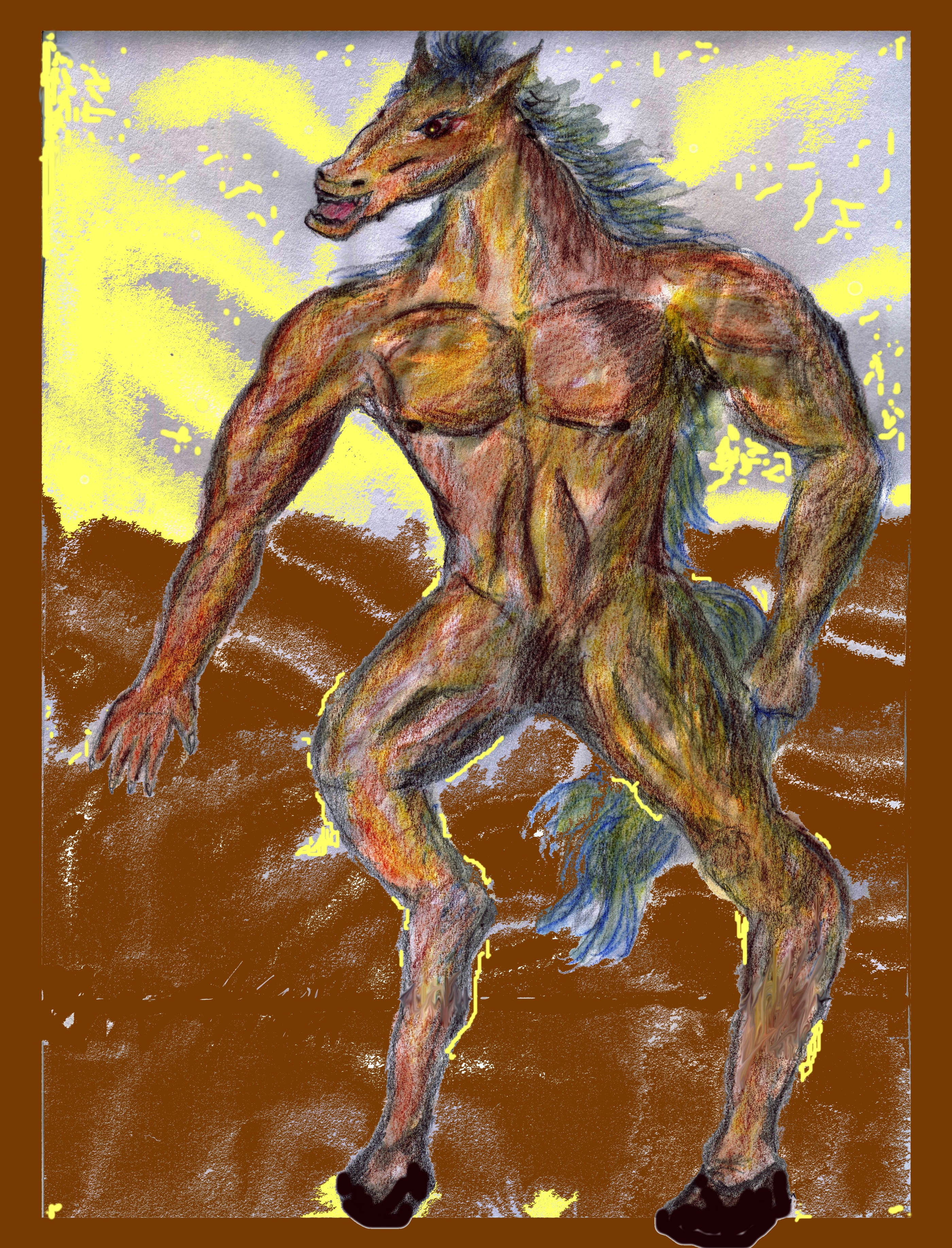
When rain falls out of a sunny sky in the Philippines, the children sing the old verdict at once: somewhere, a tikbalang is getting married. The creature so honored is the archipelago's great forest trickster: the tikbalang—a towering figure, far taller than a man, with the head and hooves of a horse on a man's gaunt body, limbs so long that when it squats its knees rise above its head; a mane of coarse spikes; and a residence every rural Filipino can point to: the great old trees—the balete above all, the strangler fig whose columned, buttressed, root-curtained bulk is the archipelago's standing door to the spirit world—and the bamboo brakes, the banana groves, the foggy mountain trails. Its office, learned by every traveler the hard way, is the family business of forest tricksters everywhere: the tikbalang turns the path. The man who walks under its tree without leave, or cuts through its grove, finds the trail circling—the same stream crossed three times, the same bent tree arriving again and again—and walks, sweating and bewildered, in great loops through country he has known all his life, while somewhere above him, in the branches, something with a long face is quietly enjoying itself. And the remedy, known from Luzon to the southern islands, is the one the reader of these pages could by now prescribe unprompted: turn your shirt inside out, wear it so, and ask aloud, politely, for passage—whereupon the forest, its point made, lets you through.
The Etiquette of the Balete Tree
Around the tikbalang the rural Philippines keeps a working etiquette, and its first phrase is on every grandmother's lips: tabi-tabi po—"excuse me, please; by your leave"—spoken aloud when passing the balete, the termite mounds, the old trees at dusk: the traveler announcing himself to the unseen landholders and asking right-of-way. The tikbalang punishes not travel but trespass without greeting: the loops and circlings fall on those who barge; the courteous pass unlooped. Beyond the path-turning, its repertoire runs to the trickster's classics: it appears as a friend or kinsman walking ahead, leading the follower astray before dissolving into laughter and hoofbeats; it leans down from its tree to blow tobacco smoke in a sleeping woodsman's face; in its darker registers—for the Spanish centuries darkened it, as they darkened all the archipelago's spirits, into a demon of the friars' sermons—it frightens travelers mad or rides them through the canopy all night. And the boldest tradition of all makes it a mount to be mastered: the man who can leap onto a tikbalang's back and hold on—through a bucking flight over the treetops that the tales describe with relish—until the creature exhausts itself, or who can pluck from its spiked mane the three golden hairs hidden there, wins its submission: the tamed tikbalang becomes his servant and protector for life, faithful past death. The forest's trickster, ridden to a standstill, turns steed: the archipelago's own chapter of the universal doctrine that the wild energies loop and mock the timid, flee the violent, and serve the one who can mount and simply endure them — kin, in this, to every uncanny horse of the world's thresholds, from the eight-legged stallion that carries between the worlds to the fatal mounts of the northern fords.
The sun-shower wedding completes the portrait, and deserves its moment. Across the world the "devil's wedding" or "fox's wedding" names the paradox of rain in sunshine; the Philippines gave the wedding to the tikbalang, and the assignment is exact: the creature of the turned path presides over the crossed weather—the moment when two incompatible states of the sky hold at once. The trickster's whole jurisdiction is the overlap: sun-and-rain, path-and-loop, horse-and-man, friend-ahead-who-is-not; and the folk instinct that married him under a sun-shower was the same instinct that put his house in the balete—a tree that is itself two things at once, a fig that is a cage, a plant that began as a guest and became the architecture.
The scholars of the archipelago add a genealogy with teeth. The tikbalang's horse-anatomy poses a famous puzzle—the Philippines had no horses before the Spanish brought them—and the answers illuminate the whole figure: some trace him to the Hindu-Buddhist currents that reached the islands through Java and the trade world, kin to the horse-headed beings of Indian iconography; others hold that he wore other heads before the conquest and took the horse's when the friars' mounts became the islands' new image of alien power—the colonizer's animal grafted onto the native genius of the groves. The friars themselves, meanwhile, put him to work: the mission chronicles deploy the tikbalang as a terror of the unconverted dark, and the folk, in their genius for reversal, kept him anyway—baptized his remedies (the murmured excuse-me acquired a po of Christian courtesy), moved his residence to the very balete trees the new towns dared not clear, and made him, over three colonial centuries, the unbroken tenant of the islands' oldest sovereignty: proof, standing at every crossroads of the rural night, that the groves had never entirely changed hands.
The Esoteric Reading: The Looped Path and the Golden Hairs
Read esoterically, the tikbalang gathers the world's forest-trickster doctrine and adds the archipelago's own clauses. The loop is the lesson: like its Russian and Amazonian colleagues, the horse-headed one does not attack—it circulates the trespasser: the punishment for entering the deep places rudely is not injury but repetition: the same stream, the same bent tree, the same mistake arriving again and again, in forests and in lives; whoever finds his path looping—the same relationship, the same failure, the same season returning—is advised by the whole tradition to suspect not bad luck but an unpaid courtesy somewhere back down the trail. The remedy is inversion and address: the shirt turned inside out—the traveler reversing his own presentation, owning the wrongness by wearing it—and the spoken tabi-tabi po: humility plus articulate greeting; the loop breaks not when the walker tries harder but when he changes state and speaks. The wild serves the one who holds on: the mounting of the tikbalang is the archipelago's initiation-image—the raw looping energy of the forest (of the instincts, of the untamed talent, of the trickster within) cannot be argued with or outrun, but it can be ridden: seized at the moment of encounter and simply stayed on through every buck and treetop plunge, until exhaustion makes it a lifelong ally. And the three golden hairs: hidden in the coarse mane of every rough power are a few strands of gold—the small, specific, precious essence buried in the bristling mass—and the tradition's finest clause is that plucking those, not shaving the mane, wins the creature: mastery of the wild is never wholesale; it is the finding, in the thicket of an energy, of the two or three golden threads that are its heart, and the gentle, decisive taking of them.
The creature keeps company, in the islands' crowded spirit-world, that clarifies its own office by contrast. The kapre, the giant tobacco-smoking tree-dweller, shares its balete but not its mischief—the kapre watches and smokes, a sedentary landlord; the duwende of the mounds handle the small luck of households; the fearsome aswang hunts flesh in the villages by night. Among them the tikbalang alone specializes in the path itself—in orientation, its granting and its confiscation—and the specialization is the key to his person: he is not the islands' terror but their examiner of travelers, testing, at the boundary of every grove, whether the walker still knows how to ask. The mountains of Luzon add the grandest version: on Mount Makiling and the other spirit-mountains, the tikbalang serves the mountain's diwata as herdsman and gatekeeper, turning back the hunters the goddess has not licensed—the trickster revealed, at the highest altitudes, as staff.
The tikbalang rides on, entirely current: it stalks Philippine cinema and comics, lends its name to art collectives and craft beer, and—in the sincerest tribute folklore receives—is still acted on: the tabi-tabi po is still murmured at the balete trees by university graduates who would deny believing in anything, and the great figs stand unfelled in cleared fields across the islands because no crew could be hired to cut them, a form of forest conservation the environmental agencies have learned not to disparage. The counsel travels whole to any life with deep groves in it: greet what you pass, aloud, at the old trees of your world; when the path loops, turn your shirt and speak, rather than walking harder; if the friend leading you onward through the dark begins to seem too conveniently familiar, stop and look at his feet; and should the horse-headed thing itself block your trail some dusk—that is not your worst day but possibly your best one, if your grip is good. Hold on, white-knuckled and laughing if you can, through the treetops. Find, in the coarse bristling mane, the golden hairs. The trickster of the forest has carried, faithfully and forever, every single rider it could not throw.
Lux Esoterica.
2026.


Comments