Norse Mythology in Art: Odin, Thor, Yggdrasil, and the Nine Worlds
The Norse mythological tradition is one of the most psychologically acute bodies of sacred narrative ever produced. Its gods are not perfect beings dwelling in serene immortality — they are beings who know they will die, who have read their own doom in the prophecy of Ragnarök, and who fight nonetheless. Odin sacrifices his eye for wisdom, hangs himself from Yggdrasil for nine nights to win the runes, sends his ravens daily to gather knowledge of a world he knows he cannot save. Thor's hammer Mjolnir protects the sacred boundaries of civilization against the forces of chaos, and Thor himself will die fighting the Midgard Serpent at Ragnarök, taking nine steps before falling. This is not a mythology of triumph. It is a mythology of meaning in the face of certain defeat — the most Northern thing imaginable, and one of the most human.

Yggdrasil, the World Tree — by Friedrich Wilhelm Heine (1886); the cosmic ash whose roots reach into the three wells (Urðarbrunnr, Mímisbrunnr, and Hvergelmir), whose branches support the Nine Worlds, and in whose branches an eagle and a serpent wage eternal conflict

The Tjängvide image stone, Gotland, Sweden (c. 700-900 CE) — a Viking Age picture stone depicting a mounted rider arriving at Valhalla, greeted by a Valkyrie offering a horn; such stones were among the primary visual media of Norse mythological narrative before the written Eddas

Thor wades the rivers while the Æsir ride the Bifröst — illustration by Lorenz Frølich (1895); Thor, too heavy for the rainbow bridge, crosses on foot; the Eddas preserve such paradoxical details with the specificity of genuine mythology rather than the smoothness of literary invention
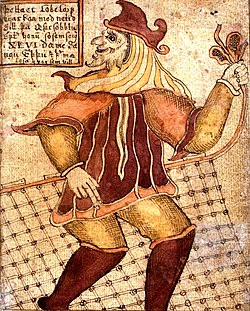
Loki — the trickster god, agent of transformation and destruction; neither fully aligned with the Æsir nor fully opposed, Loki embodies the necessary role of disruption in cosmic order; his eventual binding and release at Ragnarök is the Norse version of the apocalyptic drama
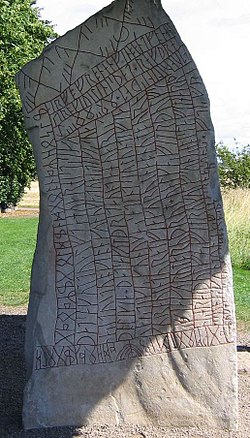
The Rök Runestone, Östergötland, Sweden (c. 800 CE) — bearing the longest runic inscription ever found, with references to heroic deeds, cosmic riddles, and the mythological tradition; scholars have proposed it encodes anxieties about cosmic winter (fimbulvetr) and the approach of Ragnarök

The Snoldelev Stone, Denmark (c. 800-900 CE) — bearing the triskelion and drinking horn symbols associated with the skalds (poets); the three-armed spiral appears throughout Norse and Celtic art as a symbol of the threefold nature of time and the divine

The Wolves Pursuing Sol and Mani — by J.C. Dollman (1909); two wolves (Sköll and Hati) chase the sun and moon across the sky; at Ragnarök, they will catch them; the Norse cosmological drama is written into every sunset, every moment of impermanence


Comentarios