Sacred Animals: Messengers Between the Human and the Divine
No human spiritual tradition has been without its sacred animals. The eagle carries prayers to the sky. The serpent moves between the worlds of the living and the dead. The cow gives milk without being asked and is revered across three continents. The fox speaks in riddles. The bear is initiated in darkness and returns from the cave in spring. Long before writing, before temples, before theology in any formalized sense, human beings recognized in the animals around them qualities of the divine — power, wisdom, regeneration, connection to realms inaccessible to human consciousness — and built their spiritual understanding around those recognitions. The sacred animals of the world's religions are not primitive anthropomorphism or naive confusion of the human and animal. They are a sophisticated taxonomy of divine qualities, expressed through the beings who embody those qualities most completely.

The Gayer-Anderson Cat, British Museum (664-332 BCE) — one of the finest surviving bronze statues of the goddess Bastet in her cat form; in ancient Egypt, cats were sacred to Bastet, goddess of home, fertility, and protection; killing a cat was punishable by death, and cats were mummified and offered as votive gifts to the goddess

Sekhmet, Luxor Temple (c. 1403-1365 BCE) — the lion-headed goddess of war, plague, and healing; the same force that destroys disease also destroys enemies; Sekhmet's priests were the physicians of ancient Egypt, because healing and destructive power were understood as two expressions of the same divine energy

Ganesha, 13th century — the elephant-headed son of Shiva, remover of obstacles; the elephant's combination of great power and gentle intelligence made it the perfect embodiment of the deity who opens paths; Ganesha is invoked before any undertaking in Hindu practice, his elephant wisdom guiding human action toward its proper completion

Nandi the sacred bull, Shiva temple — Nandi is Shiva's vehicle and devotee, the gatekeeper of Kailash; the bull as the embodiment of righteousness (dharma) and devoted service appears in the sacred traditions of both India and ancient Egypt, where the Apis bull was worshipped as a manifestation of Ptah

Inari Ōkami with fox messengers — the Japanese deity of rice, foxes, fertility, industry, and worldly success; the fox (kitsune) serves as Inari's messenger, a liminal creature between the human world and the divine; Inari shrines are the most numerous in Japan, with over 32,000 throughout the country
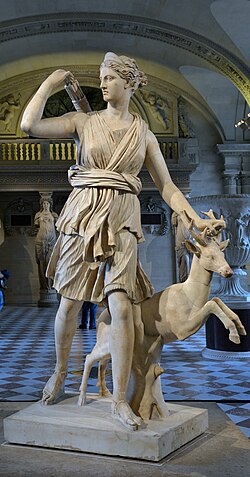
Diana of Versailles (Artemis), Louvre — the goddess of the hunt with her sacred deer; Artemis-Diana is the protector of wild animals as well as their hunter, the paradox of the deity who both kills and protects; her deer, her bears, and her hounds are extensions of her divine nature into the animal world

The Uffington White Horse, Oxfordshire, England (c. 1000 BCE) — a 114-meter figure cut into the chalk hillside, one of the oldest and most mysterious sacred animal images in the British Isles; its stylized form suggests connection to the Celtic horse goddess Epona or to the solar horse that pulls the sun across the sky

Pan mosaic, National Museum of Rome (2nd century CE) — the goat-legged god of wild places, flocks, and panic; Pan embodies the animal nature that civilization cannot fully tame; his sudden appearance in lonely places caused the irrational fear that bears his name — the terror of the divine wildness breaking through the human world
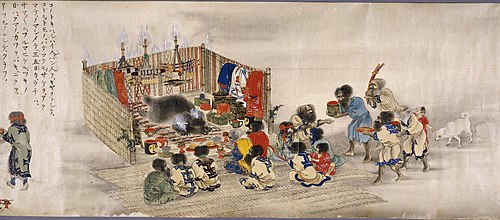
Ainu bear ceremony, Hokkaido, Japan (c. 1870) — the Ainu people regarded the bear (kamuy) as the supreme divine messenger; the bear ceremony (Iyomante) raised a bear cub as a sacred being, then ritually sacrificed it to send its spirit back to the divine realm, where it would speak well of the humans who had cared for it

Kukur Tihar (dog festival), Nepal — during the five-day Tihar festival, dogs are garlanded, given tika (red mark), and offered special food in recognition of their role as the vehicle of Yama, the god of death, and as the guardians of the threshold between the living and the dead

Sumerian sheep plaque, 27th-24th century BCE — the sheep was among the first domesticated animals and among the first sacred ones; in Mesopotamian religion, the king was the 'shepherd' of his people in a direct theological sense, and the health of the royal flock was understood as a cosmic indicator of divine favor


Comentarios