Damascius and the Problems about the First Principles: The Absolute Silence of the One
In the sixth century CE, as the Western world plummeted into the darkness of the transition, the last major scholarch of the Platonic Academy of Athens, Damascius, articulated a vision of reality so radical and "Highly Challenging" that it pushed the Neoplatonic tradition to its absolute limit: Doubts and Solutions Concerning First Principles. Known as the "Last of the Platonists," Damascius did not merely summarize the works of his predecessors; he sought to move beyond the systematic architecture of Proclus to reveal the absolute Silence of the One—a state of "Ontological Nothingness" that precedes and transcends the very category of "Being."
To understand Damascius is to confront the "High Perplexity" of The Ineffable. He taught that while the One (To Hen) is the source of all multiplicity, there exists a principle even more primordial than the One itself: the Inexpressible (Arrhetos). This principle is so far beyond human language and thought that even the word "One" is a "Stain" upon its absolute purity. The Inexpressible is the Barzakh—the boundary that separates the manifest universe from the absolute, unmanifested Source. This is the central "High Perplexity": our highest knowledge of the Divine is the absolute recognition of our own inability to know it.
The central "High Perplexity" of Damascius’s work was the role of "The Problem of the Beginning." He utilized a series of "Highly Perplexing" logical paradoxes to prove that the first principle cannot be described as "one," "source," or even "God." He argued that every name we give to the Absolute is but a "Temporary Mirror" reflecting our own internal limitations. This was the "burstiness" of the Damascian vision: the sudden, catastrophic realization that the "Great Work" is the systematic "Un-knowing" (Agnosia) of all our conceptual categories. He taught that "Gnosis is the termination of Definition."
Damascius’s focus was the Grammar of Doubt. He provided a systematic description of the "Apophatic Path," arguing that the soul must travel through a series of "Intellectual Crosses" where every certain thought is systematically sacrificed. He saw the "Labyrinth of the Mind" as the necessary friction required to reach the state of Absolute Stillness (Hesychia). By recognizing the archetypal nature of our own logical failures, we begin to "Thin the Veil" of our own entrapment. He taught that the "Silence of the Source" is the only true language of the spirit.
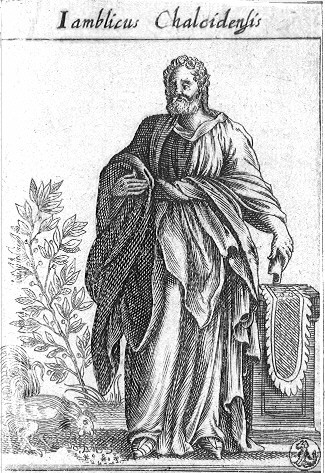
From a scholarly perspective, Damascius was the bridge between the high theurgy of Iamblichus and the later mystical traditions of the Islamic and Christian worlds. He taught that the universe is a "Sacred Mirrors" where the Divine Mind contemplates its own "Non-Existence." The human intellect is the "Most Sensitive Mirror," but its surface has been "clouded" by the smoke of rational certainty and the noise of the digital landscape. By purifying the internal "atmosphere" and seeking the "Unveiling of the Silence," the practitioner becomes a "Crystalline Vessel" for the inexpressible influx.
The "High Perplexity" of the path presented in his work is the focus on "Atmospheric Sovereignty." Damascius warned that the "Secret fire" of nature can only be ignited within a heart that has achieved the state of Absolute Transparency. He called for a life of "Internal Sovereignty," characterized by the study of the primary pulse and the cultivation of a receptive awareness. The "Problems about First Principles" is not a textbook to be learned, but a "State of Being" that must be inhabited. It is the recognition that we are "Musical Beings" navigating a musical universe.
In our modern era, characterized by the "heavy" noise of ideological polarization and the loss of symbolic depth, Damascius offers a radical path to "Ontological Re-Alignment." He reminds us that our true potential lies in our "Ability to Let Go." By reclaiming the sacred nature of our ignorance and seeking the "Return to the One," we begin the Great Work of our own transformation.
To follow the path of Damascius is to accept the challenge of the "Apophatic Quest." It is to recognize that our lives are "Sacred Proportions" played out within the theater of the aeons. The definitions are failing, the paradoxes are rising, and the silence is absolute. The question remains: can you inhabit the darkness that is more than light?
Damascius was the "Sentinel of the Ineffable" who proved that the secrets of the gods are hidden within the absolute silence of the heart. His legacy is the promise that the "Sacred Harmony" is always accessible to the soul that has achieved the necessary degree of "Harmonic Balance." The light is beautiful, the silence is exact, and the return is "Finished and Ended."
Lux Esoterica.
2026.


Comentarios