Francesco Patrizi: The Nova de Universis Philosophia, the Metaphysics of Light, and the Renaissance Hermetic Crusade against Aristotle
The Renaissance Hermetic Crusade
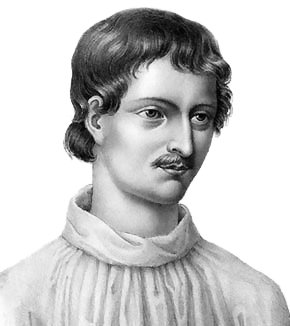
In the twilight of the sixteenth century, as the intellectual landscape of Europe was preparing for the scientific revolution, an Italian philosopher launched a radical, systematic campaign to overthrow the dominant scholastic order. Francesco Patrizi da Cherso (1529 – 1597) was a scholar of extraordinary erudition, holding the chair of Platonic philosophy at the universities of Ferrara and Rome. Patrizi recognized that the academic institutions of his day were paralyzed by their rigid adherence to the natural philosophy of Aristotle, which he regarded as a sterile, materialistic system that alienated the human mind from its divine source. His life's mission was to replace Aristotelianism with a new, universal philosophy rooted in the ancient Hermetic and Platonic traditions.
Patrizi's crusade was not merely an academic dispute; it was a spiritual battle for the soul of Western civilization. He argued that the Aristotelian physics taught in the universities led directly to skepticism, materialism, and the denial of the immortality of the soul. In contrast, he asserted that the ancient wisdom of Hermes Trismegistus, Zoroaster, and Orpheus—which he believed predated and surpassed all Greek philosophy—offered a perfect reconciliation of natural science and Christian revelation. By reviving this prisca theologia (primordial theology), Patrizi sought to construct a comprehensive cosmology that viewed the physical universe as a living temple of light, bridging the infinite gulf between the human intellect and the transcendent Creator.
The Critical Assault on Aristotle
Before Patrizi could build his new philosophical palace, he had to dismantle the foundations of the scholastic academy. He did this in a massive, four-volume critical work titled Discussiones Peripateticae ("Peripatetic Discussions," 1581). In this text, Patrizi combined historical scholarship, philological analysis, and rigorous logical critique to undermine the authority of Aristotle.
Patrizi attacked Aristotle on every front. He demonstrated that many of the works attributed to the Stagirite were of doubtful authenticity, and he highlighted the numerous contradictions within the Aristotelian corpus itself. More fundamentally, Patrizi argued that Aristotle's physics was based on flawed definitions. He rejected the Aristotelian concepts of prime matter, substantial forms, and the division of the cosmos into sublunary and celestial realms. He pointed out that Aristotle's God was merely an indifferent "Unmoved Mover" who was unaware of the creation and incapable of loving it. This deity, Patrizi warned, was incompatible with the Christian concept of a caring, providential Creator. By exposing the logical inconsistencies and spiritual limitations of the scholastic authorities, Patrizi sought to liberate the minds of his contemporaries, preparing them for the reception of a higher, spiritualized science of nature.
The Nova de Universis Philosophia: The New Paradigm
In 1591, Patrizi published his masterwork in Ferrara: the Nova de Universis Philosophia ("The New Philosophy of the Universe"). This monumental work was a complete, systematic exposition of his Hermetic cosmology, structured in four books that traced the emergence of the cosmos from the divine source to its physical manifestations:
- Panaugia (All-Light): This section outlines the metaphysics of light, presenting light as the primary, immaterial mediator between the Creator and the physical creation. It is the physical manifestion of the divine energy that fills all space.
- Panarchia (All-Principle): Here, Patrizi investigates the primary principles of existence, describing the hierarchy of beings that emanate from the One, including the divine intellect, the cosmic soul, and the spiritual forces that govern the celestial spheres.
- Pampsychia (All-Soul): This book describes the animation of the universe. Patrizi rejects the mechanistic view of nature, arguing that the entire cosmos is a living, sentient organism endowed with a cosmic soul that coordinates all movement.
- Panacosmia (All-Cosmos): The final section presents his physical cosmology, detailing the structure of space, the movement of the planets, and the physical principles that govern the sublunary world.
Through this elegant, tripartite and quadripartite structure, Patrizi built a unified theory of reality where the physical laws of nature were treated as manifestations of the divine spirit, offering a path of intellectual ascent for the seeker who studies the cosmic architecture.
The Metaphysics of Light: Space, Light, Heat, and Fluidity
The center of Patrizi's physical and metaphysical system is his revolutionary doctrine of Space and Light. Rejecting the Aristotelian view that space is merely the boundary of a body, Patrizi proposed that space is the first created entity—an infinite, incorporeal, three-dimensional container that exists prior to all material bodies. This infinite space is not empty, but is filled with the divine light (lux) that emanates continuously from the Creator.
From this primary light, Patrizi derived three active physical principles that govern the material universe:
* Calor (Heat): The active, generative force that causes movement, growth, and transformation. It is the physical manifestation of the divine love that warms the cosmos.
* Fluor (Fluidity): The passive, receptive principle of continuity and connectivity, which allows bodies to cohere, flow, and interact. It is the fluid medium that prevents gaps in the universe, ensuring that the cosmos remains a unified, continuous organism.
* Lux (Light): The visible manifestation of these forces, acting as the primary carrier of information and form throughout the infinite space.
These three principles flow from the divine source, organizing the formless matter into the stars, planets, and sublunary elements. In this cosmology, light is both a physical entity that can be measured and analyzed, and a spiritual reality that illuminates the human intellect, demonstrating the absolute unity of natural physics and divine metaphysics.
Reclaiming the Hermetic Revelation
Patrizi's New Philosophy was not built on the observation of nature alone; it was deeply rooted in the recovery of ancient texts. He believed that the Corpus Hermeticum and the Chaldean Oracles contained a primordial, divine revelation given to humanity at the dawn of history, which had been corrupted by the rationalist speculations of the classical Greek philosophers.
In the appendix of the Nova de Universis Philosophia, Patrizi published complete Greek editions and Latin translations of the Hermetic writings and the Zoroastrian fragments, presenting them as the true theological foundations of his system. He argued that these texts should be introduced into the curricula of Christian schools and universities to replace the pagan physics of Aristotle. Patrizi believed that by aligning Christian theology with the Hermetic metaphysics of light, the church could resolve its internal divisions, win over the secular intellectuals, and initiate a global spiritual reformation. This bold proposal represented the high-water mark of the Renaissance Hermetic crusade, asserting that the oldest wisdom of humanity was the only key to the future.
Legacy: The Inquisition and the Twilight of the Renaissance
The reception of Patrizi's New Philosophy was tragic and turbulent. He traveled to Rome to present his book to Pope Gregory XIV, hoping to secure papal approval for his educational reforms. While the Pope was initially supportive, the Roman Inquisition viewed Patrizi's synthesis of Hermeticism and Christian theology with deep suspicion. In 1592, the Nova de Universis Philosophia was placed on the Index of Prohibited Books, and the author was forced to recant several of his cosmological propositions.
Despite these setbacks, Patrizi's ideas exerted a powerful, subterranean influence on the development of early modern science and philosophy. His concept of infinite space was adopted and adapted by thinkers like Pierre Gassendi and Henry More, laying the conceptual groundwork for the Newtonian physics of absolute space. His metaphysics of light anticipated the light-based cosmologies of the seventeenth century and the modern physical understanding of space as a dynamic field. Francesco Patrizi stands as a heroic, transitional figure in the history of esotericism: a philosopher who stood on the boundary between the medieval scholastic past and the scientific future, fighting to preserve the living, spiritual light of Hermes Trismegistus within the emerging physical sciences of the universe.
Lux Esoterica.
2026.


Comentarios