Malkuth: The Kabbalistic Kingdom, the Earthly Shekhinah, and the Gate of the Elements
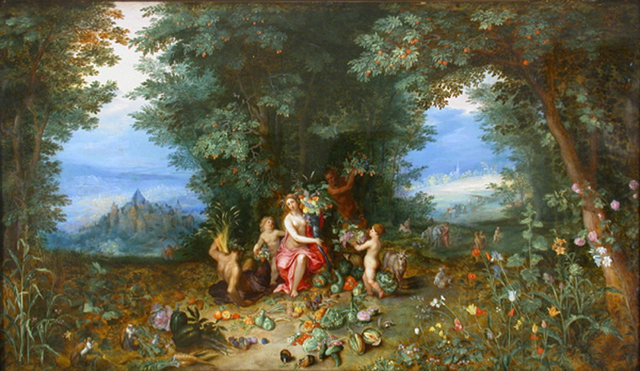
The Tenth Sephirah: The Kingdom of Manifestation
At the lowest point of the Tree of Life, at the foot of the middle pillar of equilibrium, stands the tenth and final Sephirah: Malkuth. Translating from the Hebrew as "Kingdom," Malkuth represents the culmination of the divine emanation. It is the physical universe, the material world, and the concrete reality that we perceive with our physical senses. While the higher Sephiroth exist as realms of pure spirit, mind, and formation, Malkuth is the vessel where all these abstract forces crystallize, assuming solidity, density, and tangible form.
In Kabbalistic philosophy, Malkuth is not seen as separate from the divine, nor is it viewed as an inherently evil or fallen realm. Rather, it is the necessary completion of the cosmic cycle. If the crown of Kether represents the unmanifest seed of will at the top of the Tree, Malkuth is the fully grown tree, the fruit that contains the seed. In this sense, Kabbalists declare that "Kether is in Malkuth, and Malkuth is in Kether, but after another manner." The physical world is the mirror of the divine mind, the container that holds the spiritual light of the macrocosm. Without Malkuth, the higher Sephiroth would remain in a state of eternal potential, unable to witness their own glory in the mirror of form.
The Shekhinah: The Divine Presence in Exile
Crucially, Malkuth is personified in Kabbalah as the Shekhinah—the feminine aspect of the divine presence, the immanent glory of God that dwells within creation. In the mythological narrative of the Zohar, the Shekhinah is the Bride, the Queen who has descended from the higher palaces of the Tree of Life to dwell among her children in the sublunary world.
Due to the fragmentation of human consciousness and the disruption of the cosmic balance, the Shekhinah is described as being in "exile." She is trapped in the dense matter of the physical world, surrounded by the heavy shells of material illusions (klipoth). The exile of the Shekhinah represents the spiritual blindness of humanity, which perceives the physical world as a collection of dead objects, unaware of the divine light that animates them.
The work of the Kabbalist is to facilitate the redemption of the Shekhinah, a process known as Tikkun Olam (the restoration of the world). By performing spiritual practices, ethical actions, and focused visualizations, the practitioner seeks to reunite the Bride (Malkuth/Shekhinah) with the Bridegroom (Tiphereth/the Holy One). This union, known as the Yihud, restores the flow of divine energy through the channels of the Tree, transforming the physical earth back into a transparent temple of the spirit. The Shekhinah is the gate; to find the divine, one does not flee the earth, but descends deeply into the heart of matter to release the sparks of light hidden within the heavy gravity of form.
The Gate of the Elements: Earth, Water, Fire, and Air
Malkuth is also known as the Gate of the Elements (Sha'ar ha-Yesodot), the point where the four primary elements of the sublunary world meet, mix, and solidify. In Kabbalistic cosmology, these four elements correspond to the four letters of the divine name (YHVH):
- Fire (Yod): The active, energetic force that provides the warmth, movement, and transformative power within the material world.
- Air (He): The volatile, expanding medium that acts as the breath of life, connecting the elements and facilitating growth.
- Water (Vav): The fluid, cohesive force that binds the particles of matter together, providing attraction, moisture, and form.
- Earth (He final): The passive, solid container that receives the other three elements, providing solidity, structure, and weight.
In Malkuth, these elements are not present in their pure, celestial states; they are mixed and compacted, forming the heavy, physical substances of nature. The earth we walk upon, the water we drink, the air we breathe, and the fire that burns are all manifestations of this elemental play. The body of the human being is a miniature version of this gate, a structure where the bones represent the earth, the blood represents the water, the breath represents the air, and the metabolic heat represents the fire.
By learning to balance these elements within their own constitution, the practitioner purifies the physical vessel. They transform the heavy, opaque matter of their physical body into a transparent lens, capable of receiving and reflecting the higher light of the Sephiroth. Malkuth is thus revealed as the laboratory of the elements, the threshold where the heavy metals of earthly experience are prepared for the alchemical transmutation of the soul.
The Spheres of Illusion: The Klipoth and the Shadow of the Kingdom
Because Malkuth is the furthest point from the divine source of light, it is the realm where the shadows are longest. In Kabbalistic cosmology, surrounding the outer boundaries of Malkuth are the Klipoth—the "shells" or "husks" of spiritual waste. These shells are the remnants of unbalanced creations, forces of severity that have become detached from the central pillar of mercy.
The Klipoth act as spiritual parasites, feeding on the sparks of light that fall from the higher worlds. They create the illusions of the physical world, tempting humanity to believe that material wealth, sensory pleasure, and personal power are the ultimate realities. Under the influence of the shells, the mind becomes heavy and dark, trapped in the belief that the physical world is the only existence.
To navigate Malkuth safely, the seeker must learn to distinguish between the holy sparks of the Shekhinah and the deceptive shells of the Klipoth. This requires a sharp sword of discernment and a firm anchor in the middle pillar of the Tree. The practitioner must learn to look through the heavy gravity of material illusions, recognizing that the physical objects around them are temporary shells holding the eternal fire of the spirit. The path of ascent begins not by rejecting Malkuth, but by conquering its illusions, reclaiming the sparks of light from the hands of the shells, and offering them back to the divine source.
The Alchemical Ascent: From Malkuth to Yesod
The transition from Malkuth to the higher Sephiroth is represented as an ascent along the 32nd Path of the Tree of Life, which connects the Kingdom to the astral foundation of Yesod. This path is associated with the Hebrew letter Tau and the planet Saturn, representing the threshold of limitation and the beginning of the spiritual return.
To cross this threshold, the practitioner must undergo a process of spiritual awakening, transitioning from physical awareness to astral perception. They must realize that the solid, physical objects of Malkuth are merely the final precipitation of subtle energies that originate in the higher worlds. The physical body must be recognized as the garment of the soul, a temporary suit of armor worn for the duration of the earthly journey.
When this realization is achieved, the heavy gravity of Malkuth loses its hold on the mind. The seeker begins to perceive the subtle, fluid currents of the astral plane, rising along the central pillar to the lunar light of Yesod. The Kingdom is not left behind; it is elevated, transformed into a base from which the soul can launch its flight back to the celestial heights. Malkuth is the foundation of the master, the stable stone upon which the temple of the spirit is built.
Lux Esoterica.
2026.


Comentarios