Nicholas of Cusa and the Coincidence of Opposites: The Geometry of the Infinite
In the 15th century, a German cardinal, mathematician, and philosopher named Nicholas of Cusa (Cusanus) articulated a vision of reality that would prefigure modern cosmology while providing a profound metaphysical anchor for Western esotericism. A student of the Neoplatonic tradition and a bridge between the Middle Ages and the Renaissance, Cusanus introduced the world to the principle of the Coincidentia Oppositorum—the "Coincidence of Opposites."
To understand the Coincidence of Opposites is to move beyond the limitations of linear, Aristotelian logic. Cusanus taught that while our rational minds operate through the law of non-contradiction (something cannot be both A and not-A at the same time), the absolute reality of the Divine Mind transcends these divisions. In the infinite, all opposites meet and harmonize. The center is everywhere, and the circumference is nowhere.
The "High Perplexity" of Cusanus’s work is his use of Mathematical Metaphors to describe the relationship between the finite and the infinite. He famously utilized the image of a circle whose radius is infinitely long. In such a circle, the curved line of the circumference becomes identical to a straight line. Here, the "Straight" and the "Curved"—absolute opposites in the finite world—coincide in the infinite. This was not a mere geometric exercise, but a "Syntax of the Spirit," a way of training the intellect to perceive the unity underlying the multiplicity of the world.
Cusanus’s masterpiece, De Docta Ignorantia (On Learned Ignorance), introduces another "High Perplexity": the idea that our highest knowledge of God is the realization that He is ultimately unknowable. Learned Ignorance is not a lack of information, but a conscious, "vibrational elevation" of the mind. By acknowledging the infinite gap between our finite concepts and the absolute light of the source, we enter a state of "Apophatic Gnosis." We learn to see the Divine not as an object, but as the "Non-Other" (Non-Aliud) that is more intimate to us than we are to ourselves.
The "burstiness" of the Cusanian path is the moment of Intellectual Intuition. When the mind has exhausted all its rational categories, it experiences a sudden, sharp "Unveiling" where the contradictions of existence are seen as necessary facets of a single, radiant truth. Cusanus taught that the universe is an "Explication" (Explicatio) of the Divine Unity. Every individual being is a unique "contraction" of the infinite, a "Small God" who contains the whole within its own specific perspective.
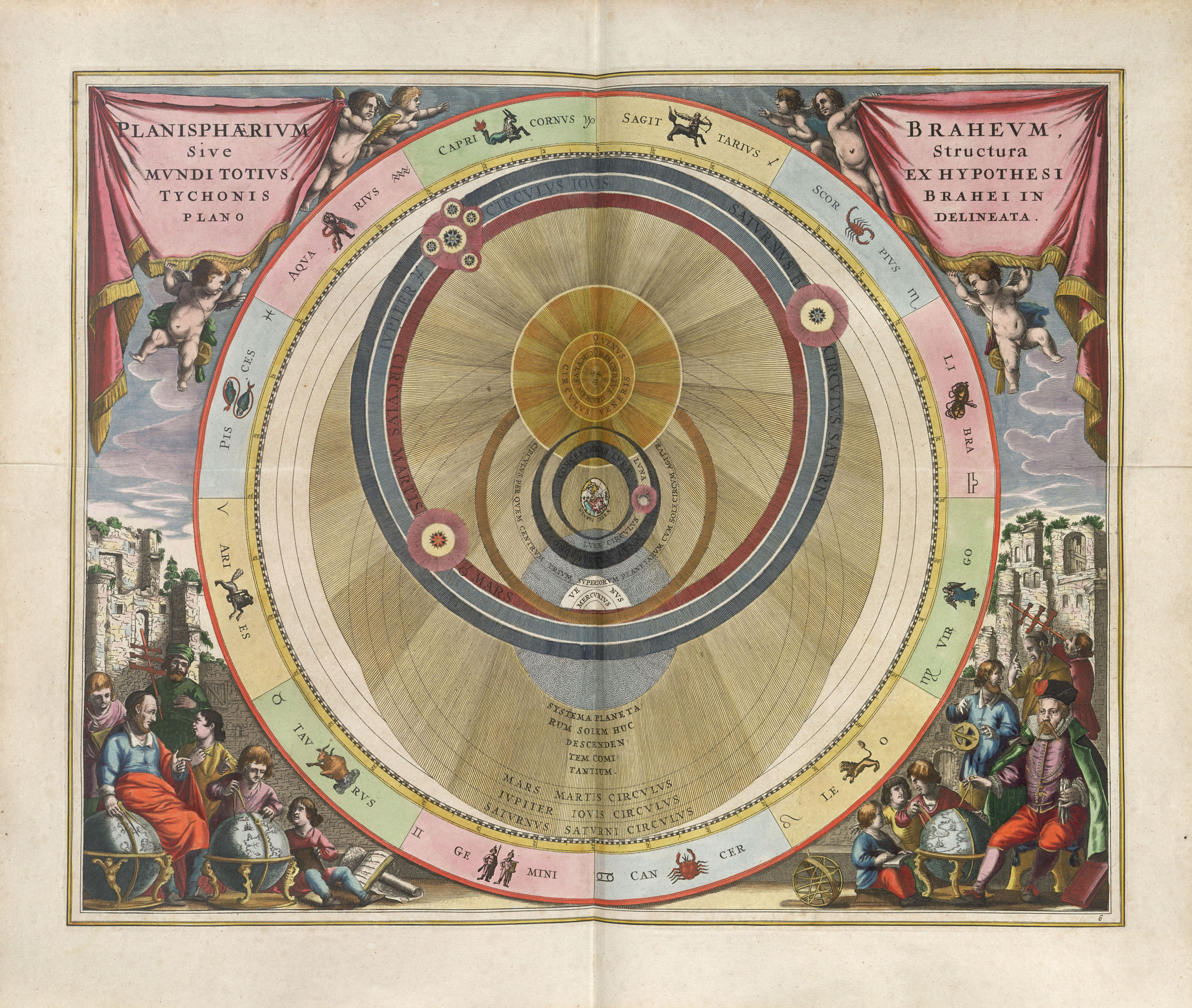
From a scholarly perspective, Nicholas of Cusa was the first to suggest that the earth is not the stationary center of the universe, but a "moving star" among others. His cosmology was built on the principle of Universal Relativity—the idea that every point in the cosmos is a potential center. He saw the universe as a "Living Organism" whose harmony is maintained by the constant interplay of the "Absolute Maximum" and the "Contracted Minimum."
The "High Perplexity" of the Coincidence of Opposites is its Healing Power. It suggests that the conflicts we experience in our psychological and social lives are the result of our "fragmented vision." When we view the world through the lens of binary opposition (good vs. evil, self vs. other, spirit vs. matter), we are trapped in the "Wall of Paradise." By striving for the Cusanian synthesis, we begin to "dismantle the wall," recognizing that every "opposite" is a required counter-weight for the equilibrium of the whole.
In our modern era, characterized by extreme polarization and the "heavy" noise of ideological certainty, Nicholas of Cusa offers a radical path to "Ontological Humility." He reminds us that the truth is always larger than our definitions. To inhabit the Coincidence of Opposites is to live in a state of "Dynamic Tension," accepting the complexity of existence while remaining anchored in the absolute unity of the source.
To follow the path of Cusanus is to accept the challenge of the "Mathematical Quest." It is to recognize that our lives are a "Geometry of the Soul," and that our task is to find the point where our straight-line actions coincide with the curved-line of the Divine Will. The infinite is not a distant goal; it is the "Context of our Being." Nicholas of Cusa showed us that by embracing our own "ignorance," we become the very light we have been seeking.
Lux Esoterica.
2026.


Comentarios