Olympiodorus the Younger: The Last Sentinel of the Golden Chain
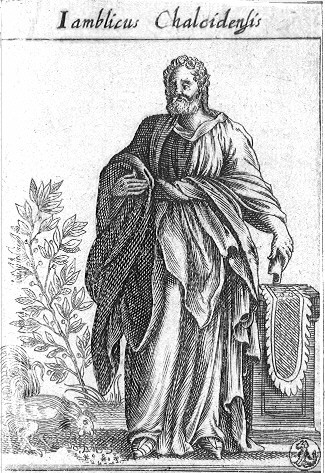
In the sixth century CE, as the classical world of antiquity drew its final, ragged breaths, a singular figure stood at the threshold of a new and uncertain era: Olympiodorus the Younger. The last major pagan philosopher to head the Neoplatonic school in Alexandria, Olympiodorus was the final link in the "Golden Chain" (Seira)—the unbroken succession of sages stretching back to Plato himself. His life and work represent a heroic "Atmospheric Defense" of the primordial light in an age increasingly dominated by religious dogmatism and political upheaval.
To understand Olympiodorus is to witness the survival of the Hieratic Art (Theurgy) within a hostile cultural landscape. Unlike the school of Athens, which was forcibly closed by the Emperor Justinian in 529 CE, the Alexandrian school persisted through a delicate process of "Intellectual Camouflage." Olympiodorus taught the works of Plato and Aristotle using a neutral, descriptive language that allowed the esoteric truths of the Neoplatonists to remain accessible to a diverse audience, including Christians and early Islamic thinkers.
The central "High Perplexity" of Olympiodorus’s work is his commentary on the alchemical and Platonic traditions. He is unique in being both a philosopher and an alchemist, providing one of the earliest and most profound commentaries on the works of Zosimos of Panopolis. For Olympiodorus, the laboratory and the lecture hall were not separate domains. He saw the "Separation of Metals" as an external mirror for the "Separation of the Soul" from the material garments of the body. He taught that the "Gold of the Sages" was the realized state of the purified intellect.
The "burstiness" of the Olympiodoran path is found in his concept of the "Seven Virtues." He mapped a progressive ladder of the soul’s evolution, starting from the physical and ethical virtues and rising toward the "Paradigm" and "Theurgic" virtues. This was not a dry, moralistic system, but a "Syntax of Deification." At each stage, the initiate experiences a sudden "Upward Pulse" of consciousness, a shifting of the internal frequency that allows for the perception of higher celestial realities.
From a scholarly perspective, Olympiodorus is the bridge between the high theurgy of Iamblichus and the later Hermetic and Alchemical traditions of the Islamic world and the Latin West. He preserved the "Mathematics of the Soul" during a period of massive structural collapse. He understood that while the temples might be destroyed and the statues broken, the Archetypal Patterns of the Divine Mind remain eternally accessible to those who possess the correct "Phonic and Symbolic Keys."
The "High Perplexity" of Olympiodorus’s legacy is his "Philosophical Sovereignty." He remained a committed Platonist in a world that demanded conformity. He proved that the true "Academy" is not a physical building, but a state of internal awareness—a "Pleroma" that can be carried within the heart of the "Kenoma." His school was a "Sanctuary of the Spirit," where the "Music of the Spheres" continued to be heard long after the external festivals had ceased.
In our modern era, characterized by the "heavy" narratives of historical inevitability and the noise of the digital landscape, Olympiodorus offers a radical model of "Esoteric Persistence." He reminds us that even in the darkest hours of a civilizational transition, it is possible to maintain the "Luminous Link." The "Golden Chain" is not made of metal, but of the persistent will of those who refuse to forget their starry origin.
To read Olympiodorus is to engage in a process of "Atmospheric Recalibration." He does not give us "information"; he gives us the "Internal Compass." He teaches us that the task of the philosopher is to be a "Sentinel of the Light," ensuring that the path to the One remains open for future generations. The spheres continue to turn, the elements continue to mix, and the Golden Chain remains unbroken for those who have the courage to grasp it.
Olympiodorus was the "Last of the Greeks" and the "First of the Medievals." His legacy is the promise that the "Ancient Theology" is not a relic of the past, but a living, breathing reality that transcends all historical boundaries. The door to the inner chamber is always unlocked.
Lux Esoterica.
2026.


Comentarios