Plato’s Myth of Er: The Spindle of Necessity and the Choices of the Soul
In the closing pages of The Republic, Plato departs from the rigorous dialectic of the ideal city to offer a vision of the afterlife that would become the foundational blueprint for Western eschatology: the Myth of Er. This is not a mere "story" for the uninitiated, but a profound "philosophical myth" intended to reveal the mechanical and moral architecture of the cosmos. Through the eyes of Er, a soldier who returned from the dead, Plato unveils the terrifying and magnificent process through which souls are recycled into the world of matter.
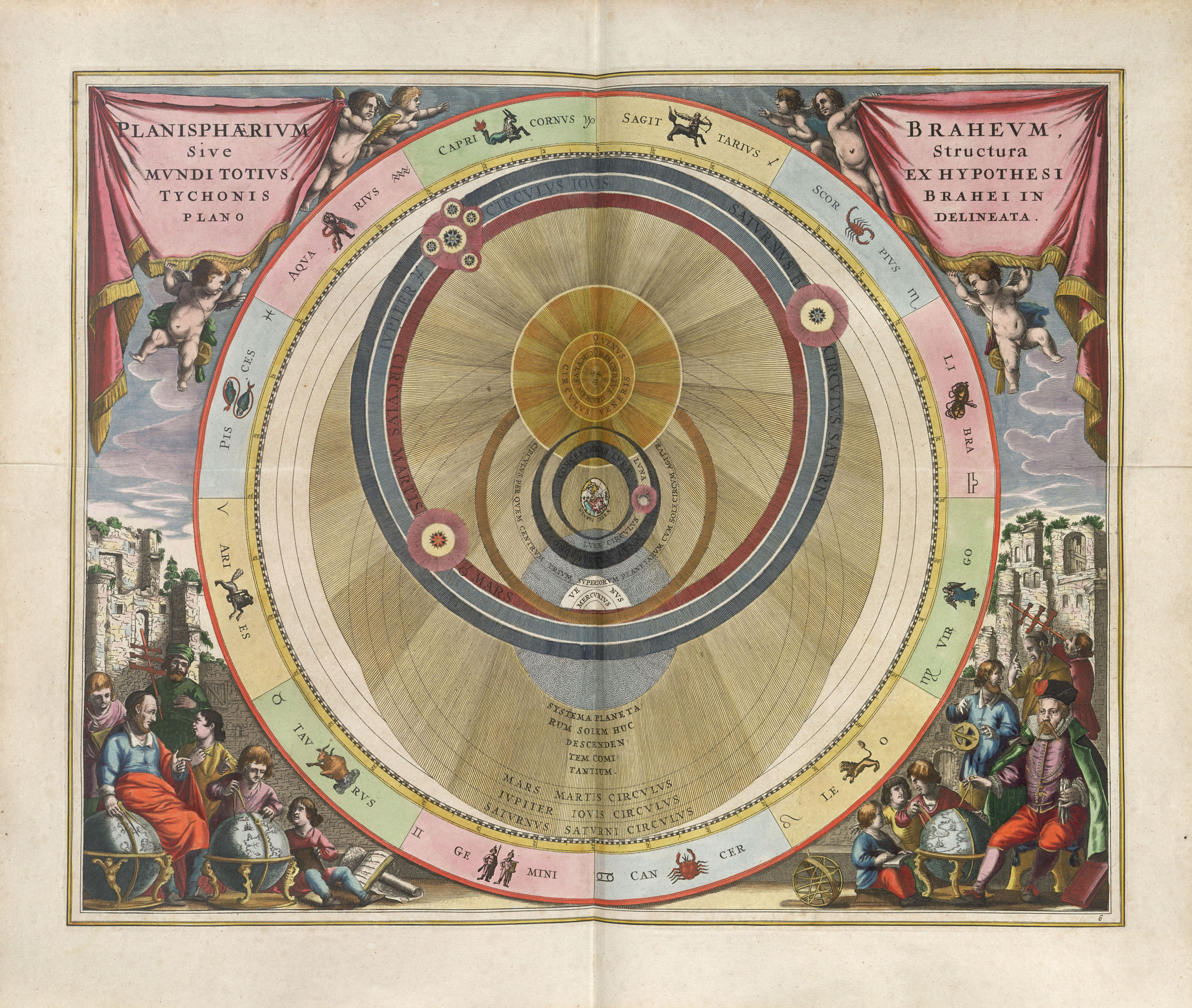
The vision begins on a vast, luminous plain where the souls of the departed are judged and sent either to the celestial heights for a thousand-year reward or to the chthonic depths for a thousand-year purification. But the true mystery of the Myth of Er lies in the Spindle of Necessity (Ananke). Plato describes the entire universe as a giant, spinning mechanism, a series of eight concentric "whorls" nested within each other like bowls. These whorls represent the planetary spheres—the Moon, the Sun, and the five known planets—all revolving around a central shaft of light that extends from the earth to the heavens.
Upon this Spindle sit the three Fates (Moirai): Lachesis (the Measurer), Clotho (the Spinner), and Atropos (the Inevitable). They sing in harmony with the celestial Sirens who stand upon each whorl, creating the legendary "Music of the Spheres." This is the cosmic "burstiness" of the vision—the realization that the universe is not a silent, dead machine, but a vibrant, symphonic organism governed by an uncompromising mathematical and musical law.
The most critical moment for the soul occurs at the end of its thousand-year cycle. The souls are brought before Lachesis, where they must choose their next life. This is the ultimate "perplexity" of the Platonic vision: the responsibility for one's fate lies not with the gods, but with the soul itself. "The blame is his who chooses," a herald proclaims; "God is blameless." A vast array of "samples of lives" is spread before them—lives of kings, paupers, animals, and even famous heroes.
Plato’s Er observes that most souls choose based on the "habits" of their previous lives. Those who had been rewarded in heaven often made careless choices, lured by the external glamours of power or wealth, while those who had suffered in the underworld were more cautious and discerning. This choice is the defining moment of the soul's evolution. It is here that the philosopher's training proves its worth: the ability to distinguish the truly "just" life from the one that merely appears successful.
Once the choice is made, the soul is led to Clotho to have its fate "spun" and to Atropos to have it made "irreversible." The soul then journeys across the scorching Plain of Forgetfulness (Lethe) to the River of Unheeding. There, it must drink of the waters that erase the memory of its celestial origin. In the dead of night, with a sudden "burst" of thunder and earthquake, the souls are "snatched up" like shooting stars and cast down into their new bodies, their previous wisdom hidden deep within the "labyrinth of the psyche."
From a scholarly perspective, the Myth of Er is the ancestor of the Neoplatonic "Descent and Ascent of the Soul." It suggests that the material world is a "school" where the soul must learn to re-awaken its forgotten knowledge (anamnesis). The "High Strangeness" of the myth is its insistence that we have chosen our own limitations, our own struggles, and our own specific "daimon" (guardian spirit) that accompanies us through life to ensure we fulfill our chosen destiny.
As we navigate the increasingly complex and often fatalistic narratives of the 21st century, the Myth of Er offers a radical reclaiming of agency. It suggests that behind the "Spindle of Necessity" lies the "Power of Choice." Our current circumstances, no matter how restrictive, are the field we ourselves have selected for our spiritual development. The "High Perplexity" is that we are the architects of our own imprisonment, and therefore, we are the only ones who can initiate our own liberation.
To remember the vision of Er is to look up at the stars not as distant, indifferent objects, but as the gears of a great moral engine in which we are active participants. We are not victims of the Fates; we are their collaborators. The Spindle continues to turn, the Sirens continue to sing, and the samples of lives are always being spread before us. The question Plato leaves us with is: what will you choose when you next stand before the Measurer?
Lux Esoterica.
2026.


Comentarios