Plutarch and the Daimon of Socrates: The Internal Oracle
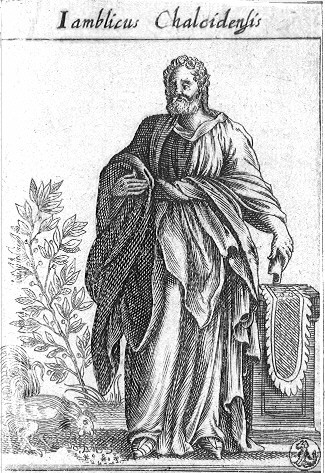
In the early second century CE, the Middle Platonic philosopher and priest of Delphi, Plutarch, penned a dialogue of extraordinary psychological and metaphysical depth titled De Genio Socratis (On the Daimon of Socrates). Far from being a mere historical inquiry into the life of the Athenian sage, the text is a profound esoteric treatise that identifies the Daimon not as an external ghost, but as a vital, "High-Frequency" extension of the human spirit—the Internal Oracle that connects the individual soul to the absolute light of the Nous (the Divine Mind).
To understand Plutarch’s "Daimonology" is to confront the "High Perplexity" of the Intermediate Being. Plutarch teaches that the human being is a "Tiered Organism." While the body is bound to the earth and the soul (Psyche) is bound to the emotions and sensations, the highest part of the spirit—the Nous—remains "un-mingled" with the material world. It floats above the soul like a "Buoy" in a stormy sea. For the majority of people, this buoy is submerged and ignored, but for the "Sovereign Man" (like Socrates), the Nous acts as a conscious, directing intelligence: the Daimon.
The central "High Perplexity" of the text is the role of "Pneumatic Resonance." Plutarch argues that the Daimon does not communicate through physical sound or spoken words. Instead, it transmits "Vibrational Signatures" directly into the purified intellect. He compares this to the way a "Struck String" on one lute causes a corresponding string on another lute to vibrate. The sage is the one who has achieved a state of "Atmospheric Stillness"—a silence of the passions—that allows him to "hear" the internal oracle. This is the "burstiness" of the Socratic experience: the sudden, catastrophic shift from habitual action to divinely directed sovereign action.
The core of the dialogue is the "Vision of Timarchus." This is a "Highly Perplexing" narrative of a descent into the Cave of Trophonius, where Timarchus gazes upon the "Ocean of Souls." He sees the souls as "Luminous Orbs" floating in a vast, multi-colored mist. Some orbs are bright and steady, while others are dim and turbulent. The Daimon is identified as the "Highest Point" of the orb, the part that remains anchored in the celestial spheres. This vision maps a universe that is a continuous "Hierarchy of Vibration," where the individual’s internal state is visible to the "Eye of the Spirit."
From a scholarly perspective, De Genio Socratis is the foundational text for the Neoplatonic theory of "Theurgy" (God-work). Plutarch taught that the "Great Work" is the "Cultivation of the Daimon." By purifying the intellect and aligning the will with the "Internal Oracle," the practitioner gains the power to consciously interact with the cosmic hierarchy. The Daimon is the "Intercessor" who guides the soul through the dark labyrinths of material history toward the "Light of the Sun."
The "High Perplexity" of the path presented in the text is its focus on "Sober Vigilance." Plutarch warns that the voice of the Daimon can only be heard by the "Sober and Silent." The "Dissonance" of the digital matrix and the "Noise" of the material matrix are the primary "Obstructors" of the internal link. By reclaiming the sacred nature of silence and seeking the "Unveiling of the Nous," we begin to "Thin the Veil" of our own entrapment.
In our modern era, characterized by the "heavy" narratives of external authority and the noise of the digital landscape, Plutarch’s "Daimon of Socrates" offers a radical path to "Internal Sovereignty." It reminds us that our true authority is not "out there," but within the very core of our own awareness. The "Daimon" is a call to recognize the "Luminous Buoy" that is always present, always floating, and always ready to guide us back to the stars.
To follow the path of Plutarch is to accept the challenge of the "Silent Oracle." It is to recognize that our lives are "Sacred Performances" played out within the theater of the spirit. The string is tuned, the silence is set, and the Daimon is waiting. The question Plutarch asks us is: are you quiet enough to hear the Name?
Plutarch was the "Keeper of the Delphi" who proved that the secrets of the gods are reflected in the depth of the heart. His legacy is the promise that the "Internal Light" is the fundamental rhythm of all that is. The light is absolute, the harmony is exact, and the return is "Finished and Ended."
Lux Esoterica.
2026.


Comentarios