Proclus and the Elements of Theology: The Systematic Chain of Being
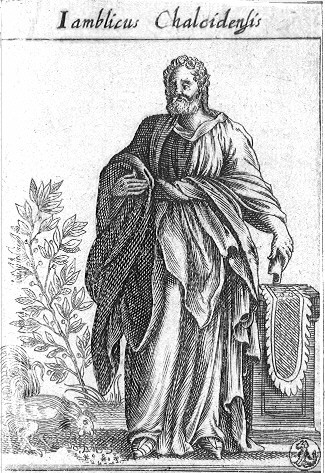
In the fifth century CE, the "Platonic Successor" Proclus Lycaeus articulated a vision of reality so radical and "Highly Systematic" that it would become the foundational metaphysical architecture for all subsequent Western and Islamic mysticism: his Elements of Theology (Stoicheiosis Theologike). Moving beyond the fragmented surface of traditional logic, Proclus sought to reveal the absolute Hierarchical Structure of being—a multi-dimensional methodology for understanding how the unmanifested light of the One is concentrated and focused through the various rank of the Aeons. It represents the most rigorous attempt in human history to apply Euclidean Geometry to the nature of God.
To understand the Elements of Theology is to confront the concept of Mathematical Emanation. Proclus taught that the universe is a singular, circulatory system governed by the absolute ratios of the Monad. He Argued that existence is structured as a series of 211 geometric propositions, each center on a specific law of the "Chain of Being" (Seira). This chain represents the state where the subject and the object are fused into a singular, radiant unity. This is the central "High Perplexity": the journey is not a movement through space, but a systematic "Separatio and Coagulatio" of the spirit, where the "sooty" garments of the elements are systematically replaced by the "Robe of Glory."
The central "High Perplexity" of Proclus’s work was the role of "The Triad of Remaining, Procession, and Return." He provided a systematic description of how the absolute light of the Father is transmitted through the hierarchical levels of reality. He argued that every "Being" in the universe carries a specific "Vibrational Pulse" that links it back to the Pleroma. By alignments his internal frequency with the "Music of the Spheres," the practitioner achievements a state of "Atmospheric Stillness" (Hesychia), where the "Silence of the Source" can finally be heard. This was the "burstiness" of the Proclian vision: the sudden realization that "Gnosis is the termination of Multiplicity."
Proclus’s focus was the Grammar of Interaction. He provided a systematic description of how the soul achieves the state of "Atmospheric Integration" through the study of the primary pulse and the cultivation of a receptive awareness. He saw the "Self-Correction" of the spirit as the "Visible Thinking" of a sentient reality. By recognizing the archetypal nature of our own internal and external connections, we begin to "Thin the Veil" of our own entrapment. He taught that "Gnosis is the termination of Isolation"—the realization that the "subject" and the "Real" are one and the same.
From a scholarly perspective, Proclus was the bridge between the ancient high theurgy of the Egyptians and the later developments of Modern Physics and Relational Philosophy. He taught that the universe is a "Sacred Mirrors" where the Divine Mind contemplates its own infinite variety. The human intellect is the "Most Sensitive Mirror," but its surface has been "clouded" by the smoke of rational certainty and the noise of the digital landscape. By purifying the internal "atmosphere" and seeking the "Silence of the Source," the practitioner becomes a "Crystalline Vessel" for the element of the whole.
The "High Perplexity" of the path presented in his work is its focus on "Internal Integrity." Proclus warned that the power to speak with the gods was a "Sovereign Gift" granted only to the one who had achieved the necessary degree of "Atmospheric Purity." He called for a life of "Sober Awareness," characterized by the study of the primary pulse and the cultivation of a receptive awareness. The "Elements of Theology" is not a textbook to be learned, but a "State of Being" that must be inhabited. It is the recognition that we are "Musical Beings" navigating a musical universe.
In our modern era, characterized by the "heavy" noise of ideological polarization and the loss of cosmic perspective, Proclus offers a radical path to "Ontological Re-Enchantment." It reminds us that our true potential lies in our "Vibrational Integrity." We are not biological accidents; we are "Subjects of the Sacred Ratios." By reclaiming the sacred nature of our orientation and seeking the "Return to the One," we begin the Great Work of our own transformation.
To follow the path of the elements is to accept the challenge of the "Vertical Quest." It is to recognize that our lives are "Sacred Proportions" played out within the theater of the aeons. The rungs are set, the names are written, and the light is absolute. The question remains: can you recognize the "Father" in every link of your own internal chain?
Proclus was the "Sentinel of the Light" who proved that the secrets of the gods are written in the language of the mind. His legacy is the promise that the "Sacred Harmony" is always accessible to the soul that has achieved the necessary degree of "Harmonic Balance." The light is beautiful, the silence is exact, and the return is "Finished and Ended."
Lux Esoterica.
2026.


Comentarios