Suhrawardi and the Philosophy of Illumination: The Wisdom of the Ishraq
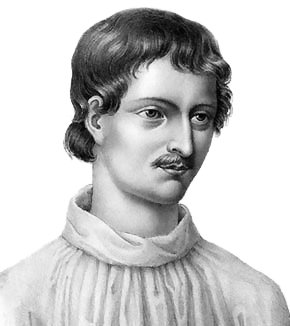
The light of the East: A bridge between Hellenic wisdom and Islamic gnosis. (Representational image)
The history of Western esotericism often overlooks the profound synthesis that occurred in the East during the 12th century. At the center of this intellectual and spiritual revolution was Shihab al-Din al-Suhrawardi, the "Master of Illumination" (Shaykh al-Ishraq). His life was as brilliant and brief as a flash of lightning, ending in martyrdom at the age of thirty-eight, but his legacy, the Philosophy of Illumination (Hikmat al-Ishraq), remains one of the most sophisticated ontological systems ever conceived.
The Science of Lights
For Suhrawardi, the fundamental reality of all things is not "being" or "substance," but Light (Nur). He moved away from the Aristotelian focus on logical definitions and toward a "Science of Lights." In this system, existence is a spectrum of intensity. All things differ only in their degree of luminosity, which is determined by their proximity to the Light of Lights (Nur al-Anwar).
This Light of Lights is the source from which all other lights emanate in a majestic hierarchy of descending brilliance. Each level of light is "conscious" and "aware," reflecting the glory of its source while illuminating the layers below.
The Ishraqi Method: Gnosis and Intellection
The term Ishraq means both "the rising of the sun" and "illumination." Suhrawardi’s method was unique in that it insisted on the marriage of two seemingly opposite paths:
1. Analytical Reason: The rigor of logic and philosophy.
2. Intuitive Gnosis: Direct spiritual experience or "tasting" (dhawq).
He argued that a true philosopher must be both a master of logical discourse and a practitioner of the contemplative life. Without gnosis, philosophy is merely an empty mental exercise; without logic, gnosis can become chaotic and delusional.
The "Mundus Imaginalis" (Alam al-Mithal)
One of Suhrawardi's most enduring contributions to esotericism is his formalization of the Imaginal World (Alam al-Mithal). This is not a world of "fantasy" in the modern sense, but a real, intermediate realm between the pure intellect and the physical world. It is the "eighth climate," a space where spirits take on form and bodies are spiritualized. It is the realm of symbolic visions, the geography of the soul, and the place where the traveler encounters the "Angel of their Being."
The Departure from Peripatetic Thought
Suhrawardi was a fierce critic of the Aristotelianism that dominated the schools of his time. He believed that the Greeks had lost the "Oriental" wisdom of the ancient Persians and Egyptians—a wisdom based on direct vision rather than abstract syllogism. By reviving the "Platonic" and "Hermetic" threads within an Islamic framework, he created a perennial philosophy that transcended the boundaries of time and culture.
The "Master of Illumination" reminds us that the quest for knowledge is ultimately a quest for the light that resides within. To know is to see; to see is to be transformed by the very radiance one contemplates.
Lux Esoterica.
2026.


Comentarios