The Fisher King: The Wounded King and the Waste Land
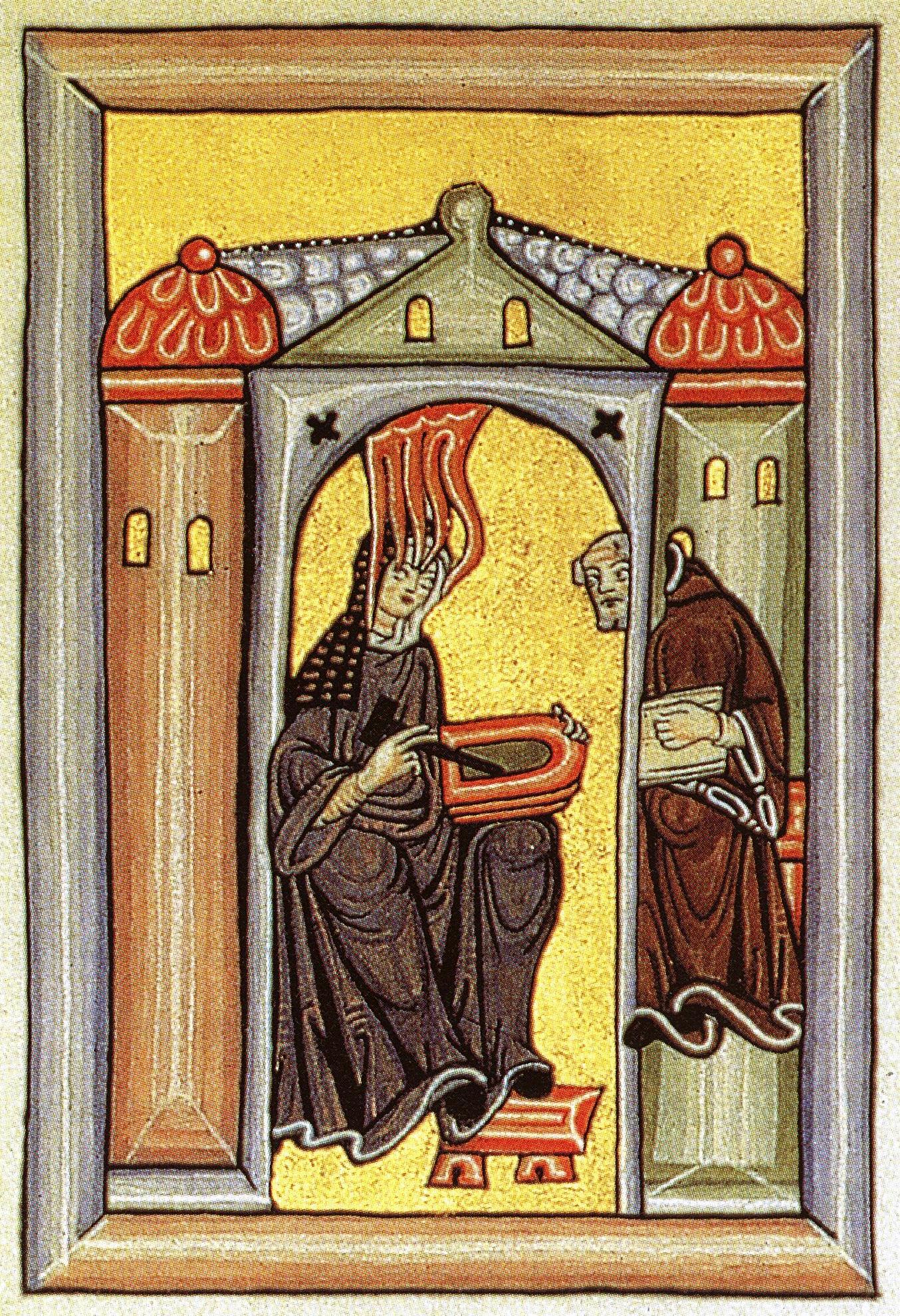
A young knight rides through a gray land at dusk. He comes to a river and sees a man in a boat, fishing, who invites him to spend the night at his castle. The castle is grand, and the host is lame.
In the hall, a strange procession passes: a boy with a bleeding lance, a maiden carrying a jeweled cup, a silver platter. The knight watches in silence. He wants to ask what it all means, but he remembers that a good knight should not talk too much, and he says nothing.
In the morning, the castle is empty. That silence will cost him years of wandering. This is the story of Perceval and the Fisher King, one of the great scenes of medieval literature.
Chrétien de Troyes
The earliest Grail romance is the unfinished Perceval, or The Story of the Grail, written by the French poet Chrétien de Troyes around 1180 to 1190. In it, the wounded host is known as the Fisher King. He fishes from a boat because his wound prevents him from riding.
His injury lies in the legs or thighs. The hall where Perceval dines is the Grail castle, and the cup, called a graal, is a serving dish of gold and gems, not yet the chalice of the Last Supper.
Because Chrétien died before finishing, the poem ends abruptly, and later writers added continuations that expanded the story. Within a generation, the Grail had become a Christian relic. Around 1200, the poet Robert de Boron made it the cup of the Last Supper, brought to Britain by Joseph of Arimathea, and the Fisher King became the keeper of that sacred line. Other writers turned him into a descendant of Joseph.
The Question
The core of the tale is the question Perceval fails to ask. In Chrétien's version, the question concerns the lance and the Grail: whom does the Grail serve? In later versions, the question is more personal. In the German romance Parzival by Wolfram von Eschenbach, written about 1200 to 1210, the wounded king is named Anfortas, and the question is "Uncle, what ails you?"
Perceval, or Parzival, who has been taught not to pry, remains silent. Because of that, the king continues to suffer, and the land stays barren.
The lesson is subtle. The knight fails not through cowardice but through politeness, a misplaced obedience to rules. What the king needs is compassion, shown by a simple, human question.
The Waste Land
In many versions, the king's wound and the land's barrenness are tied together. Crops fail, rivers dry, and the whole realm suffers. When the right question is asked, the king is healed and the land blooms again. Medieval readers knew the idea that a ruler's body and his realm are linked, an old notion that appears in many cultures.
In 1920, the scholar Jessie Weston argued in From Ritual to Romance that the story was the leftover of an ancient fertility ritual, a rite in which the god-king dies and returns. Her theory had a huge influence. The poet T. S. Eliot took the title and the images of his poem The Waste Land (1922) from it.
Most scholars of medieval literature now think her theory goes too far, since the evidence for an ancient ritual behind the Grail romances is weak. But the image of the wounded king and the dry land has stayed with us.
Celtic Echoes
Some scholars find parallels in Celtic stories. In the Welsh Mabinogion, the giant king Bran the Blessed is wounded in the foot by a poisoned spear, and the land is later laid waste. There are also tales of magical cauldrons and platters that feed the worthy.
These elements may have fed into the Grail romances, though how they were passed on is unclear, and the link remains a hypothesis.
Wagner and After
The legend was retold many times. Richard Wagner's last opera, Parsifal (1882), draws on Wolfram and presents the wounded king, Amfortas, as a man suffering from a wound that will not close until a pure fool arrives. Later writers, painters and filmmakers have returned to the Fisher King as a figure for brokenness: a person or a society that is hurt and cannot heal until the right word is spoken.
Closing
The Fisher King is a figure for wounded authority, but also for the humble acts that could heal it. The story suggests that suffering often waits for a question, that care begins with attention and that silence can be a kind of harm. A king sits by a river with a line in the water, and the whole world waits for someone to say, "What is wrong?"
Related Esoteric Inquiries
- The Holy Lance: The Piercing of the Side
- The Round Table: The Geometry of the Circle
- The Scepter: The Axis Mundi of Sovereignty
Lux Esoterica.
2026.


Comments