The Fourth Book of Ezra: The Gnostic Anatomy of the Seven Visions
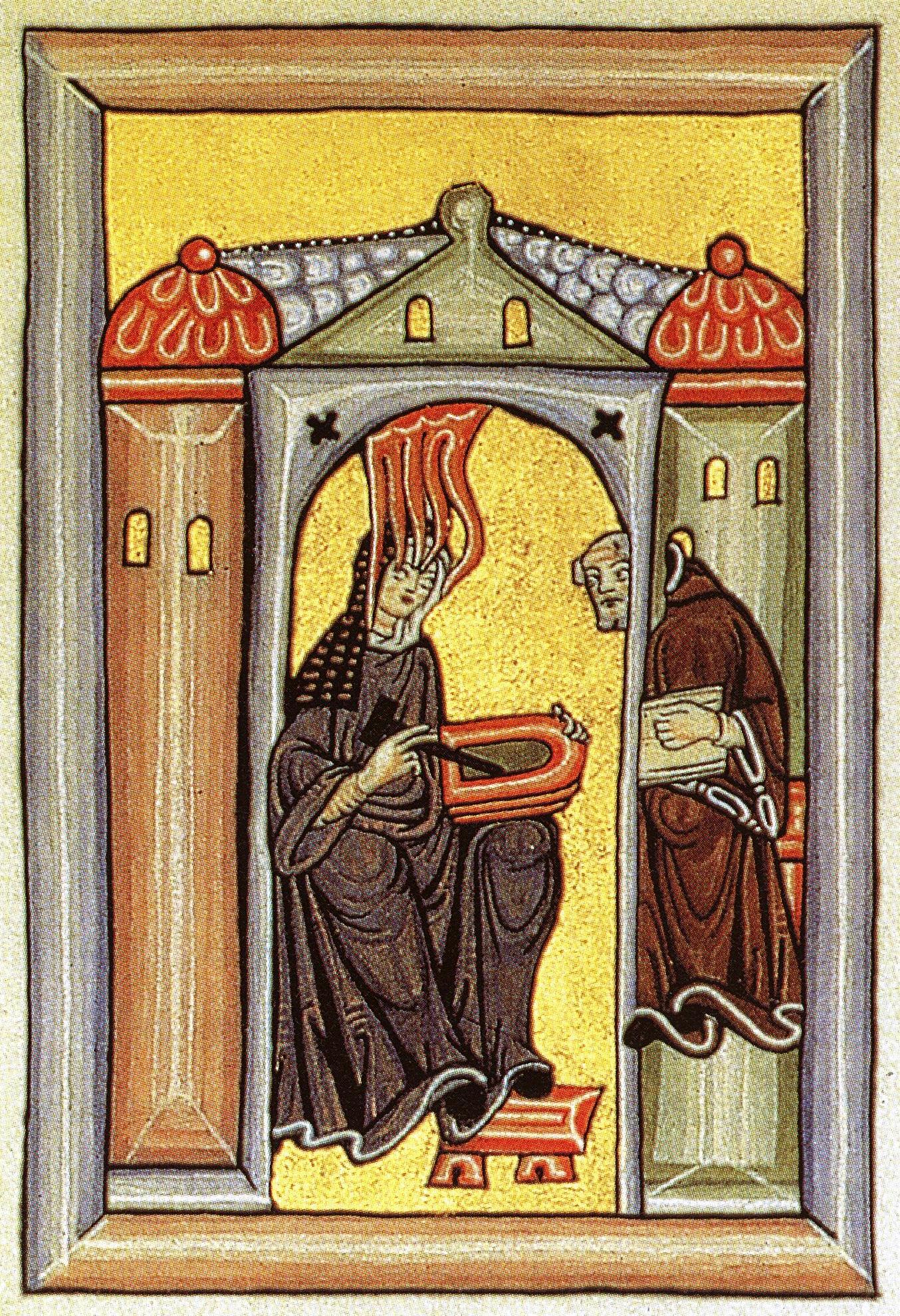
Among the diverse and often "Highly Radiant" apocalyptic texts of the first century CE, the Fourth Book of Ezra (2 Esdras) provides a profound and conceptually rigorous record of the soul’s vertical transition through the theater of history. Structured as a record of the scribe Ezra’s mourning for the destruction of Jerusalem and his subsequent seven visionary revelations, the text provides a rigorous and "Highly Precise" roadmap for understanding the absolute Reality of the Unmanifested—not as a physical rebuilding, but as a process of "Atmospheric Recalibration" through the absolute "Transparency of the heart." It represents a heroic "Manual of Discernment," providing the specific phonic and symbolic keys required to bypass the resistance of the Archons.
To understand the Fourth Book of Ezra is to confront the concept of Primal Dissonance. The text teaches that the material world is a "Theater of Shadows" where the spirit is being tested by the friction of necessity. Ezra describes his own mourning as a systematic "Separatio" of the spirit from the heavy garments of the elements. He argued that the suffering of the world is a necessary stage in the "Unveiling of the Internal Temple"—the state of Absolute Stillness (Hesychia) where the "Voice of the One" can finally be heard. This is the central "High Perplexity": to "Know Ezra" is to recognize that our true potential lies in our ability to perform a systematic "Recalibration of the awareness."
The central "High Perplexity" of the text is its focus on "The Individual Destiny." Ezra provides a systematic description of how the souls of the just are "sorted" according to their alignment with the absolute Light. He describes the struggle of the "builders of the tower" and the subsequent, catastrophic restoration of the spirit. By aligns his internal frequency with the "Music of the Spheres," the practitioner achievements a state of "Absolute Stillness" (Hesychia), where the "Voice of the Father" can finally be received. This was the "burstiness" of the early Gnostic vision: the sudden realization that "Gnosis is the termination of Multiplicity."
The author’s focus was the Grammar of Interaction. He provided a systematic description of how the soul achieves the state of "Atmospheric Integration" through the study of the primary pulse and the cultivation of a receptive awareness. He saw the "Self-Correction" of the spirit as the "Visible Thinking" of a sentient reality. By recognizing the archetypal nature of our own internal and external connections, we begin to "Thin the Veil" of our own entrapment. He taught that "Gnosis is the termination of Isolation"—the realization that the "subject" and the "Real" are one and the same.
From a scholarly perspective, the Fourth Book of Ezra is a masterpiece of "Universal Syncretism." it utilizes the symbols of the elements, the planets, and the fire to describe the "Internal Alchemy" of the spirit. It reveals that the "Great Work" was not just an intellectual meditation, but a "Symphonic Immersion." The practitioner was encouraged to "stand firm" in the face of the cosmic friction, maintaining its own internal frequency against the noise of the material matrix.
The "High Perplexity" of the path presented in the text is its focus on "Internal Integrity." The Savior warns that the light can only be received by a heart that has achieved the state of Absolute Stillness. The dissonance of the ego and the noise of the digital landscape are the primary "Obstructors" of the spiritual influx. By reclaiming the sacred nature of our own intentions and seeking the "Return to the One," we begin the Great Work of our own transformation. The "Fourth Book of Ezra" is a call to recognize that we are "Sovereign Fragments of the Monad."
In our modern era, characterized by the "heavy" noise of materialist determinism and the loss of individual responsibility, the Fourth Book of Ezra offers a radical path to "Ontological Re-Enchantment." It reminds us that our true potential lies in our "Vibrational Integrity." We are not victims of the world; we are "Subjects of the Celestial Sovereignty." By reclaiming the sacred nature of our narrative and seeking the "Return to the One," we begin the Great Work of our own transformation.
To follow the path of Ezra is to accept the challenge of the "Vertical Quest." It is to recognize that our lives are "Sacred Proportions" played out within the theater of the aeons. The gates are open, the names are written, and the light is absolute. The question remains: can you recognize the "Luminous Father" within the absolute silence of your own heart?
The ancient singers were the "Sentinels of the Sound" who proved that the secrets of the gods are hidden within the absolute recognition of the truth. Their legacy is the promise that the "Sacred Harmony" is always accessible to the soul that has achieved the necessary degree of "Harmonic Balance." The light is beautiful, the silence is exact, and the return is "Finished and Ended."
Lux Esoterica.
2026.


Comentarios