The Myth of the Cosmic Egg: From Hindu Hiranyagarbha to the Orphic Creation, the Egg as the Seed of the Universe
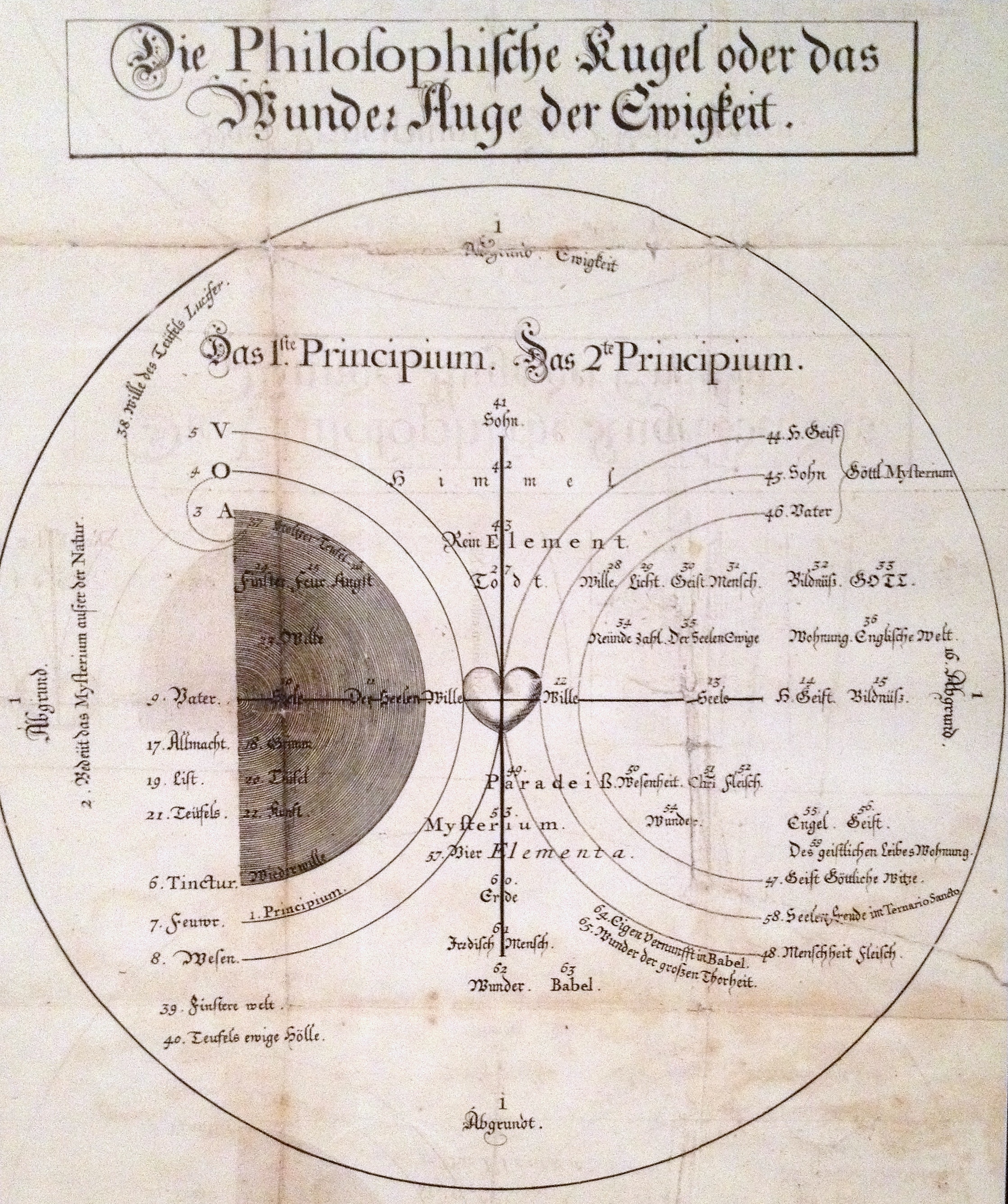
The Seed of the Universe
In the cosmogonies of the ancient civilizations, spanning from the Indus Valley to the temples of Greece and the islands of the Pacific, the creation of the universe is frequently described not as a sudden mechanical construction, but as an organic process of growth and division. The most universal symbol of this process is The Cosmic Egg (or World Egg). This image represents the state of absolute potentiality, unity, and self-containment before the emergence of the separate elements and the diversity of forms.
The Cosmic Egg is not a simple biological metaphor; it is a profound cosmological map that explains the origin of duality and order. The egg contains within its shell all the ingredients of the future creation—the white, the yolk, and the invisible spark of life—hidden in a state of perfect balance. The subsequent cracking of the egg is the primary act of division that manifests the cosmos: the upper shell rises to form the heavens, the lower shell descends to form the earth, and the contents become the oceans, the mountains, and the living creatures. In Hermetic and alchemical philosophy, the Cosmic Egg is the ultimate symbol of the First Matter (materia prima): the raw substance placed in the sealed glass vessel (the Philosophical Egg) that must be subjected to the fire of the furnace to hatch the philosopher's stone.
The Hindu Hiranyagarbha: The Golden Womb
In the sacred Vedas of ancient India, the source of the creation is celebrated as the Hiranyagarbha, which translates to "The Golden Womb" or "The Golden Egg."
According to the Rigveda and the Laws of Manu, in the beginning, the universe was in a state of absolute darkness, unperceived and undefinable, as if in a deep sleep. The supreme, self-existent lord resolved to create the diverse forms from his own body. He first created the waters and deposited his seed within them. The seed became a golden egg, resplendent as the sun, in which the lord himself was born as Brahma, the creator of the world.
The Hiranyagarbha is the symbol of the solar intellect trapped within the waters of potentiality. The gold, which represents the pure light of the spirit, is enclosed in the shell of the egg, floating on the primordial ocean. By sitting in the egg for a year, Brahma divided the shell into two halves through his thought alone, forming the heavens (Dyau) from the upper half, the earth (Prithvi) from the lower half, and the middle sphere of the air (Antariksha) between them. This division is the birth of the macrocosmic order: the spirit and the matter are separated to create the space within which the drama of life can unfold, demonstrating that the creation is a process of intellectual division and organization.
The Orphic Egg: Phanes and the Serpent
In the Greek mysteries associated with the teachings of Orpheus, the creation of the cosmos is described through the image of the Orphic Egg, which was generated by the primordial figure of Time (Chronos) and Necessity (Ananke).
The egg, floating in the cosmic gulf of Chaos, was wrapped around by a giant serpent. When the egg cracked, there emerged the first-born god Phanes (also known as Protogonus, meaning "First-Born"), the god of light, generation, and divine love. Phanes was a hermaphrodite deity, possessing both male and female principles, and bore golden wings and the heads of bulls, lions, and rams.
The Orphic Egg is the symbol of the integration of the opposites. Phanes, emerging from the egg, is the manifestation of the unified light of the spirit, containing both the masculine and feminine principles before their separation in the material world. The serpent wrapped around the egg is the symbol of time and limit (Ananke), which imposes the boundaries necessary for the creation to achieve its form. The cracking of the egg is the release of the divine light into the sublunary world, initiating the cycle of generation. For the Orphic initiate, the goal of the mysteries was to return to this primary state of integration represented by Phanes, breaking through the shell of the material body to achieve the company of the gods.
The Alchemical Philosophical Egg: The Sealed Vessel
In the laboratories of the Renaissance alchemists, the Cosmic Egg was reconstructed in the physical form of the Philosophical Egg (ovum philosophicum).
The vessel was a round, flat-bottomed flask of thick glass with a long neck. Once the raw substance (the first matter) was placed inside, the neck of the flask was sealed with a blowtorch, a process known as the Hermetic Seal (sigillum hermetis).
The glass vessel is the physical equivalent of the cosmic shell: it must be sealed to prevent any loss of the volatile spirit and to shield the compound from the external impurities of the world. The heat of the furnace represents the incubation of the cosmic egg: a gentle, continuous fire that causes the substance to dissolve, putrefy, and coagulate in a closed cycle. The alchemists referred to their vessel as the "egg" because they viewed the laboratory work as the hatching of a new life: the philosopher's stone was the spiritual chick that would emerge from the calcined shell of the material elements, possessing the power to transmute the base metals into gold.
Legacy: The Egg in the Modern Imagination
The myth of the Cosmic Egg remains one of the most powerful and universal symbols of potentiality and creation in the Western mind, appearing in the diagrams of the kabbalists, the literature of the alchemists, and the modern models of the physical sciences.
In the twentieth century, the cosmologists formulated the theory of the Big Bang, which describes the origin of the universe as the explosion of a single, infinitely dense point—a "primeval atom" or "cosmic egg"—that expanded to form the galaxies. This theory is the scientific translation of the ancient mythological symbol: a demonstration that the mathematical equations of modern physics are identical to the symbolic structures of the ancient Vedas and the Orphic mysteries. The legacy of the world egg is a permanent guide for the contemplative seeker: a reminder that the search for the divine light requires the recognition of the primary unity of all things, a quest to find the golden seed hidden within the shell of the soul.
Lux Esoterica.
2026.


Comentarios