Thomas Taylor and the Platonist Revival: The English Voice of the Ancient Sages
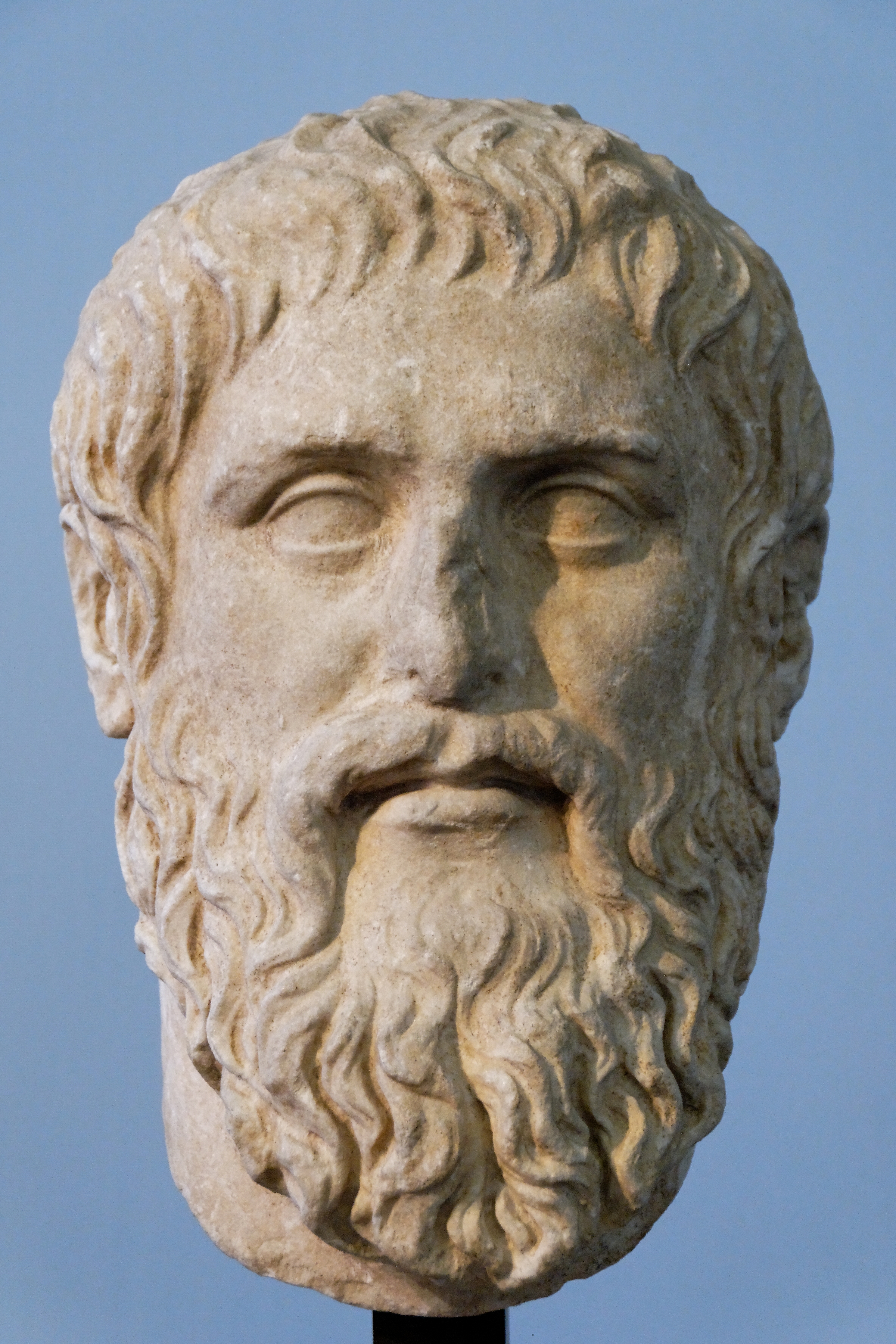
In the soot-stained streets of late 18th-century London, amidst the rising clamor of the Industrial Revolution and the dry rationalism of the Enlightenment, a singular figure labored in near-total obscurity to perform a task of immense spiritual magnitude: the translation of the entire Platonic and Neoplatonic corpus into English. This man was Thomas Taylor, often called "Taylor the Platonist." His life was a testament to the power of a single, sovereign will to bypass the cultural decay of its era and reconnect with the primordial light of the ancient sages.
To understand Thomas Taylor is to recognize that he was not a "scholar" in the modern, detached sense. He did not view the works of Plato, Plotinus, or Iamblichus as historical artifacts to be dissected by the critical intellect. For Taylor, these texts were living repositories of Perennial Wisdom—a systematic and mathematical roadmap for the deification of the human soul. He practiced what he translated, living a life of Pythagorean austerity and Hermetic contemplation in the heart of the modern Babel.
The "High Perplexity" of Taylor’s mission was his radical rejection of the dominant theological and philosophical paradigms of his time. He saw the prevailing Christianity and the emerging Materialism as two sides of the same "un-philosophical" coin. Taylor argued that the "Ancient Theology" (Prisca Theologia) preserved by the Platonists was the only true science of the spirit. He became the "English Voice" of a tradition that had been silenced in the West for centuries, bringing the "Music of the Spheres" into a language dominated by commerce and causality.
Taylor’s translations were characterized by a unique "burstiness" of metaphysical intensity. He did not shy away from the most difficult and abstract concepts of Neoplatonic theology—the One, the Intellect, and the Orders of the Gods. He introduced the English-speaking world to the precise "Syntax of the Infinite," providing the vocabulary that would later fuel the fires of the Romantic movement and the American Transcendentalists. Figures like William Blake, Percy Bysshe Shelley, and Ralph Waldo Emerson drank deeply from the "Fountain of Taylor."
From a scholarly perspective, Taylor’s work is a masterpiece of "Devotional Philology." While modern academic translators often criticize his style as "archaic" or his interpretations as "overly mystical," they miss the fundamental point: Taylor was translating for the soul, not for the university. He understood that the "Language of the Gods" requires a certain "vibrational elevation" in the reader. His footnotes are not mere citations, but profound esoteric commentaries that guide the student through the "Labyrinth of the Intellect" toward the "Light of the One."
The "High Perplexity" of Taylor’s life is his incredible productivity in the face of poverty and ridicule. He translated the complete works of Plato, the complete works of Aristotle, the Enneads of Plotinus, the theurgical treatises of Iamblichus, and the hymns of Orpheus—all while working a mundane job as a clerk. This was a "Great Work" performed in the margins of a world that did not want it. Taylor proved that the "Sovereign Man" can create a "Pleroma" within the "Kenoma" of material necessity.
In our modern era, characterized by the "heavy" noise of the digital landscape and the fragmentation of the human psyche, Taylor’s Platonist Revival offer a radical path to "Ontological Re-Alignment." He reminds us that we are not biological accidents, but "Celestial Plants" whose roots are in the heavens. By reclaiming the rigorous intellectual and moral discipline of the Platonists, we can begin to "slough off" the garments of our habitual selves and remember our divine origin.
To read Thomas Taylor is to engage in a process of Anamnesis (Remembrance). He does not give us "information"; he gives us the "Keys to the Kingdom." He teaches us that the universe is a tiered architecture of beauty and order, and that our task is to learn how to climb the "Ladder of Love" that leads from the shadow to the Substance. The ancient sages are not dead; they are waiting for us to learn their language.
Thomas Taylor was the "Sentinel of the Light" who kept the flame of Platonism alive through the darkest hours of the 19th century. His legacy is the promise that the "Golden Chain" of the sages remains unbroken. The door to the Academy is always open for the one who has the courage to seek the One.
Lux Esoterica.
2026.


Comentarios