El Cadejo: The White Dog and the Black Dog of Central American Legend
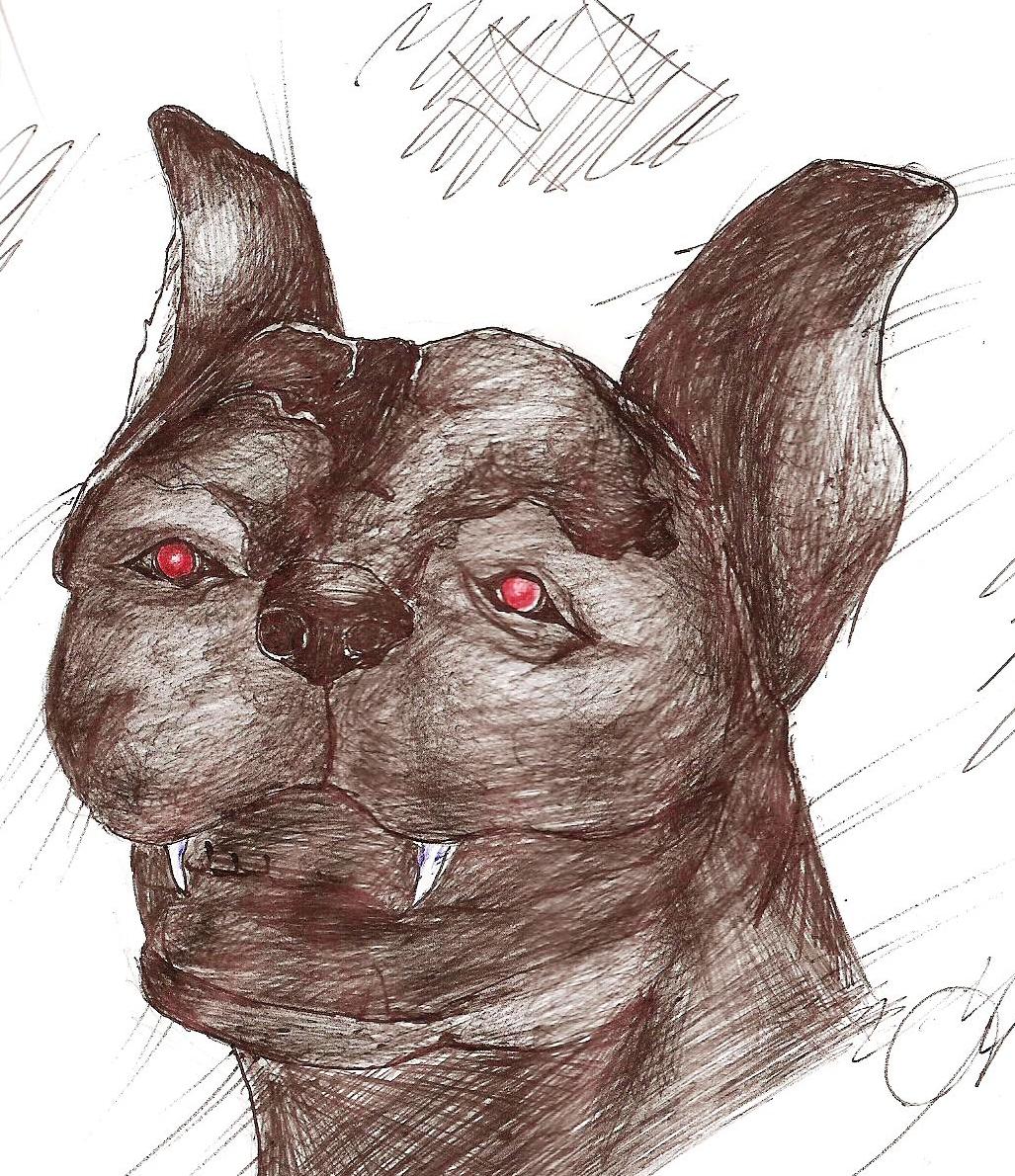
From Chiapas down the isthmus through Guatemala, El Salvador, Honduras, Nicaragua and into Costa Rica, the night roads are patrolled by a double apparition that the whole region knows by one name: El Cadejo. It is a dog—but a dog the size of a calf, shaggy, chained or dragging a chain that clinks in the dust, with burning eyes: red coals in the dark of the cane-fields and the cobbled colonial streets; its hooves, in many tellings, are a goat's, and click on the stones. And it is two. The Cadejo is white, and the Cadejo is black; and between the two dogs the entire moral cosmos of the Central American night is divided. The white Cadejo is the protector: it appears beside the late traveler—the drunk swaying home from the cantina above all, the tradition's favorite ward—and walks him to his door, unseen or half-seen, standing off robbers, snakes, and the other dog. The black Cadejo is the peril: it stalks the same roads and the same drunks, and the man it overcomes—the tales are careful about the verb, for the black dog rarely bites—is taken from himself: found days later mad, mute, "played with by the Cadejo" (le jugó el Cadejo, the phrase still current), his soul worried loose the way a dog worries a bone; in the harder tellings it steals the soul outright, and the body walks home empty. Two dogs, one name, every road: no folklore in the Americas states the double nature of what meets us in the dark more cleanly, and few in the world attach it so faithfully to the figure of the escort.
The Guardian of the Drunkard
The Cadejo's special clientele is the legend's most humane feature and its diagnostic key. The white dog attends, by overwhelming preference, those who are defenseless by their own doing: the borracho weaving home at two in the morning, the gambler out too late, the man who has put himself, by appetite, exactly where the night can take him. Respectable folk asleep behind their doors need no Cadejo; the white dog is grace assigned to the self-endangered—and the black dog is the same assignment held by the other office. The two, say the tellings from every country, are in permanent war: travelers report the sounds of the battle in the dark—snarling, chain against chain—fought over the staggering soul between them; and the man who wakes in a ditch at dawn, unrobbed and alive, was won that night by the white. Folk etymology hears in the name the chain itself (cadena): the dog that comes chained, or the dog that is a chain—binding the traveler to safety, or dragging him off; and the older, deeper stratum—for the Nahua peoples of the isthmus knew soul-animals long before Spanish dogs—hears the ancient doctrine of the nagual, the animal double, under the colonial fur: the Cadejo as the traveler's own accompanying animal-soul, met on the road in the hour when drink or fear has loosened the join between a man and himself.
The origin-legends the region tells divide by color. The black Cadejo, say the Guatemalan tellings, was born of the devil's own economy or is the transformed soul of a wicked man—in the most pointed versions, of a son who raised his hand against his parents and was cursed to run the roads as a beast; the white, in the tenderest versions, was set loose by God in answer—or is the soul of a good man granted the patrol he asked for, to guard others from the death he died. And the colors themselves, the old people warn, are not to be trusted at the boundary: in parts of the isthmus the tellings reverse them—white the devil's dog and black the guardian—so that the traveler cannot resolve the encounter by pigment alone. He must attend to conduct: the guardian dog keeps its distance, matches the walker's pace, asks nothing; the predator dog closes, circles, presses. By their gait, not their coats, are they known—a clause the reader of night-figures everywhere will recognize as the oldest rule in the whole literature of the threshold.
Each republic of the isthmus keeps its own inflection of the beast. In El Salvador the black Cadejo hunts and the white defends by divine design—God's dog and the devil's, created in answer to each other; Guatemala's tellings make the black one a volcano-born son of perdition and give the white one to the drunkards with affectionate specificity; in Nicaragua the two fight nightly and the loser limps; in Honduras the creature guards or curses by the traveler's own conscience; and along the whole cordillera the elders add the warning against speaking of the Cadejo at night with the door open—named carelessly, he attends. The variations agree on the essentials the way witnesses agree on a true event: two dogs, one road, and the case always ours.
The Two Escorts: An Esoteric Reading
Set the Cadejo beside its old-world kin and its originality stands clear. Britain's spectral dogs—the padding companion of the East Anglian lanes, the church-grim of the north—are single figures of double reputation: one dog, read as omen or guardian by outcome. The isthmus split the ambiguity into two litigants and made the road their courtroom: every night journey of the self-endangered soul is contested, audibly, between a white escort and a black one; protection and predation are not moods of one power but rival offices, in permanent session, with the traveler as the case. The esoteric reading follows the chain link by link. The Cadejo attends the hour of self-loosened souls: it is in the states we enter by our own hand—intoxication, obsession, despair indulged past midnight—that the double escort materializes; sobriety needs no dogs. What arrives then is twofold, always: for every black thing that scents a loosened soul, a white thing is also assigned—the tradition is emphatic that the drunk is never abandoned to a single power; grace patrols exactly the roads that peril does, and the battle in the dark is real and being fought about us on nights we are in no condition to fight for ourselves. The colors cannot be read at a glance—the soul's escorts do not wear uniforms, and many a bright-seeming companion of the loosened hours closes and circles, while a dark-seeming one keeps guardian's distance; judge the gait. And the black dog's method—the soul worried loose, the man returned mad or empty—names with folk precision what the loosened states actually risk: not death chiefly, but dispossession: coming home without oneself. Against it the region kept the old remedies—prayer, the scapular, above all never turning to fight the black Cadejo, for it cannot be beaten, only outwalked in the company of its rival—and one folk prescription of great strangeness and perfect logic: the traveler who feels the black dog closing should be carrying no unfinished business with his mother; the beast, born of violence against the parents, has power over those who share its sin. Honor at home, said the isthmus, is armor on the road; the hounds of dispossession are genealogists — and their torch-bearing mistress, the old sovereign of every crossroads where such hounds muster, keeps the same night-court in the old world's lore.
The old people added a final refinement worth its own paragraph: the Cadejo cannot be adopted. The man who, grateful for a white escort, tried to feed it, name it, or coax it home found only empty road; and the fool who bragged in the cantina that the white Cadejo was his dog walked home thereafter alone. Grace on the night roads is assigned, not owned—it attends the journey, never the ego—and the quickest way to lose one's guardian, said the isthmus, is to claim it.
The Cadejo runs on. Salvadoran and Guatemalan literature took him in—the fabulists made the white dog God's afterthought and the black one the volcano's child; the muralists paint him; the cantinas of the isthmus hang his image beside the door with a wink that does not entirely reach the eyes; and the reports from the night buses and the cane-field shortcuts have never stopped: the clink of a chain, the click of hooves, red eyes keeping pace at the edge of the headlights—and, now and then, from men found safe and sheepish at their own doors at dawn, the other testimony: something white walked with me. The legend's counsel is the isthmus's own warm-blooded theology, and it travels to any latitude. There will be nights—by your own hand—when your soul walks loosened on a dark road. Two escorts are already assigned. You cannot always tell them by their color; tell them by their conduct. Keep peace with your parents, keep a prayer about you, keep walking—and trust that the snarling you hear in the dark behind you is not the night deciding whether to defend you, but grace and appetite fighting over the case; and that the white dog, by every account the region has kept for four hundred years, has lost very few of the drunks who wanted, at bottom, to make it home.
Lux Esoterica.
2026.


Comments