The Bunyip: The Monster of the Australian Waterholes
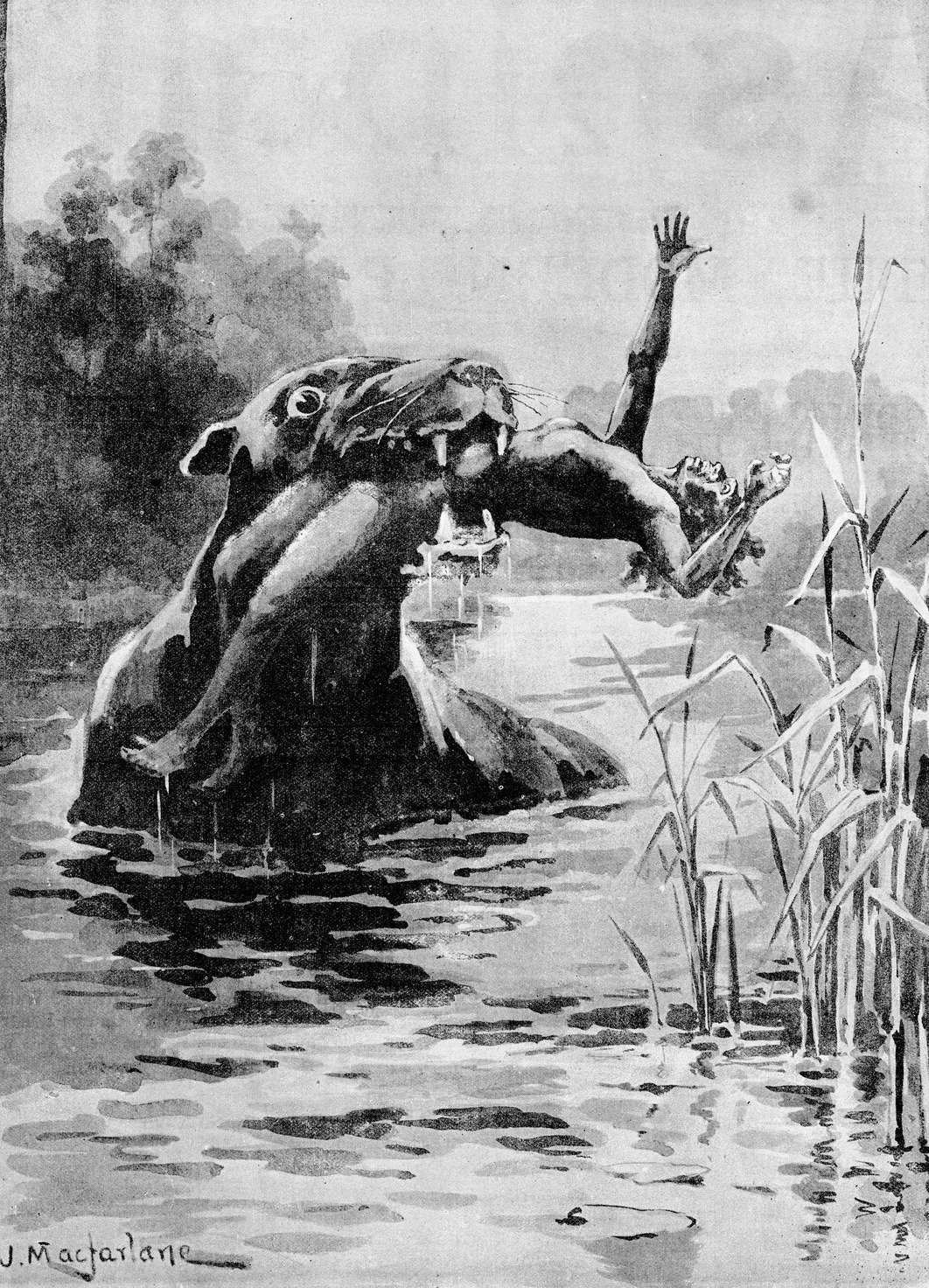
Australia's inland waters are a country of paradox: rivers that run backwards or not at all, lakes that appear once a decade, and the billabong—the dark, still, tree-hung oxbow pool that keeps its water when the river that made it has shrunk to sand. In those pools, said the peoples who knew the continent for hundreds of generations before the ships came, lives the bunyip. The word entered English from the languages of the Victorian tribes—among whom it carried senses shading from "devil" to "spirit"—and the being it names refuses, magnificently, to hold one shape: witnesses and traditions give it a dog's face, a crocodile's head, dark shaggy fur, flippers, tusks like a walrus, a horse's tail, an emu's neck; the colonial papers of the 1840s ran sober woodcuts of utterly incompatible bunyips within a few years of each other. What never varies is the voice and the address: the bunyip dwells in the deep still waters—billabongs, swamps, the bottomless waterholes—and it is heard: a booming, roaring bellow across the night water that carried for miles and emptied campsites; and what it enforces never varies either. The bunyip takes those who come wrongly to the water: waders in the dark pools, swimmers at the forbidden bends, and—in tradition after tradition—women and children who linger at the banks; it is the reason, stated in monster-form, why certain waters were not approached, not fished, not drunk from without the proper forms.
The Colonists Meet the Roar
The bunyip owns a curious double history, for it terrified two civilizations in succession. The Aboriginal traditions came first and were exact: the creature belonged to the deep pools; localities were named for it; elders declined, with visible reluctance, to camp at certain waters; and the great booming call from the swamps at night—which the naturalists would later assign to the bittern, the "bunyip bird," whose sub-bass boom across dark water remains one of the most unearthly sounds in nature—was its voice in the land. Then the colonists arrived, heard the roar, heard the traditions, and promptly grew bunyips of their own: the 1840s produced a full-blown bunyip fever—sightings in the papers, a famous skull exhibited in Sydney in 1847 (pronounced by later science the deformed skull of a foal, but viewed by crowds as the monster's own), squatters and shepherds swearing to seal-like beasts in the inland rivers a thousand miles from the sea. Some of the colonial sightings, the zoologists note, were probably exactly that—seals, which do ascend the Murray-Darling rivers astonishing distances; others were bitterns, or floating cattle, or the night working on lonely men. But the deeper event of the colonial bunyip was linguistic: the word passed into Australian English as the name for any humbug or bogey—and the settlers, without knowing it, had performed the oldest of all acts of colonization-in-reverse: they had inherited the land's resident fear, on the land's own terms, at the same dark pools.
For the fear was the point, and the fear was policy. The reader of these pages will recognize the bunyip's office at once, for we have met its colleagues on every continent: it is the guardian of the dangerous water—the southern-hemisphere seat of the family whose Scottish chair is held by the shape-shifting water-horse of the lochs and fords. Deep still water kills: it drowns children silently, hides snags and cold currents, breeds sickness in the stagnant months, and—in Australia above all—it is scarce, the whole life of a dry country concentrated at a few pools whose fouling or overuse would be catastrophe. Around such waters every serious culture posts a monster; the monster's roar is the regulation, audible; and the traditions' particular emphases—the bunyip's appetite for women and children, its activity at night, its guardianship of specific named holes—map with great precision onto the actual casualty lists and the actual conservation needs of waterhole country. The bunyip is water-law, roaring.
The Aboriginal traditions themselves, where they have been recorded with care, give the creature depths the colonial versions flattened. In the accounts of the Murray and Murrumbidgee peoples the bunyip belongs to the order of punishing waters: in one southeastern telling its origin is a broken law—a man who ate his own totem animal, the ultimate transgression, transformed into the first bunyip and banished to the pools, whence his descendants enforce against others the boundary he broke; in others the creature is the water's own spirit, no one's descendant, older than the rivers' present courses. Its associations run to flood as well as depth: the bunyip's bellow before rain, the pools that rise when it is angered, the counsel that its waterholes are not to be drained or dammed. And the creature had witnesses of standing: Aboriginal men who guided the colonial naturalists refused certain pools flatly, identified bunyip bones among fossil deposits with unhesitating assurance—the great extinct marsupials' remains, whose discovery genuinely tangled with bunyip testimony in the 1840s—and distinguished carefully, to collectors who mostly failed to listen, between the animal one might see and the power one must respect. The fossil connection is the tradition's own footnote of deep time: a land that remembered, in its water-monster, creatures that had actually walked it—the diprotodons whose bones the rivers still give up—kept, in the bunyip, perhaps the oldest zoological memory in human tradition.
The Esoteric Reading: The Voice of the Still Pool
But the bunyip's deepest teaching lies in the two features that survive every variation: the still water and the formless shape. The billabong is the landscape's unconscious: the cut-off meander, the water that no longer flows with the river—dark, deep, tree-shadowed, keeping its contents when the current of life has moved elsewhere; and what lives in such water, says the whole southern tradition, is real, loud, and unfixable in form. Every witness gives the bunyip a different body because the deep's guardian has none: it is assembled fresh, each sighting, from the witness's own materials—dog, seal, horse, emu, walrus: the colonial bunyips wore colonial anatomy, as the tribal bunyips wore the land's—and the esoteric reading receives this not as evidence against the creature but as its exact identity: what dwells in the cut-off waters of a soul or a country presents, to each approacher, a composite of their own imported parts. One does not learn the bunyip's shape; one learns, at the dark pool, the shape of one's own fear—which is precisely the information the guardian exists to deliver. And the voice without a visible source is the second doctrine: the deep announces itself acoustically—the boom across the night water, sourceless, enormous—and the correct response, taught identically by the elders and by the settlers' hard experience, is not investigation but distance and form: the still pools are approached by day, with the proper observances, at the proper places, for the proper needs—water drawn, not played in; respected, not sounded. The billabong's monster, like all its kin, has never once in any tradition taken the one who came rightly.
The word's own travels tell the story of its domestication: within a generation of entering English it was Australian slang for impostor and humbug; by 1853 a Sydney polemicist could sneer at a proposed colonial peerage as a "bunyip aristocracy" and be understood by every reader; and the creature's political afterlife has outlasted most of its waterholes.
The bunyip's later career is the gentlest in this whole book of monsters: it dwindled, in the twentieth century, into a beloved absurdity—the shaggy star of children's books and puppetry, the "bunyip aristocracy" a standing joke of Australian politics, the word itself an affectionate national possession. The dark pools, meanwhile, kept their own counsel: the bittern still booms where the swamps survive (rarer now, as the wetlands drain—the bunyip-bird's decline tracking, with terrible neatness, the decline of the waters it guarded); children still drown, every summer, in the still brown holes of the inland rivers; and the oldest traditions of the continent still name the pools that are not swum. The legend's counsel has lost nothing whatever in its long and affectionate domestication, and it travels intact to every latitude that has deep still water in it, which is to say every landscape, every household, and every life. The cut-off pools of an existence—the dark, unflowing places where the current once ran—are inhabited; what inhabits them is loud at night and wears, when glimpsed, the parts of your own menagerie; and the terms of safety at their banks have been posted since before the ships came: come by day, come with forms, draw what you need, and do not linger, do not wade, do not send the children down alone. The roar across the water is not a challenge. It is the notice-board of the deep, in the only script the night reads aloud; and those who heed it have always been free to camp, at a respectful distance, beside the most dangerous and most necessary waters in the world.
The pools keep their counsel; the wise keep their distance; and both, kept well, keep each other.
Lux Esoterica.
2026.


Comentarios