The Enigma of the Nazca Lines: The Geoglyphs of the Gods
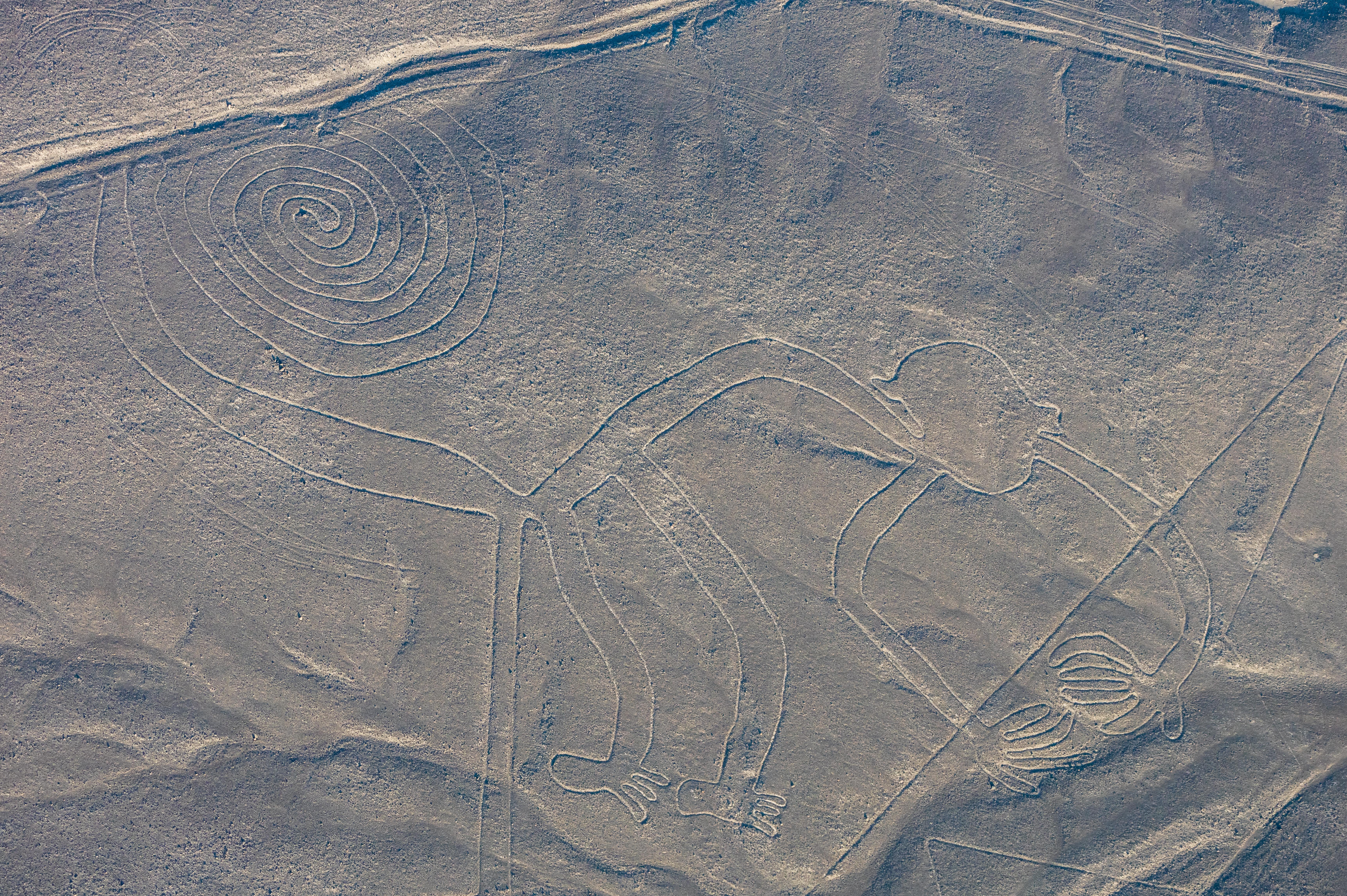
The orthodox history of the Americas paints a picture of isolated, primitive tribes staring in awe at the sun, completely disconnected from the profound engineering of the Old World. But the high deserts of Peru completely shatter this narrative. We have already explored the massive, telluric stargate of Aramu Muru near Lake Titicaca. However, a few hundred miles away lies an even more baffling anomaly. Scraped into the arid, barren surface of the Nazca Desert are over 10,000 lines and 300 massive geometric and animal figures. They are so massive that they are completely invisible from the ground; they can only be seen and understood from the air. These are the Nazca Lines, and they are not primitive art. They are an ancient, localized circuit board.
Created between 500 BC and 500 AD, the lines were made by removing the dark, iron-oxide-coated pebbles that cover the desert, revealing the light-colored clay beneath. Some of the straight lines run perfectly true for over 30 miles, ignoring topography entirely, climbing straight up steep hills without deviating a single degree. The animal figures—including a massive spider, a monkey, and a hummingbird—are drawn with a single, continuous, unbroken line.
The Aerial Perspective
The immediate, terrifying question posed by the Nazca Lines is one of perspective. Why would a pre-Columbian civilization expend massive amounts of labor to draw figures that they themselves could not see? The orthodox explanation claims they were drawing them for their "gods in the sky" to see. But the esoteric tradition—and the physical evidence—suggests that the architects of Nazca were not praying to the sky; they were flying in it.
The discovery of the Piri Reis map proves that a global, highly advanced civilization mapped the Earth from an aerial perspective thousands of years ago. The Nazca lines are likely the localized remnants of that exact same civilization (or a later culture trying to emulate them). The massive, perfectly flat geometric trapezoids found at Nazca bear a chilling resemblance to modern airstrips. Were they landing zones for the ancient anti-gravity craft that navigated the global grid?
The Telluric Circuit Board
But the true esoteric purpose of the lines likely runs deeper than mere landing strips. Just as the Great Pyramid was an acoustic power plant, the Nazca desert is a massive node on the Earth's electromagnetic grid. The high iron content of the desert stones makes the entire region highly conductive.
The lines are not art; they are literal conduits. By removing the iron-rich stones in specific, massive geometric patterns, the architects were charting and manipulating the flow of telluric (earth) energy. The massive animal figures are likely ancient sigils, designed to lock specific energetic frequencies into the desert floor. When a shaman—or an advanced pilot—wanted to interface with the grid or shift their Assemblage Point, they would walk the continuous lines of the spider or the monkey, literally tracing the circuit to activate the localized energy node.
The Nazca Lines stand as a massive, silent rebuke to orthodox history. They prove that the ancient world was not a disconnected series of primitive tribes, but a highly integrated, globally aware civilization that understood the Earth not as a dead rock, but as a massive, living machine waiting to be programmed.
Lux Esoterica.
2026.


Comentarios