The Fossegrim: The Fiddler in the Waterfall and the Price of a Perfect Tune
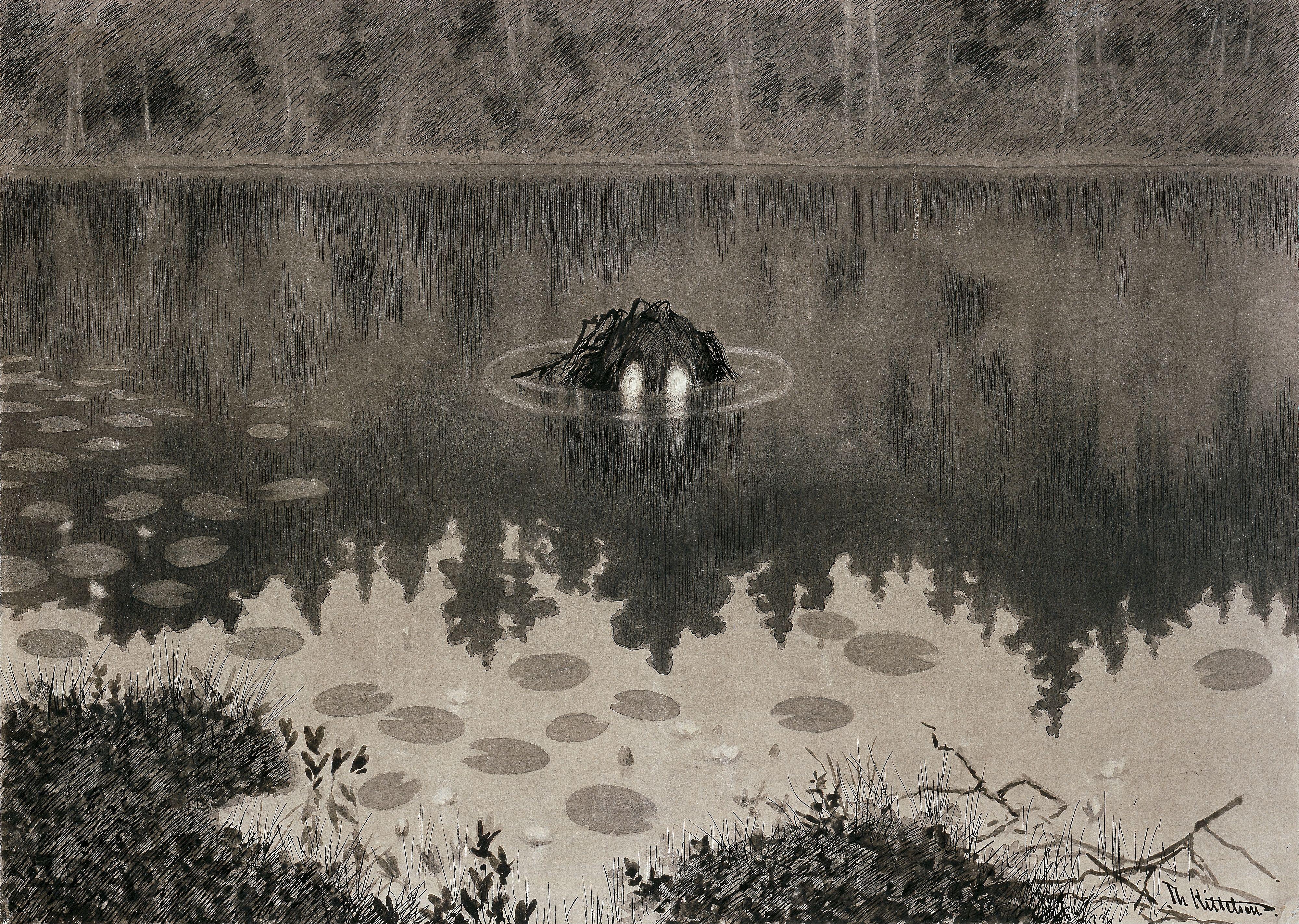
Norway is a country built vertically, and its music always knew where it came from. In every parish of the fjord-lands there was a waterfall—the foss, white and unceasing, hammering into its black pool—and in the waterfall lived a musician. The Fossegrim: a youth, fair beyond mortal looks in most tellings, seated behind or beneath the falling water, playing a fiddle whose music was the waterfall's own voice raised to melody—the tune in which, say the old accounts, you could hear the wind and the water, the forest and the seasons, all sounding together. He is the gentlest member of a dangerous family. His elder kinsman the Nøkk—Kittelsen painted its eyes rising from the tarn, two pale lamps in the black water, and no image in Scandinavian art says more with less—lured the unwary to drowning with the same beauty of sound; the nix and neck of the German and English waters are cousins in the same guild. But the Fossegrim of the falls, alone in the family, made of his music not chiefly a bait but a curriculum: he would teach. The greatest fiddlers of Norway—and this was said soberly, of named men, into the twentieth century—had learned their art at the waterfall, from him, at night, for a fee. And everything the tradition has to say is in the fee, the lesson, and the one warning.
The Offering Over the Falls
The rite is recorded with the exactness of a recipe, for it was, in the fiddle-parishes, practically a licensing procedure. The aspirant went to the waterfall on a Thursday evening—the old free night of the northern week, the night that belonged to neither God nor commerce—with his head turned away, and threw into the falls his offering: a white he-goat, in the full and serious form; in lesser forms a joint of meat, but it must be fat—and this clause the tradition enforces with its own comic severity: if the meat was lean, the Fossegrim took payment and gave short weight—the pupil learned only tuning, the eternal beginner's scrape—but if the offering was fat and thrown with the face averted and no bargaining, then the master reached out of the water, took the pupil's hands, and drew his fingers along the strings until they bled. The pupil played through the pain, guided; the blood slicked the fingerboard; and when the lesson ended—at dawn, or when the pupil fainted, the tellings vary—the fingers that healed were no longer his old fingers. The man could fiddle from that night, said the parishes, so that the trees danced and the waterfalls stopped to listen: the pupil's art now included, permanently, the voice of the element itself.
Every clause bears weight. Thursday: the threshold-time, the night outside the week's economies. The averted face: the deep teacher, like every genuine numen of the north, is not to be watched during the transaction; payment is made blind, on trust, into the roar. The fat offering: the deep does not honor token sacrifices; what is given to the waterfall must cost—the tradition's entire theory of tuition compressed into butchery: lean gift, lean art. And the blood on the strings: here the Fossegrim's school states what every conservatory conceals in its syllabus—that mastery enters through the wound; that the teacher's grip hurts precisely along the line of the future skill; that the fingers must be broken open at exactly the points where the music will afterwards live. The parallel rites stand all along the world's crossroads—the bluesman's midnight bargain, the shaman's dismembered hands—but the Norwegian version alone adds the pedagogical tenderness: the Fossegrim holds the pupil's hands while they bleed. It is not a mutilation. It is a transmission, and it is guided to the last drop.
The Tune You Must Not Finish
With mastery came the repertoire's forbidden summit. The fiddlers who had been to the falls, said the tradition, knew a tune the rest did not: the Fanitullen, the devil's tune in its parish forms—and above it, the true crown, the tune the Fossegrim himself plays under the water. Whoever played it at a dance discovered its property: it cannot be stopped. The dancers cannot cease dancing; the fiddler cannot cease playing—his own arm no longer obeys him; benches, tables, old men, the very crockery, said the gleeful tellings, joined the reel; and the thing ended only in one of three ways: someone came behind the fiddler and cut the strings; or the fiddler had learned—few had—the tune's own retrograde, the way of playing it backwards to unwind what it had wound; or dawn came, and the church bell, and released the parish sweating where it stood. The finest players, the old people said, would not play it at all with anyone in the room, or played it only out of doors, facing the water, giving the tune back to its owner.
The doctrine under the comedy is the deepest thing the fiddle-parishes knew, and it completes the waterfall's curriculum. Music—art, vision, every skill fetched from the deep—arrives with one clause the deep never waives: somewhere in the repertoire there is a tune stronger than the player, the piece of one's art that plays the artist, the gift's own undertow; and the mastery that matters finally is not the fingering—that was bought with blood at the falls—but the knowledge of endings: the cut string, the retrograde, the discipline of facing the water when you let the strongest thing in you sound. The Fossegrim teaches everything for a fat goat except this; this, every fiddler had to learn in the dancing-room, watching the parish spin past exhaustion, discovering what he had brought home. The waterfall's tuition, like all tuition from the elements, covers the summoning. The dismissal is the human's own homework.
The Water That Wants the Church
And behind the teacher, always, stood the family's darker truth and its strangest hope. The Nøkk drowned; the tradition never denied that the same beauty that taught could take, and mothers along the millponds kept their children off the banks at dusk with the water-man's name — the same office of fatal enchantment held on other shores by the shape-shifting horse of the Scottish fords. Yet the north told, again and again, one more story about these spirits, and it is the tenderest in the whole water-lore of Europe: the water-sprite sitting on the evening river, playing, and the passing children—or the passing priest—calling out that he had no soul and no salvation, whatever he played; and the music stopping; and the sprite weeping on the water. And in the versions the parishes loved best, the harsh word is taken back—the Redeemer lives for you too, maybe—and the fiddle starts again, sweeter than before, and plays on into the dark long after the travelers are home. The wild musician of the falls, said Norway at its kindest, is not damned; he is waiting—the unbaptized beauty of the world, practicing behind the white water, hoping to be found teachable himself.
Norway's fiddlers made the legend biography. Of the greatest of them all, the Telemark master Myllarguten—the Miller's Boy, whose playing bent Ole Bull himself to tears—it was said in his own lifetime, and not entirely as a figure of speech, that he had learned from the Fossegrim; and half the great slåtter, the old dance-tunes of the valleys, carry water in their very names and structure: tunes that circle and pour and never quite cadence, as falls never quite finish falling. The Hardanger fiddle itself, with its understrings that sound unbowed beneath the played ones—resonating of themselves, a second hidden instrument inside the first—is as near as luthiery ever came to building the legend into wood: every tune played on it is accompanied, faintly and continuously, by strings no finger touches. The parishes knew what that faint sympathetic shimmer was, and said so plainly, and named the falls it came from.
For that is the figure entire, read esoterically: the Fossegrim is the artistry of the elements before it enters a human hand—the music nature already plays, resident in the fall of water, needing only blood-contact to cross into culture. The falls still hammer in every parish of a life: the standing roar of the given world, which most pass daily and hear as noise. The tradition's instruction survives its theology intact. Go on the free night. Bring something fat—no lean offerings to the deep, no bargain tuition. Avert your face and throw. Let the teacher hold your hands along the strings through the bleeding, for the skill enters at the wound and nowhere else. Learn, on your own account, the endings—the cut string, the backwards way—before you play your strongest tune among people you love. And if, some evening on the water, you hear the fiddler weeping because someone told him what he is: contradict it, as the kind parishes did. The music starts again sweeter every time it is forgiven—and it plays on, behind the white water, long after the lamps of the houses are lit.
Lux Esoterica.
2026.


Comments