The Mamlambo: The River's Mother They Called the Brain-Sucker
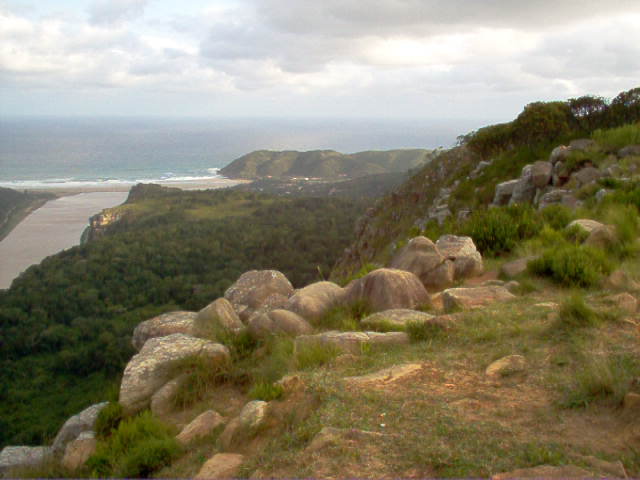
In the deep green river country of South Africa's Eastern Cape — the old Pondoland, where the rivers come down folded between steep grass hills to the Wild Coast — the autumn of 1997 produced one of the strangest episodes in the modern history of folklore: a monster made the national news, the police issued statements about it, and a question about it was raised, in complete seriousness, in the provincial legislature. Along the Mzintlava River near Mount Ayliff, seven, then eight, then nine bodies had come out of the water in a span of months; and the villages along the banks knew what had taken them, because the thing had been seen: at night, in the pools, a creature half serpent and half horse — a body like a monstrous snake, twenty meters by the boldest accounts, with a horse-like head — and around it in the dark water a glow, a shimmering greenish light, as though the pool itself had a lamp in it. The press, hunting a headline, found the detail that made the story immortal: the recovered dead, long in the water, were damaged about the head and throat — the work, said the forensic officers wearily, of the river's crabs; the work, said the terrified banks, of the monster — and the creature entered the world's newspapers under the name the region gave it: the brain-sucker. Villagers demanded a hunt; the police pointed to flood-season drownings; the provincial safety minister was asked in the house what government intended to do about the monster in the Mzintlava — and behind the whole carnival, the folklorists quietly noted, stood a figure far older and far greater than any headline: for the name the villages used was Mamlambo — and uMamlambo, in the Zulu and Xhosa deep tradition, is no river oddity. She is the Mother of the River: the goddess of the waters themselves, ancient mistress of every pool with a lamp in it — remembered by the modern age, as this chronicle has found the old goddesses remembered everywhere, chiefly by her teeth.
The Wealth-Snake and Her Terrible Rent
For the Mamlambo of living belief is double, and her second face is the one whispered about in courtyards rather than printed in newspapers. In the witchcraft-lore of the region — the world of muti, of medicines and their venders — the mamlambo is a thing that can be obtained: a wealth-familiar, bought secretly from certain practitioners, kept hidden in the house or the byre. By day it is a snake, or a root, or an oily charm in a bottle; by night — this is the tradition's signature — it comes to its keeper as a lover: a beautiful being, irresistible, devoted, and profoundly jealous. And it pays. The keeper of a mamlambo prospers against all arithmetic — the cattle multiply, the taxi business thrives, the money arrives — for the river's mother, kept as a mistress, is generous exactly as the river is: abundantly, and with a current underneath. The rent comes due in the tradition's darkest clause, the same clause this chronicle has met in the ilomba's pool in Zambia: the mamlambo must be fed — and what she eats, at the last, is the keeper's own: the marriage that can never happen because the night-lover forbids it; the kin who sicken as the herd fattens; blood, the whispers say plainly, of those nearest — the wealth flowing in over a threshold that something else is flowing out of. A household of sudden riches and serial misfortunes acquired, in the region's quiet audit, a one-word diagnosis; and the rites for getting rid of a mamlambo — no small matter, for a jealous river does not accept dismissal — occupied the healers as much as the rites for obtaining one.
The keeper-lore carried its field marks, read by neighbors with the same practiced eyes that watched the sigbinan's jars and the lidérc-keeper's black hens across the world's other wealth-familiar traditions. The man of the mamlambo did not marry, or married and buried; he kept one room of the house locked and tended it alone; he prospered in currents — sudden runs of luck with sharp reversals for those around him — rather than by the visible arithmetic of work; and water followed him strangely: his kraal never flooded, or always did, and things of his were forever being found at the river. The dismissal rites, when a keeper repented or an heir refused the inheritance, were the healers' heavy work: the charm carried back to running water by night, with payments and formulas, and returned to the river with interest — for the Mother takes back her own, the old practitioners warned, only from hands that come honestly emptied, and a mamlambo half-surrendered, grudged even in the giving, comes home up the path before its keeper does.
She stands, in the great family of African water-powers, as the southern sister of Mami Wata, the mirror-bearing water spirit of the west coasts — the same union of water, wealth, beauty and peril; the same jealous night-marriage; the same modern vigor — and the neighbor of the Inkanyamba in its waterfall pool one province north: the region's waters, as ever, fully administered. What the 1997 panic added was the demonstration, performed live before the world's cameras, of how a goddess weathers modernity: the ancient Mother of the River, her worship long officially disbanded, reappeared in the one form the age would report — a monster with a body-count — and got herself, within weeks, onto television, into parliament, and back into the nightly conversation of every household along her banks. The drownings were flood-season drownings; the crabs were crabs; the police were, in every checkable particular, right. And the villages were right too, in the older grammar: something does live in the deep pools that takes the unwary in flood season and glows in the dark of the water at night; the modern word for it is "the river," and the old word for the river was her.
An Esoteric Reading
Read with the inner eye, the Mamlambo is the great parable of the source degraded into a bargain — and her two modern faces, the brain-sucker and the wealth-snake, are the two fates of every deep power that a culture stops honoring and keeps using. She was the Mother of the River: the giver of the waters themselves, the origin — and origins, unworshipped, do not evaporate. They privatize. The goddess no longer met at the ford by the whole community with offerings becomes the familiar bought in secret by the ambitious individual: the same abundance, re-plumbed through a private pipe — and the tradition's fine print on the mamlambo-keeper's contract is the eternal fine print on all privatized sources: the flow is real, the lover is faithful, and the feeding runs backward through your own house. What a community once paid openly, in honor distributed across everyone, the secret keeper pays alone, in kin. And her other face — the brain-sucker of the headlines — is what the unhonored source becomes in the public mind: no longer mother, no longer even name, but monster: the drowned of every flood season attributed to her appetite, the crabs' forensic work read as her feeding, the glow in the night pool — which the old religion knew as her lamp, her presence, her invitation to reverence — reported now as the searchlight of a predator. The powers we cease to honor, says the whole arc of her story, do not cease to act; they cease only to be recognized, and what acts unrecognized in a landscape or a life is always, eventually, called a brain-sucker: the eater of exactly that faculty — the knowing, the remembering — whose failure made a monster of a mother.
The counsel folded in her legend is therefore double, one clause for each face. To the would-be keeper — to everyone tempted to run a private pipe to a deep source, to convert some great commons of the soul into personal supply: the rent is kin; the night-lover forbids all other marriages; and the healers' hardest rites were always the dismissals, because the current, once diverted through a household, does not politely reverse. And to the frightened banks — to every community and every heart that has caught itself calling its own deep water a monster: recover the older grammar before the hunt is organized. Ask what the glow in the pool was called by the grandmothers; pay again, openly and together, the small honors that were always the river's real fee — the caution in flood season, the respect at the fords, the name spoken rightly — and watch the body-count resolve into what it always was: the ordinary tolls of a great power moving through the world, terrible only where it is no longer known. The river's mother, the old people of the banks would say, never changed. The change was all in what the banks forgot — and the water, patient beyond any newspaper, is still there every night, holding up its lamp, waiting to be recognized by someone who remembers what the light is for.
Lux Esoterica.
2026.


Comentarios