The Nasnas: The Half-a-Man That Hops Across the Arabian Wastes
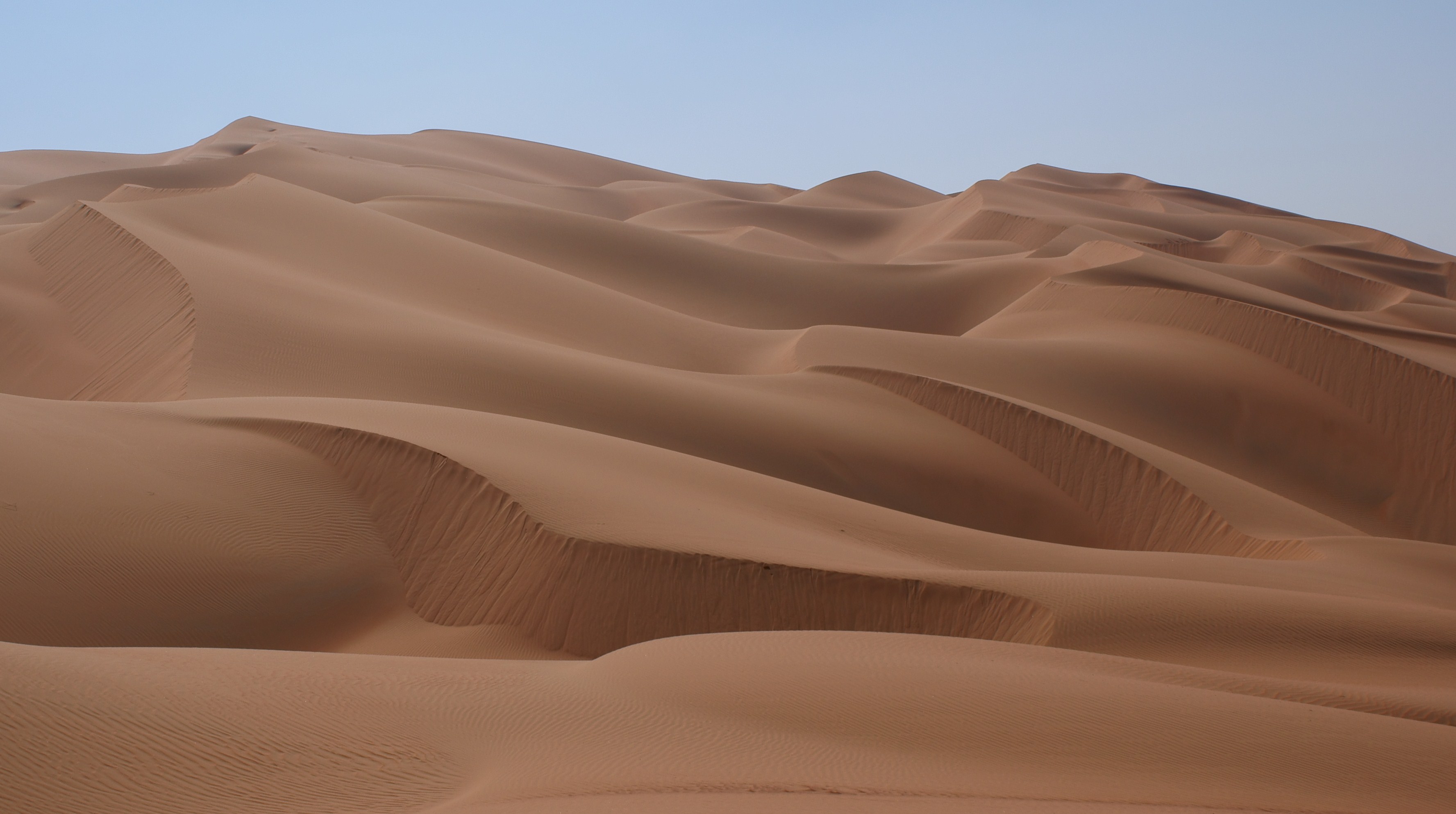
The geographers and marvel-collectors of the classical Arabic world — Al-Qazwini in his great cosmography, the anonymous compilers of the Thousand and One Nights, the lexicographers who catalogued every creature a Bedouin might name — recorded, among the wonders of the far deserts and the islands beyond, a being whose horror is entirely a matter of division. The nasnas is half a man: not a man missing a part, but a man split down the middle and only one side kept — a single arm sprouting from a single shoulder, one leg, half a head with one eye and half a mouth, half a torso — a vertical hemisphere of a person, complete on its one side and simply absent on the other, as though the world had been given the left half of a man and told to make do. And it moves as such a thing must: it hops, the tellings insist, springing on its one leg across the sand with a speed that no whole man can match — bounding, one-eyed, half-mouthed, over the dunes of the Hadramawt and the Empty Quarter and the legendary islands of the eastern sea, where Al-Qazwini places whole tribes of them, grazing and grazed upon. For the nasnas, in the older tellings, is prey as well as predator: hunted for its flesh, which is said to be eaten; and hunting in its turn the lone traveler it can overtake — half a thing, with half a thing's half-comprehensible malice, met on the empty stretches where a man is most alone and most likely to meet the half of something.
The Anatomy of the Incomplete
The classical sources argue, in their scholarly way, over what the nasnas is, and the argument is the legend's substance. One tradition — the one the pious repeated — makes the nasnas a cursed remnant: the surviving degenerate stock of a people who were mostly destroyed for their sins, left half as a mark of the judgment, humanity reduced to a hemisphere as a standing sermon. Another files it among the jinn, or among the offspring of jinn and the lower creatures — the nasnas as a hybrid's hybrid, the incomplete issue of an unnatural crossing, belonging fully to neither of its origins and so possessing only half a body to show for either. Al-Jahiz, the great ninth-century prose-master and zoologist, discusses it with his characteristic mix of report and reservation; the lexicons note that some hold the nasnas to be a kind of ape or a distorted rumor of one, half-glimpsed and half-invented by travelers; and the Nights deploy it as a straightforward monster of the marvel-voyage, the thing the shipwrecked sailor meets on the uncanny island. But under every version runs the one image that the Arabic imagination clearly found unbearable and unforgettable: not a monster of excess — not too many limbs, too many teeth, the usual inflations of terror — but a monster of lack: a being whose whole dreadfulness is that it is only half there, and that the half which is there hops after you, fast, on the strength of its single leg.
The word itself did the legend's work in the language, and the doubling repays a look. Nasnas is built on a doubled root — the reduplication that Arabic uses for flickering, wavering, half-glimpsed things — and it drifted, in ordinary speech, toward exactly the meanings the creature embodies: something scarcely-there, a phantom on the horizon of the sand, the shimmer that might be a man and might be half of one. The lexicographers connect it to the nesnas used loosely for apes and for degraded remnants of peoples; the mystics and moralists reached for it as a byword for the incomplete human — the person who has the outward half of humanity and lacks the inward, or the reverse. And Al-Qazwini's placement of whole nations of nasnas on the far islands — grazing like herds, hunted like game — carries the classical geography's deepest anxiety, the same one that peopled the edges of every old map with the headless and the one-footed and the dog-faced: that at the limits of the known world, humanity itself thins — arrives at its border and is found there only in fractions, halves and quarters of the whole thing, as though completeness were a property of the center that fails toward the rim.
And that speed is the legend's sharpest point. The whole man, met by the nasnas on the open sand, discovers the horror's cruel arithmetic: he cannot outrun it. The thing with one leg hops faster than the thing with two runs — because it has spent nothing on balance, deliberation, the whole apparatus of the complete; it is pure single-minded propulsion, a spring with an eye, and it closes the distance while the whole man is still weighing his options with the full complement of faculties that are, out here, slowing him down. The Bedouin counsel, where the tellings give it, is the desert's usual and hard-won wisdom: do not travel the empty quarters alone, for the nasnas takes the solitary and cannot manage the joined; keep to the caravan, the paired, the roped-together — for two whole men are, against the half-thing, worth far more than twice one. Some tellings arm the traveler further: the nasnas, being half, is confounded by reversal and doubling — a man who turns his cloak, or who convinces it he too is not what he seems, may throw it off; and the Nights' sailor escapes his island's half-men by the voyager's eternal expedients of wit and the incoming tide, the sea being the one road a hopping thing cannot follow. But every version returns to the first defense, which is company: the half is fast against the one, and helpless against the bound.
An Esoteric Reading
Read with the inner eye, the nasnas is the most precise image the old world ever drew of the half-self loosed in the wastes — the part of a person that has split from its whole and gone hopping, terribly efficient, across the empty country of a life. Every soul contains the material for a nasnas: the single faculty amputated from the balancing rest — the one drive, the one grievance, the one appetite or gift or fear — that, cut from the whole person who would have moderated it, does not die but specializes: becomes a hemisphere with a single leg and a single burning eye, and discovers, out on the sand where nothing checks it, that half a self moves faster than a whole one. This is the terror the classical imagination fixed on, and it is exact: the divided part outruns the integrated person precisely because it has shed everything that deliberates. The monomaniac overtakes the balanced man; the single-minded obsession bounds past the considered life; the amputated drive, spending nothing on the counterweights of a full humanity, is pure velocity in one direction — and whoever has been pursued across their own inner wastes by one of their own halves, hopping and one-eyed and horribly quick, knows that no full-faculty reasoning has ever won that footrace.
And the origin-debate is the doctrine's depth. The pious called the nasnas the remnant of a judgment — humanity reduced to half as a punishment — and the psychologists of the soul would only nod: the half-self is a kind of judgment, the visible remainder of some old catastrophe of integration, the piece left hopping after the whole that should have carried it was lost. Others called it a hybrid's hybrid, belonging fully to neither parent — and that too is the split part exactly: the drive that owns allegiance to no complete self, at home in no whole, and so reduced to the single side it can claim. But the counsel is where the desert's wisdom turns from diagnosis to deliverance, and it is the same counsel this chronicle has now heard from a hundred empty places: do not cross the wastes alone. The half-thing takes the solitary and cannot manage the joined — cannot overcome the roped-together, the paired, the integrated; two whole men are worth far more than twice one against it, and a self that keeps its halves joined — that travels its inner deserts in the company of all its faculties, roped together, refusing to let any single drive go hopping off across the dunes by itself — is a self the nasnas cannot close on, however fast it springs. The whole is slower than the half, says the Empty Quarter, and infinitely safer; the fastest thing in the desert is a fragment, and the fastest fragment in the world is still only chasing the wholeness it fell out of. Keep to the caravan of yourself; let no faculty travel the empty stretches alone. Cross the sand joined — and the hopping half of you, whichever half it is, comes home to be a whole man's honest side again.
Lux Esoterica.
2026.


Comentarios