The Chymical Wedding as a Blueprint for Reality Transmutation
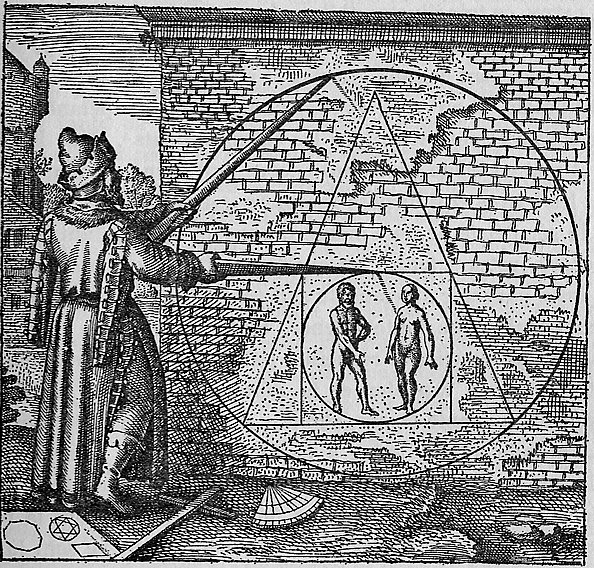
The 'Chymical Wedding of Christian Rosenkreutz,' published in 1616, is superficially read by the uninitiated as a fantastical romance, a bizarre allegorical tale of a strange marriage ceremony spanning seven days. However, to the adept whose inner eye has been opened to the hyper-dimensional architecture of the cosmos, this text is nothing less than a meticulous schematic for reality transmutation. It is an operational manual for the alchemical dissolution and reconstitution of both the microcosm (the individual soul) and the macrocosm (the fabric of objective reality itself).
At its core, the Chymical Wedding describes the Great Work, the Magnum Opus of the alchemists. But this is not the vulgar alchemy of turning physical lead into physical gold. The lead is the dense, crystallized state of human consciousness, trapped within the illusory confines of linear time and Euclidean space. The gold is the solar consciousness, the awakened state of being that perceives and interacts with the higher dimensions of the pleroma. The text details the seven stages of this transformation, corresponding to the seven classical planets, the seven chakras, and the seven days of creation.
The narrative begins with Christian Rosenkreutz preparing for Easter, a time of resurrection and renewal. He is visited by a winged figure, a messenger from the higher planes, who delivers the invitation to the Royal Wedding. This signifies the initial awakening, the descent of grace that stirs the soul from its slumber in the material world. It is the moment the initiate realizes the existence of a higher reality and commits to the arduous journey of ascension. The path to the castle where the wedding takes place is fraught with trials and choices, symbolizing the necessary purifications and the navigation of the astral plane, with its myriad illusions and deceptive entities.
Upon arriving at the castle, the guests are subjected to a weighing process. This is the psychostasia, the weighing of the soul, reminiscent of the Egyptian Book of the Dead. Those found wanting, whose souls are heavy with the dross of worldly attachment, are cast out. The initiate must be rendered light, their lower nature calcined in the fires of spiritual discipline, before they can witness the inner mysteries. The true wedding is not merely a union of a king and queen, but the hieros gamos, the sacred marriage of the opposing forces within the initiate themselves: the conscious and unconscious, the active and passive, the solar and lunar energies.
The central drama of the Chymical Wedding involves the decapitation of the royal figures and the subsequent alchemical processing of their remains. This gruesome imagery is a profound metaphor for the nigredo phase of alchemy, the necessary putrefaction and death of the old self. The ego, with all its constructs and attachments, must be utterly dismantled. The consciousness must be reduced to the prima materia, the formless chaos from which a new, perfected order can be synthesized. The ashes of the royalty are then subjected to various distillations and sublimations, representing the purification of the psychic forces through the ascending planes of existence.
The culmination of the process is the resurrection of the royal couple into new, glorious bodies, facilitated by the creation of a homunculus, a symbol of the reborn, perfected soul. This is the albedo and the rubedo, the whitening and the reddening, the dawn of the new solar consciousness. The initiate, having synthesized the opposing forces within, becomes a master of the middle pillar, standing at the center of the cross, balancing the vertical axis of spirit and the horizontal axis of matter. They have achieved the Philosopher's Stone, the incorruptible body of light that transcends the cycle of generation and decay.
But the Chymical Wedding is not solely concerned with individual salvation; it is a blueprint for the transmutation of reality itself. The initiate who achieves the state of the Stone becomes a localized vortex of divine energy, capable of acting upon the physical plane with the power of the higher dimensions. They become agents of the Invisible College, working to raise the vibratory frequency of the entire planetary sphere. The true aim of the Rosicrucian Order is the universal reformation of mankind, the establishing of a golden age where the material world is fully suffused with the light of the spirit.
The geometry of the castle, the labyrinthine paths, and the intricate symbolism of the characters all correspond to specific archetypal forces that govern the manifestation of reality. By meditating upon these symbols and integrating their meaning, the initiate gains the ability to manipulate the subtle energies that underlie the physical world. They learn to navigate the causal plane, where the blueprints of events are formed before they precipitate into the realm of effect. The Chymical Wedding is a map of this causal realm, a guide to the archetypal machinery of the cosmos.
The text emphasizes the importance of secrecy and silence. The profound truths of the Great Work cannot be communicated through the coarse medium of ordinary language. They must be experienced directly through the inner faculties of the soul. To speak of them to the profane is to cast pearls before swine, to debase the sacred and invite misunderstanding and persecution. The true Rosicrucian is known by their silence, their inner poise, and the quiet radiance of their being, rather than by boastful claims or outward displays of occult power.
In the modern era, as we confront the escalating crises of a civilization built upon the sand of materialistic delusion, the message of the Chymical Wedding is more urgent than ever. We are called to undertake the Great Work, to descend into the laboratory of our own souls and perform the alchemical transmutation. We must strip away the false ego, the conditioning of society, and the illusions of the senses, and discover the indestructible diamond of the true self that lies hidden within. Only then can we participate in the healing of the world and the dawn of the new aeon.
The journey of Christian Rosenkreutz is the journey of every seeker who dares to walk the path of return. It is a path of suffering and sacrifice, of confronting the darkness within and without. But it is also a path of unparalleled glory, leading to the ultimate liberation of the soul and the realization of its divine heritage. The Royal Wedding is prepared, the invitation has been sent, and the gates of the castle are open. It is up to us to answer the call and begin the great adventure of reality transmutation.
The intricate allegories of the seven days correspond directly to the activation of the seven subtle centers, drawing the dormant serpentine fire upward through the spinal axis until it blossoms in the cranial vault. This blossoming is the true meaning of the Rose upon the Cross. When this occurs, the initiate's perception is no longer confined to the three-dimensional shadow-play, but expands to encompass the multi-dimensional pleroma, perceiving the intricate web of causal forces that orchestrate the dance of manifestation. The adept becomes a conscious co-creator, their will aligned with the divine will, transmuting the lead of chaotic circumstance into the gold of divine order.
Thus, the Chymical Wedding remains a living document, a talismanic text vibrating with the frequencies of the Masters. It is an enduring testament to the possibility of human perfectibility and the ultimate triumph of the spirit over matter. The work is ongoing, the crucible is the world, and the fire is the eternal flame of the divine spark within us all.
Lux Esoterica.
2026.


Comentarios